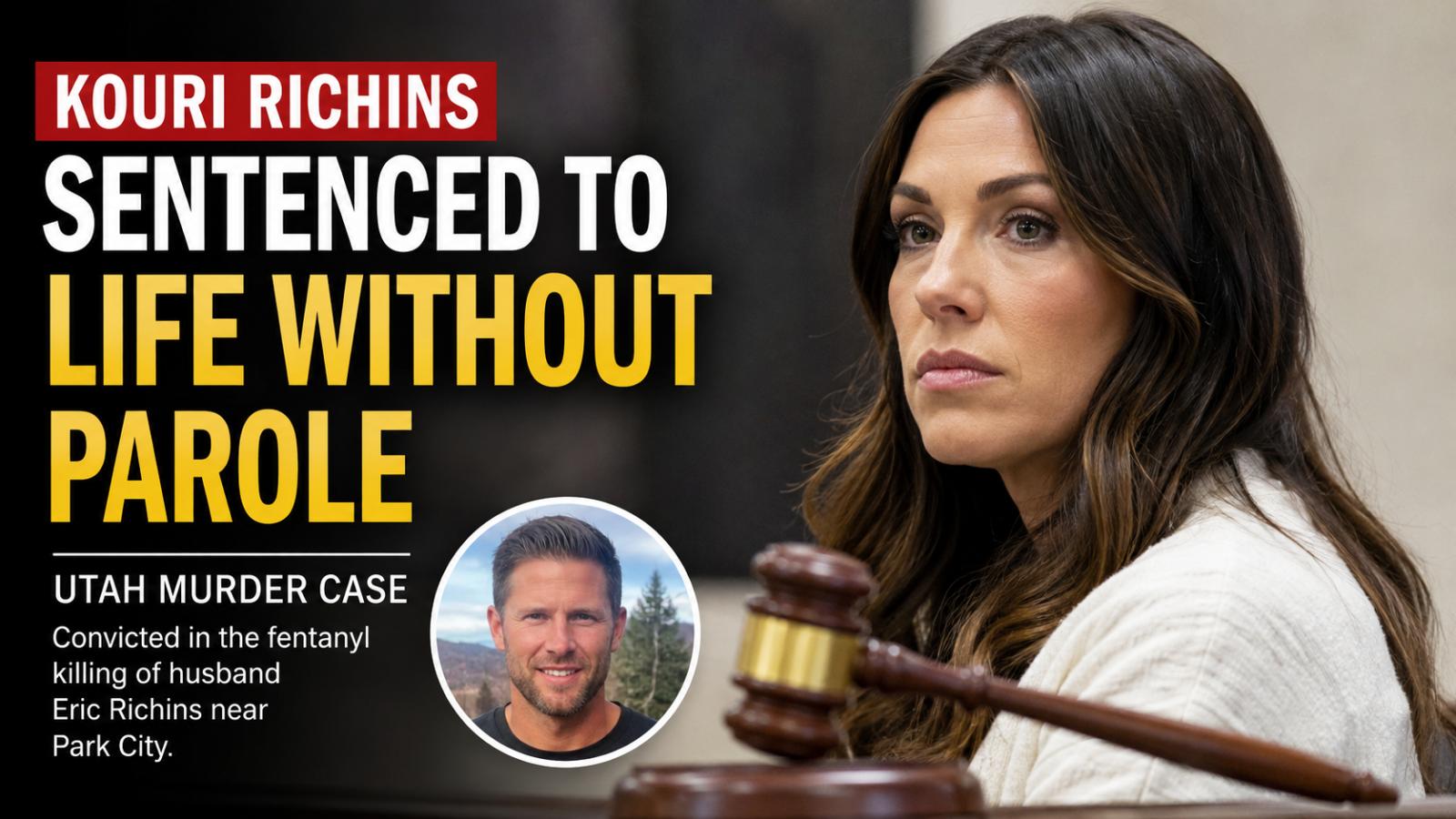
Kouri Richins was sentenced to life without parole in the Utah fentanyl murder case involving her husband, Eric Richins, ending a high-profile trial that drew national attention.
The Utah mother and real estate agent was convicted in March of aggravated murder in the 2022 death of Eric Richins at their home near Park City.
Kouri Richins Sentenced in Utah Murder Case
A judge in Park City ruled that Richins, 35, will never be eligible for release. The sentence followed her conviction in the death of her husband, whose killing became widely known after Richins promoted a children’s book about grief following his death.
Prosecutors said Richins gave Eric Richins a cocktail containing five times the lethal dose of fentanyl. Jurors also convicted her of four other felonies, including insurance fraud, forgery and attempted murder.
Prosecutors Cited Fentanyl, Debt and Insurance Policies
The attempted murder conviction was tied to an earlier allegation that Richins tried to poison her husband on Valentine’s Day with a fentanyl-laced sandwich.
Authorities said Richins was millions of dollars in debt, operated a house-flipping business and was planning a future with another man. Prosecutors said she opened several life insurance policies on Eric Richins without his knowledge and wrongly believed she would inherit an estate worth more than $4 million after his death.
Family Statements Describe Impact on Children
Judge Richard Mrazik imposed the sentence on the day Eric Richins would have turned 44. Prosecutors urged the court to make sure the couple’s three sons would not have to fear a possible future encounter with their mother.
During sentencing, relatives described the impact of Eric Richins’ death on the children, who were 9, 7 and 5 when he died. Social workers read statements from the boys, who said they would feel unsafe if their mother were ever released.
Richins maintained her innocence in court, calling the verdict false and asking her sons not to give up on her. Her defense team had argued that prosecutors failed to prove murder, but the jury found her guilty on all counts after less than three hours of deliberation.
The case remains significant because it combines a fentanyl murder conviction, alleged financial motive, insurance fraud claims and the national attention surrounding Richins’ grief book after her husband’s death.