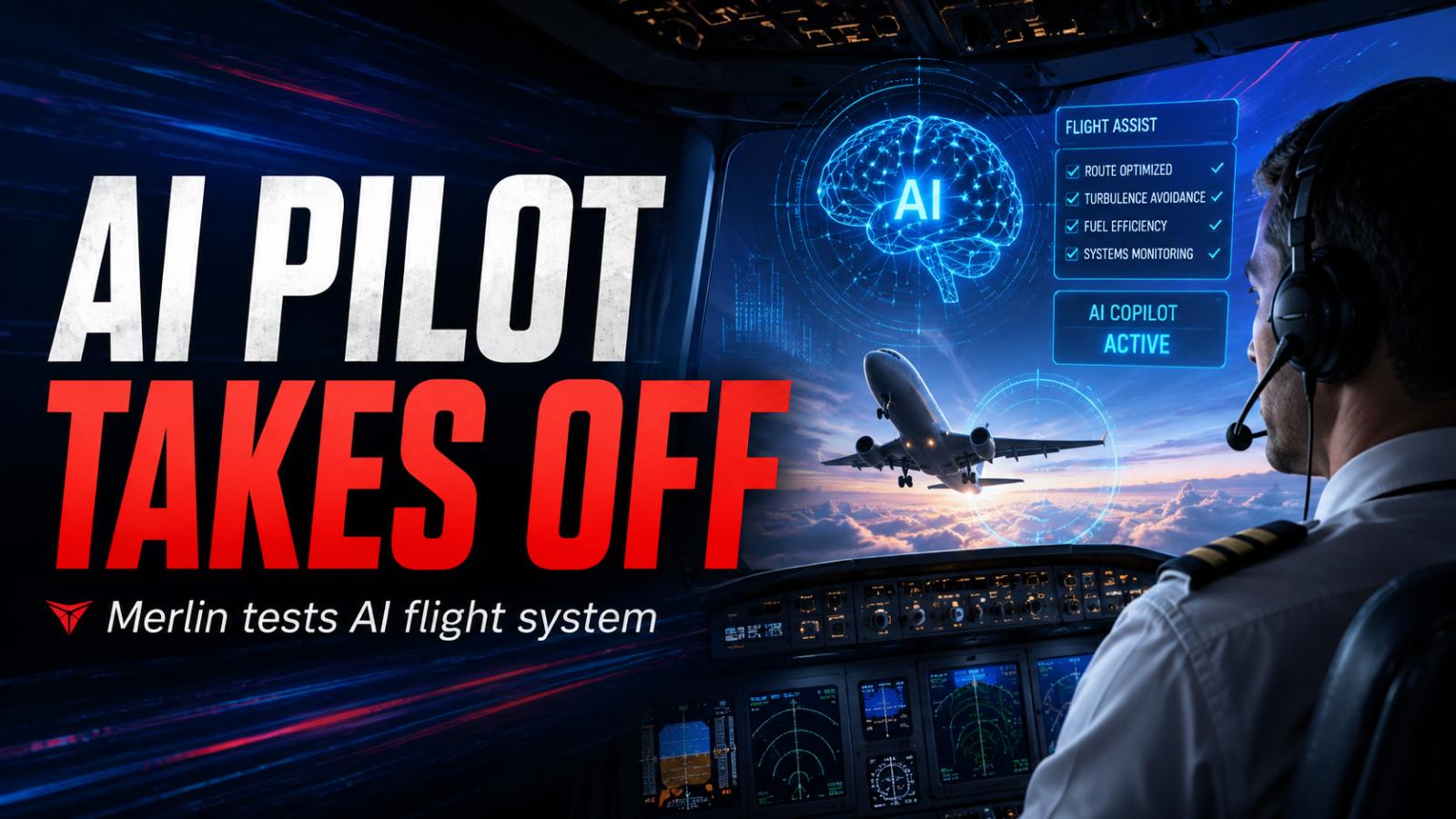
Artificial intelligence is slowly moving from phones, offices and cars into one of the most sensitive areas of modern transport: aviation. Merlin Labs, a US-based aviation technology company, has tested an AI flight system known as Merlin Pilot during an experimental aircraft demonstration.
The system is not designed to remove pilots from aircraft. Instead, it is being developed to assist trained pilots by handling selected flight-related tasks after proper approval. This makes the test important because aviation is already dealing with growing pilot workload, pressure on air traffic control systems and a rising need for smarter safety tools.
What happened during the Merlin Pilot test
During the demonstration, a trained test pilot remained inside the aircraft and continued to supervise the flight. The AI system handled certain approved tasks, including responding to instructions and helping adjust the aircraft’s course.
The aircraft used for the test was marked as experimental. This means it was used for research and testing, not for regular passenger service. That point matters because AI-assisted aviation is still in a careful development stage. Commercial passenger flights without pilots are not expected anytime soon.
The test showed how AI could become a useful cockpit assistant, especially in situations where pilots need to process several instructions quickly and accurately.
How Merlin Pilot helps pilots
Merlin Pilot uses natural language flight control. In simple terms, it can listen to spoken instructions, understand the meaning and help the aircraft respond based on approved commands.
This kind of system could reduce repetitive workload for pilots. For example, during busy flight operations, pilots must listen to air traffic control, confirm instructions, monitor instruments, adjust the aircraft and stay alert for unexpected situations. An AI pilot assistant could help manage routine actions while the human pilot focuses on judgment, safety and decision-making.
This is where AI has real value. The strongest use case is not replacing humans, but reducing pressure on them.
Why this matters for aviation
The aviation industry is facing serious challenges. Pilot shortages, increasing air traffic and pressure on air traffic controllers are creating demand for better support systems. AI flight automation could help improve efficiency if it is introduced carefully and safely.
A system like Merlin Pilot may help pilots handle communication, navigation-related tasks and routine cockpit actions. It may also help reduce errors caused by fatigue or workload overload.
But aviation cannot afford blind trust in technology. Any AI system used in aircraft must be tested deeply, monitored closely and approved by regulators before it becomes part of normal flight operations.
Can AI replace pilots?
No, not in the near future.
Passenger aviation still depends on trained pilots for safety, responsibility and emergency decision-making. AI can process information quickly, but it does not replace human experience, accountability and real-world judgment.
Aviation safety depends on people who can respond to unexpected problems. Weather changes, technical failures, passenger emergencies and unusual flight conditions still require human decision-making. That is why AI systems like Merlin Pilot are currently better understood as pilot support tools, not pilot replacements.
The most practical future is a cockpit where humans and AI work together.
AI and air traffic control
AI is also being discussed in air traffic control modernization. Busy airports and crowded airspace require faster communication and better coordination. Artificial intelligence could help organize information, detect possible conflicts and support controllers in managing traffic more efficiently.
However, just like in the cockpit, AI should assist human controllers rather than replace them. Air traffic control involves real-time decisions, safety responsibility and human coordination. AI can help with speed and accuracy, but final responsibility must remain with trained professionals.
What this means for passengers
For passengers, AI-assisted aviation could eventually mean smoother flights, better route management and improved safety support. If AI can reduce pilot workload and help avoid communication errors, it may become a valuable part of future aircraft systems.
But passengers should not assume pilotless commercial planes are coming soon. The safer and more realistic direction is AI-supported flying, where pilots remain in command and technology works in the background to assist them.
The future of AI-assisted aviation
The Merlin Pilot test shows where aviation technology may be heading. AI could become part of the cockpit, helping pilots manage routine tasks, understand commands and respond faster during busy operations.
Still, the future of AI in aviation will depend on trust, testing, regulation and safety performance. Aircraft systems must prove they can work reliably in real-world conditions before they are used widely.
For now, Merlin Pilot represents an important step toward AI-assisted aviation. It shows that artificial intelligence may help reduce pilot workload and support safer flight operations, but the human pilot remains the most important decision-maker in the cockpit.


 Joyful
0%
Joyful
0%
 Cool
0%
Cool
0%
 Thrilled
0%
Thrilled
0%
 Upset
0%
Upset
0%
 Unhappy
0%
Unhappy
0%