











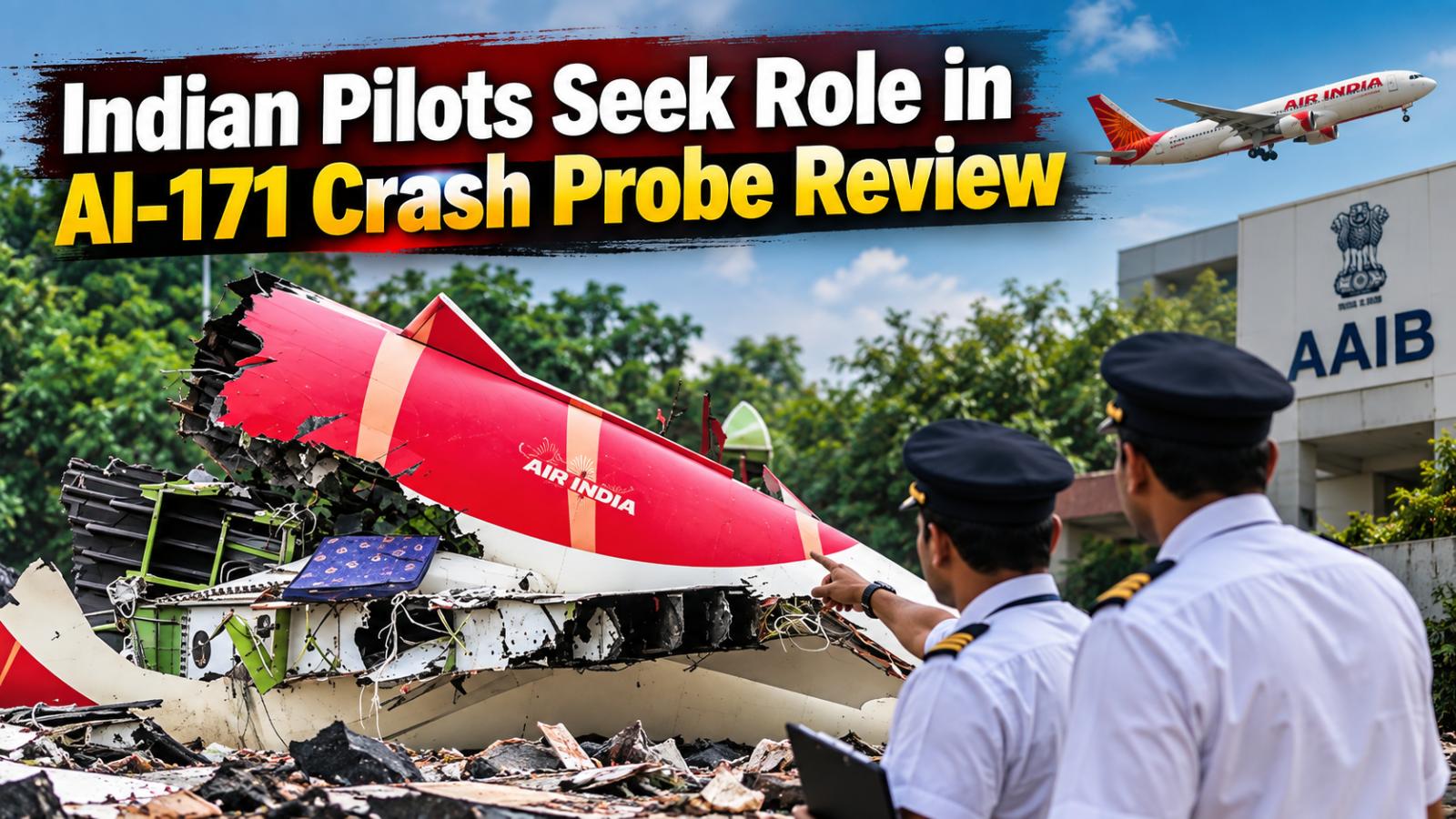
Indian pilots seek role in AI-171 crash probe review
The AI-171 crash probe review has come under fresh focus after the Federation of Indian Pilots sought a role in any independent assessment. Pilot representation and RAT timing concerns are central as the AAIB prepares its draft final report. Pilot representation in AI-171 review The Federation of Indian Pilots has asked the civil aviation ministry to clarify whether an inde
Indian pilots seek role in AI-171 crash probe review
The AI-171 crash probe review has come under fresh focus after the Federation of Indian Pilots sought a role in any independent assessment. Pilot representation and RAT timing concerns are central as the AAIB prepares its draft final report. Pilot representation in AI-171 review The Federation of Indian Pilots has asked the civil aviation ministry to clarify whether an inde

Air India Pilot Drug Test Positive After Phuket-Delhi Incident
An Air India pilot drug test is under scrutiny after the captain of a Phuket-Delhi flight tested positive for marijuana following a 300-foot altitude loss. The case has raised fresh questions about pilot tests, DGCA rule enforcement, THC risks, cockpit safety and possible licence ban action in India. Phuket Jet Incident Raises Fresh Safety Questions The Airbus A320neo was carrying 137 passenger
Air India Pilot Drug Test Positive After Phuket-Delhi Incident
An Air India pilot drug test is under scrutiny after the captain of a Phuket-Delhi flight tested positive for marijuana following a 300-foot altitude loss. The case has raised fresh questions about pilot tests, DGCA rule enforcement, THC risks, cockpit safety and possible licence ban action in India. Phuket Jet Incident Raises Fresh Safety Questions The Airbus A320neo was carrying 137 passenger
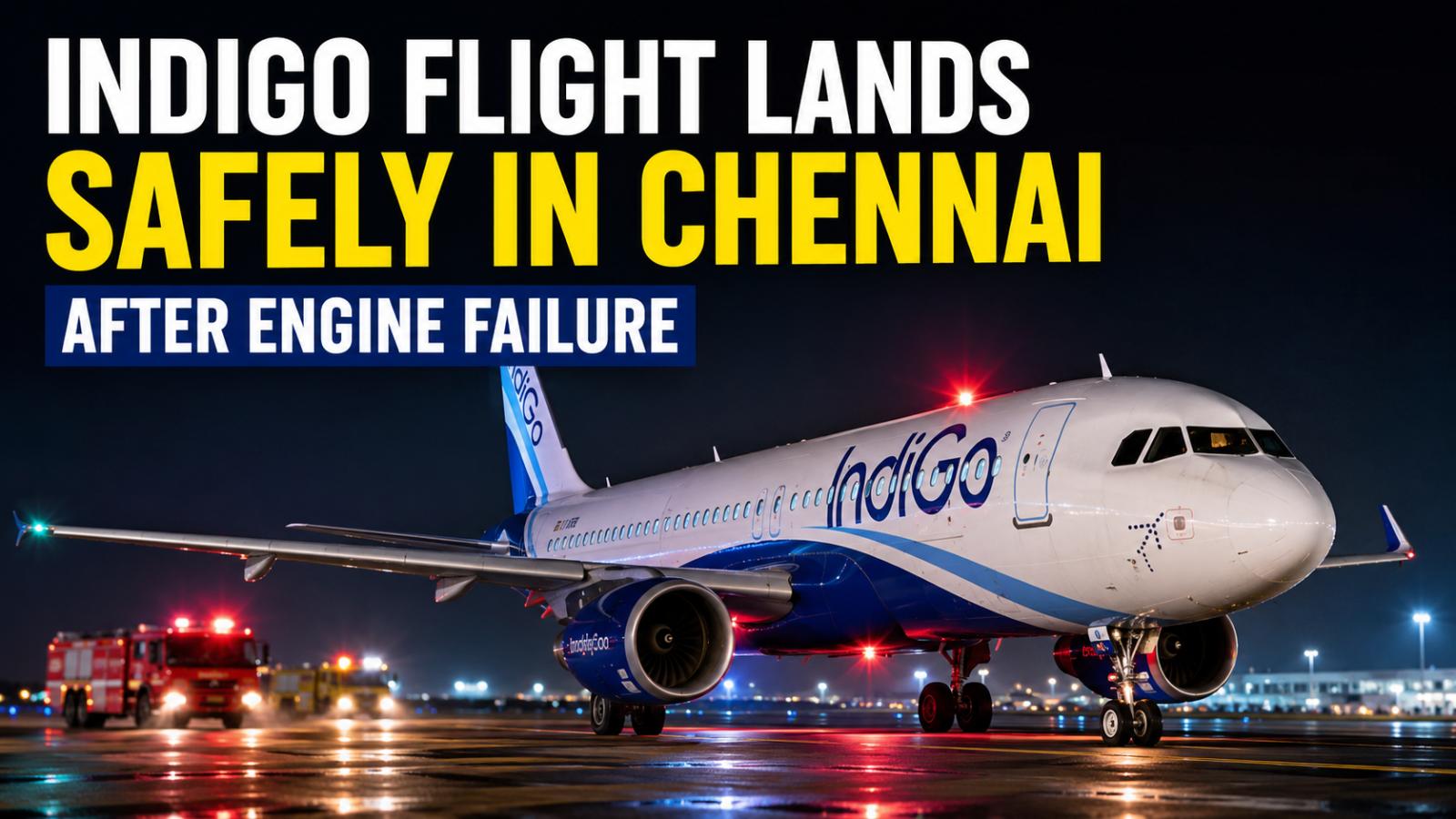
IndiGo Chennai Emergency Landing After Engine Failure
An IndiGo Chennai emergency landing ended safely late Tuesday, August 11, after flight 6E-723 from Kolkata reported a left engine failure while approaching Chennai. Chennai airport emergency teams were activated before the aircraft landed safely with 224 people onboard and no reported injuries. Left Engine Failure Reported During Approach IndiGo flight 6E-723 was flying from Kolkata to Chennai
IndiGo Chennai Emergency Landing After Engine Failure
An IndiGo Chennai emergency landing ended safely late Tuesday, August 11, after flight 6E-723 from Kolkata reported a left engine failure while approaching Chennai. Chennai airport emergency teams were activated before the aircraft landed safely with 224 people onboard and no reported injuries. Left Engine Failure Reported During Approach IndiGo flight 6E-723 was flying from Kolkata to Chennai
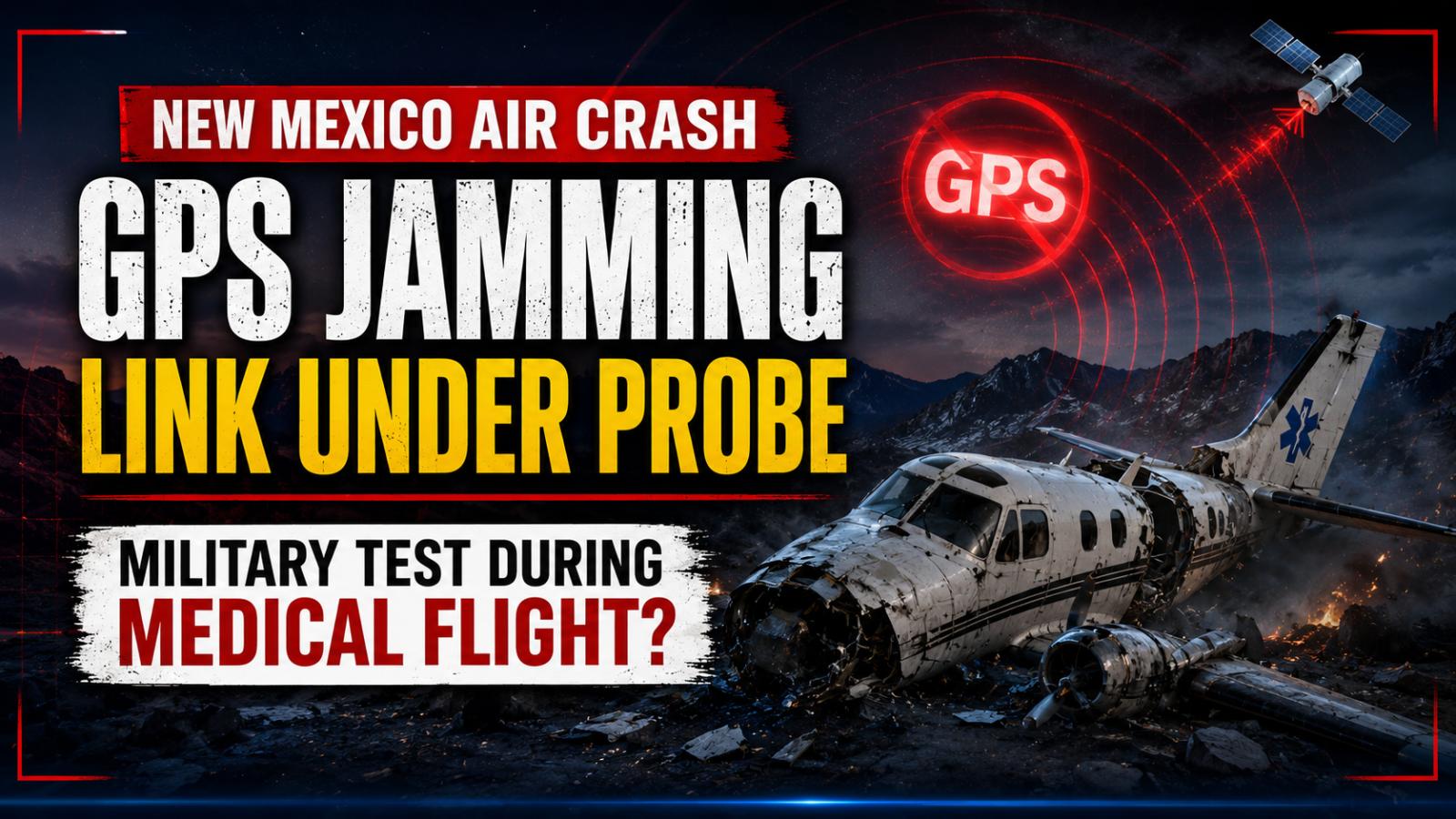
New Mexico Air Crash Raises Questions Over GPS Jamming
A fatal New Mexico air crash has raised urgent questions about the risks military GPS jamming operations may pose to civilian aviation. Four people died after an air ambulance lost GPS capability and struck mountainous terrain while flying to collect a patient near Ruidoso. The National Transportation Safety Board has stressed that its findings remain preliminary. Investigators have not determined whether the military exercise caused or contributed to the accident, and the final probable cause will come only after a wider examination of flight data, communications and operational decisions. New Mexico air crash kills four medical crew members The Beech C90 aircraft crashed near Lincoln, New Mexico, at about 12:15 a.m. on May 14, 2026. The aircraft carried two pilots and two flight nurses, and all four suffered fatal injuries. Generations Jets operated the aircraft as a Part 135 air ambulance flight. The crew had departed Roswell Air Center for Sierra Blanca Regional Airport in Ruidoso, where it was scheduled to collect a patient for transport to Albuquerque. The flight took place on a dark night with no moon illumination, although visual weather conditions prevailed. The aircraft struck terrain at an elevation of about 9,950 feet near the Capitan Mountains. The impact caused a fire that developed into a major forest blaze. GPS jamming test disrupts aircraft navigation The NTSB report states that US military GPS jamming activities covered the area and altitude through which the medical flight was operating. Aviation notices had warned crews that GPS, satellite-based augmentation and related services might become unavailable across a wide region. Shortly after departure, the pilot told Albuquerque air traffic control that the aircraft had lost GPS capability and needed heading guidance. The controller directed the crew toward Sierra Blanca Regional Airport and later contacted military officials to request that the jamming stop. Three other aircraft in the area also reported losing GPS service. One pilot struggled to locate a ground-based navigation aid and required additional assistance from air traffic control, showing that the disruption extended beyond the medical aircraft. Air traffic control guides crew toward Ruidoso Controllers initially planned to guide the aircraft toward an instrument landing system approach because its GPS-based approach was unavailable. The medical crew later reported having Ruidoso in sight and requested permission to continue visually. Air traffic control cleared the aircraft for a visual approach. The plane then turned southwest toward the airport, with mountains rising between its position and the runway. The Capitan Mountains in that area reach more than 10,000 feet. After controllers informed the military that the aircraft had switched to a visual approach, GPS jamming resumed. The aircraft began descending shortly afterward and struck the mountain about five minutes later. The NTSB report records no further radio transmissions from the crew after the visual approach clearance. Investigators examine altitude and radar data Investigators found a notable difference between two tracking sources. The aircraft’s Spidertracks GPS altitude generally appeared about 600 feet higher than its ADS-B altitude, while the ADS-B record contained large gaps during periods of interference. The NTSB is examining those altitude differences, recorded flight paths, radio communications and the timing of the military exercise. The investigation will also consider the crew’s transition from an instrument approach to visual navigation in dark mountainous terrain. The preliminary evidence confirms that GPS interference occurred and affected several aircraft. It does not yet prove that jamming caused the crash. That distinction is critical, and any final c
New Mexico Air Crash Raises Questions Over GPS Jamming
A fatal New Mexico air crash has raised urgent questions about the risks military GPS jamming operations may pose to civilian aviation. Four people died after an air ambulance lost GPS capability and struck mountainous terrain while flying to collect a patient near Ruidoso. The National Transportation Safety Board has stressed that its findings remain preliminary. Investigators have not determined whether the military exercise caused or contributed to the accident, and the final probable cause will come only after a wider examination of flight data, communications and operational decisions. New Mexico air crash kills four medical crew members The Beech C90 aircraft crashed near Lincoln, New Mexico, at about 12:15 a.m. on May 14, 2026. The aircraft carried two pilots and two flight nurses, and all four suffered fatal injuries. Generations Jets operated the aircraft as a Part 135 air ambulance flight. The crew had departed Roswell Air Center for Sierra Blanca Regional Airport in Ruidoso, where it was scheduled to collect a patient for transport to Albuquerque. The flight took place on a dark night with no moon illumination, although visual weather conditions prevailed. The aircraft struck terrain at an elevation of about 9,950 feet near the Capitan Mountains. The impact caused a fire that developed into a major forest blaze. GPS jamming test disrupts aircraft navigation The NTSB report states that US military GPS jamming activities covered the area and altitude through which the medical flight was operating. Aviation notices had warned crews that GPS, satellite-based augmentation and related services might become unavailable across a wide region. Shortly after departure, the pilot told Albuquerque air traffic control that the aircraft had lost GPS capability and needed heading guidance. The controller directed the crew toward Sierra Blanca Regional Airport and later contacted military officials to request that the jamming stop. Three other aircraft in the area also reported losing GPS service. One pilot struggled to locate a ground-based navigation aid and required additional assistance from air traffic control, showing that the disruption extended beyond the medical aircraft. Air traffic control guides crew toward Ruidoso Controllers initially planned to guide the aircraft toward an instrument landing system approach because its GPS-based approach was unavailable. The medical crew later reported having Ruidoso in sight and requested permission to continue visually. Air traffic control cleared the aircraft for a visual approach. The plane then turned southwest toward the airport, with mountains rising between its position and the runway. The Capitan Mountains in that area reach more than 10,000 feet. After controllers informed the military that the aircraft had switched to a visual approach, GPS jamming resumed. The aircraft began descending shortly afterward and struck the mountain about five minutes later. The NTSB report records no further radio transmissions from the crew after the visual approach clearance. Investigators examine altitude and radar data Investigators found a notable difference between two tracking sources. The aircraft’s Spidertracks GPS altitude generally appeared about 600 feet higher than its ADS-B altitude, while the ADS-B record contained large gaps during periods of interference. The NTSB is examining those altitude differences, recorded flight paths, radio communications and the timing of the military exercise. The investigation will also consider the crew’s transition from an instrument approach to visual navigation in dark mountainous terrain. The preliminary evidence confirms that GPS interference occurred and affected several aircraft. It does not yet prove that jamming caused the crash. That distinction is critical, and any final c
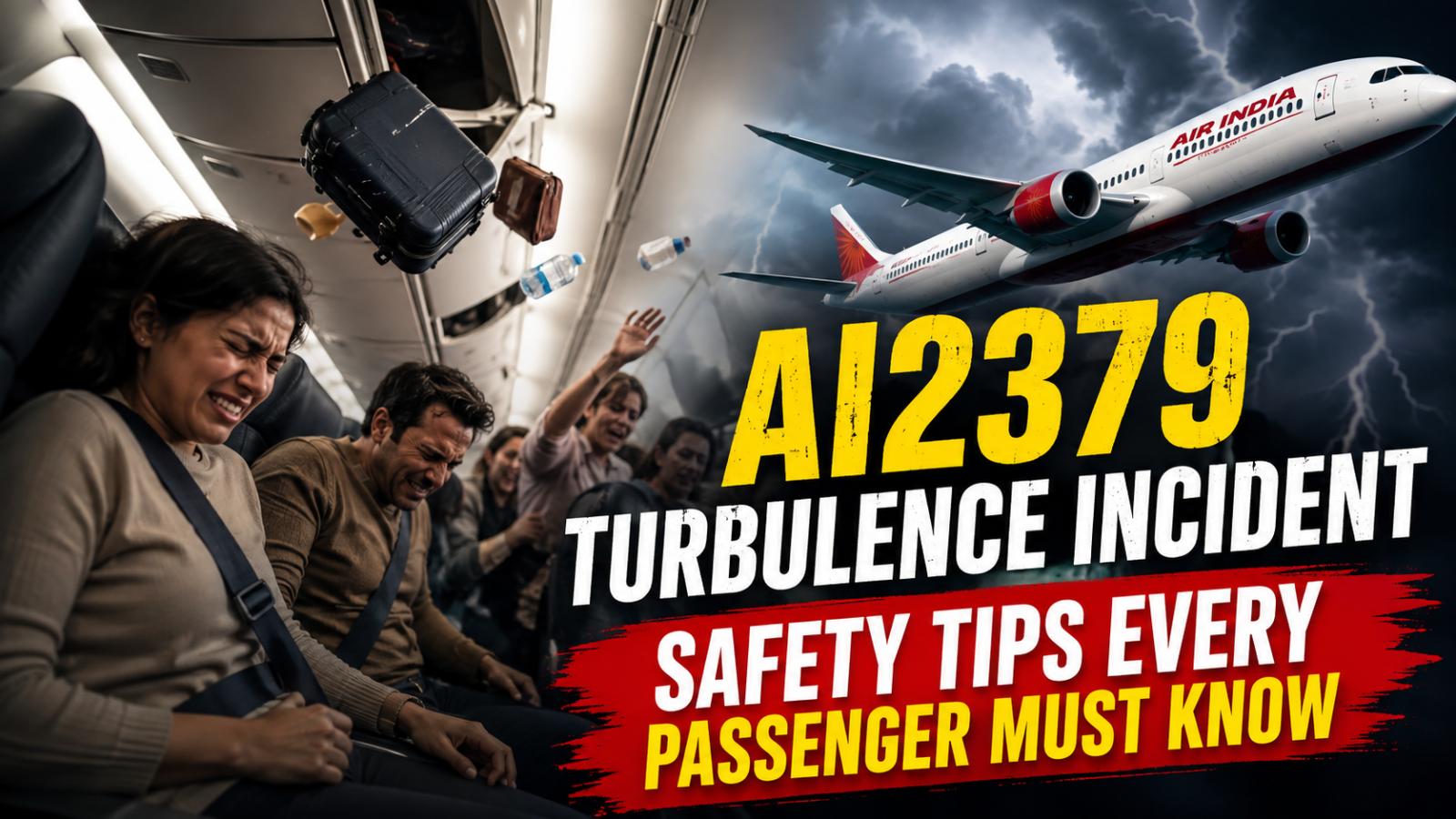
Air India AI2379 Turbulence: Essential Flight Safety Tips
ir India AI2379 turbulence safety has drawn attention after the Phuket-Delhi flight experienced a sudden altitude variation on August 4, 2026. The incident underlines why seatbelts, crew instructions, secured baggage, emergency exits and medical preparedness matter throughout a flight. Air India flight AI2379, travelling from Phuket to Delhi, encountered severe turbulence during its journey on Tuesday. Reports citing the airline said the a
Air India AI2379 Turbulence: Essential Flight Safety Tips
ir India AI2379 turbulence safety has drawn attention after the Phuket-Delhi flight experienced a sudden altitude variation on August 4, 2026. The incident underlines why seatbelts, crew instructions, secured baggage, emergency exits and medical preparedness matter throughout a flight. Air India flight AI2379, travelling from Phuket to Delhi, encountered severe turbulence during its journey on Tuesday. Reports citing the airline said the a
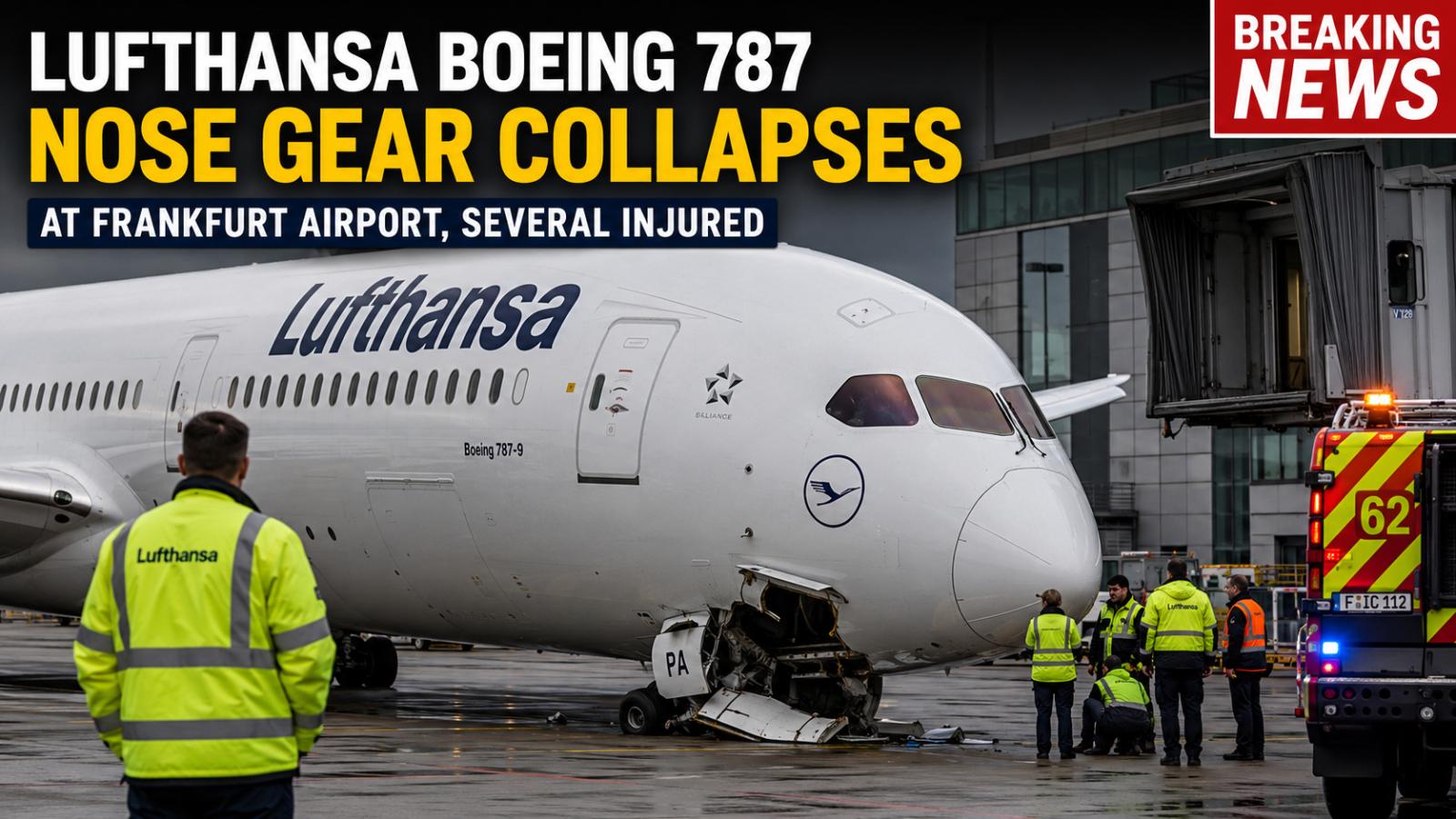
Lufthansa Boeing 787 Nose Gear Fails at Frankfurt Gate, Staff Injured
A Lufthansa Boeing 787 nose gear failure at Frankfurt Airport injured several staff members on Thursday, June 4, before passengers had boarded the aircraft. The Boeing 787-9 Dreamliner was parked at a gate and being prepared for departure when its front landing gear unexpectedly collapsed, causing the nose section of the aircraft to drop toward the ground. No passengers were on board at the time, according to reports citing the airline. Lufthansa
Lufthansa Boeing 787 Nose Gear Fails at Frankfurt Gate, Staff Injured
A Lufthansa Boeing 787 nose gear failure at Frankfurt Airport injured several staff members on Thursday, June 4, before passengers had boarded the aircraft. The Boeing 787-9 Dreamliner was parked at a gate and being prepared for departure when its front landing gear unexpectedly collapsed, causing the nose section of the aircraft to drop toward the ground. No passengers were on board at the time, according to reports citing the airline. Lufthansa
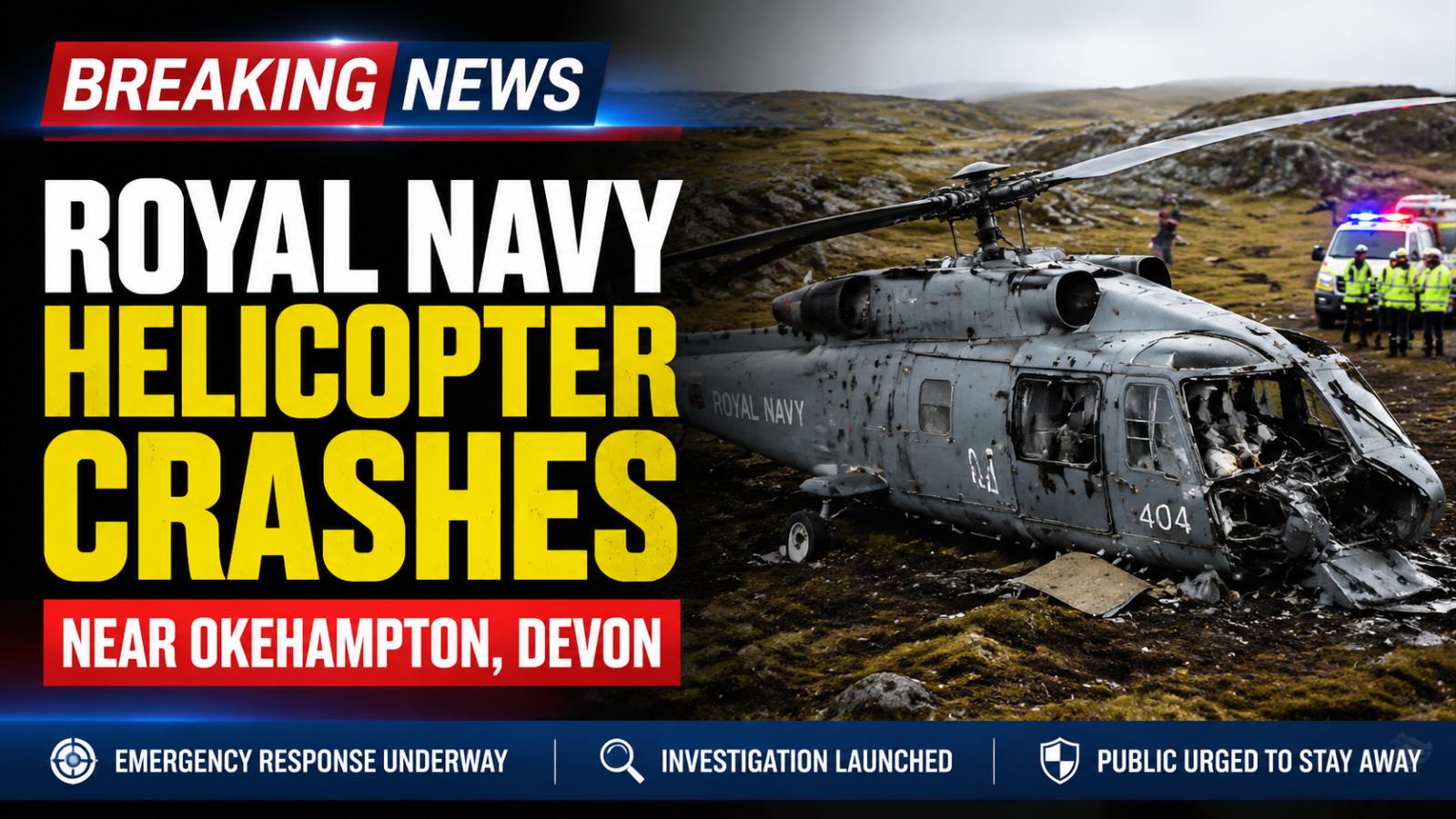
Royal Navy Helicopter Crashes Near Okehampton in Devon: Emergency Teams Respond
Early Wednesday morning, a Royal Navy helicopter crashed near Sourton Down, close to Okehampton in Devon. Authorities quickly dispatched emergency teams, including police and rescue units, to secure the area and assist personnel involved. The Ministry of Defence confirmed that an investigation is now underway to determine the cause of the incident. Immediate Emergency Response Local police and f
Royal Navy Helicopter Crashes Near Okehampton in Devon: Emergency Teams Respond
Early Wednesday morning, a Royal Navy helicopter crashed near Sourton Down, close to Okehampton in Devon. Authorities quickly dispatched emergency teams, including police and rescue units, to secure the area and assist personnel involved. The Ministry of Defence confirmed that an investigation is now underway to determine the cause of the incident. Immediate Emergency Response Local police and f

Merlin Labs Tests AI Flight System to Assist Pilots and Reduce Cockpit Workload
Artificial intelligence is slowly moving from phones, offices and cars into one of the most sensitive areas of modern transport: aviation. Merlin Labs, a US-based aviation technology company, has tested an AI flight system known as Merlin Pilot during an experimental aircraft demonstration. The system is not designed to remove pilots from aircraft. Instead, it is being developed to assist trained pilots by handling selected flight-related tasks after proper approval. This makes the test important because aviation is already dealing with growing pilot workload, pressure on air traffic control systems and a rising need for smarter safety tools. What happened during the Merlin Pilot test During the demonstration, a trained test pilot remained inside the aircraft and continued to supervise the flight. The AI system handled certain approved tasks, including responding to instructions and helping adjust the aircraft’s course. The aircraft used for the test was marked as experimental. This means it was used for research and testing, not for regular passenger service. That point matters because AI-assisted aviation is still in a careful development stage. Commercial passenger flights without pilots are not expected anytime soon. The test showed how AI could become a useful cockpit assistant, especially in situations where pilots need to process several instructions quickly and accurately. How Merlin Pilot helps pilots Merlin Pilot uses natural language flight control. In simple terms, it can listen to spoken instructions, understand the meaning and help the aircraft respond based on approved commands. This kind of system could reduce repetitive workload for pilots. For example, during busy flight operations, pilots must listen to air traffic control, confirm instructions, monitor instruments, adjust the aircraft and stay alert for unexpected situations. An AI pilot assistant could help manage routine actions while the human pilot focuses on judgment, safety and decision-making. This is where AI has real value. The strongest use case is not replacing humans, but reducing pressure on them. Why this matters for aviation The aviation industry is facing serious challenges. Pilot shortages, increasing air traffic and pressure on air traffic controllers are creating demand for better support systems. AI flight automation could help improve efficiency if it is introduced carefully and safely. A system like Merlin Pilot may help pilots handle communication, navigation-related tasks and routine cockpit actions. It may also help reduce errors caused by fatigue or workload overload. But aviation cannot afford blind trust in technology. Any AI system used in aircraft must be tested deeply, monitored closely and approved by regulators before it becomes part of normal flight operations. Can AI replace pilots? No, not in the near future. Passenger aviation still depends on trained pilots for safety, responsibility and emergency decision-making. AI can process information quickly, but it does not replace human experience, accountability and real-world judgment. Aviation safety depends on people who can respond to unexpected problems. Weather changes, technical failures, passenger emergencies and unusual flight conditions still require human decision-making. That is why AI systems like Merlin Pilot are currently better understood as pilot support tools, not pilot replacements. The most practical future is a cockpit where humans and AI work together. AI and air traffic control AI is also being discussed in air traffic control modernization. Busy airports and crowded airspace require faster communication and better coordination. Artificial intelligence could help organize information, detect possible conflicts and support controllers in managing traffic more efficiently. However, just like in the cockpit, AI should assist human controllers rather than replace them. Air traffic control involves real-time decisions, safety responsibility and human coordination. AI can help with speed and accuracy, but final responsibility must remain with trained professionals. What this means for passengers For passengers, AI-assisted aviation could eventually mean smoother flights, better route management and improved safety support. If AI can reduce pilot workload and help avoid communication errors, it may become a valuable part of future aircraft systems. But passengers should not assume pilotless commercial planes are coming soon. The safer and more realistic direction is AI-supported flying, where pilots remain in command and technology works in the background to assist them. The future of AI-assisted aviation The Merlin Pilot test shows where aviation technology may be heading. AI could become part of the cockpit, helping pilots manage routine tasks, understand commands and respond faster during busy operations. Still, the future of AI in aviation will depend on trust, testing, regulation and safety performance. Aircraft systems must prove they can work reliably in real-world conditions before they are used widely. For now, Merlin Pilot represents an important step toward AI-assisted aviation. It shows that artificial intelligence may help reduce pilot workload and support safer flight operations, but the human pilot remains the most important decision-maker in the cockpit.
Merlin Labs Tests AI Flight System to Assist Pilots and Reduce Cockpit Workload
Artificial intelligence is slowly moving from phones, offices and cars into one of the most sensitive areas of modern transport: aviation. Merlin Labs, a US-based aviation technology company, has tested an AI flight system known as Merlin Pilot during an experimental aircraft demonstration. The system is not designed to remove pilots from aircraft. Instead, it is being developed to assist trained pilots by handling selected flight-related tasks after proper approval. This makes the test important because aviation is already dealing with growing pilot workload, pressure on air traffic control systems and a rising need for smarter safety tools. What happened during the Merlin Pilot test During the demonstration, a trained test pilot remained inside the aircraft and continued to supervise the flight. The AI system handled certain approved tasks, including responding to instructions and helping adjust the aircraft’s course. The aircraft used for the test was marked as experimental. This means it was used for research and testing, not for regular passenger service. That point matters because AI-assisted aviation is still in a careful development stage. Commercial passenger flights without pilots are not expected anytime soon. The test showed how AI could become a useful cockpit assistant, especially in situations where pilots need to process several instructions quickly and accurately. How Merlin Pilot helps pilots Merlin Pilot uses natural language flight control. In simple terms, it can listen to spoken instructions, understand the meaning and help the aircraft respond based on approved commands. This kind of system could reduce repetitive workload for pilots. For example, during busy flight operations, pilots must listen to air traffic control, confirm instructions, monitor instruments, adjust the aircraft and stay alert for unexpected situations. An AI pilot assistant could help manage routine actions while the human pilot focuses on judgment, safety and decision-making. This is where AI has real value. The strongest use case is not replacing humans, but reducing pressure on them. Why this matters for aviation The aviation industry is facing serious challenges. Pilot shortages, increasing air traffic and pressure on air traffic controllers are creating demand for better support systems. AI flight automation could help improve efficiency if it is introduced carefully and safely. A system like Merlin Pilot may help pilots handle communication, navigation-related tasks and routine cockpit actions. It may also help reduce errors caused by fatigue or workload overload. But aviation cannot afford blind trust in technology. Any AI system used in aircraft must be tested deeply, monitored closely and approved by regulators before it becomes part of normal flight operations. Can AI replace pilots? No, not in the near future. Passenger aviation still depends on trained pilots for safety, responsibility and emergency decision-making. AI can process information quickly, but it does not replace human experience, accountability and real-world judgment. Aviation safety depends on people who can respond to unexpected problems. Weather changes, technical failures, passenger emergencies and unusual flight conditions still require human decision-making. That is why AI systems like Merlin Pilot are currently better understood as pilot support tools, not pilot replacements. The most practical future is a cockpit where humans and AI work together. AI and air traffic control AI is also being discussed in air traffic control modernization. Busy airports and crowded airspace require faster communication and better coordination. Artificial intelligence could help organize information, detect possible conflicts and support controllers in managing traffic more efficiently. However, just like in the cockpit, AI should assist human controllers rather than replace them. Air traffic control involves real-time decisions, safety responsibility and human coordination. AI can help with speed and accuracy, but final responsibility must remain with trained professionals. What this means for passengers For passengers, AI-assisted aviation could eventually mean smoother flights, better route management and improved safety support. If AI can reduce pilot workload and help avoid communication errors, it may become a valuable part of future aircraft systems. But passengers should not assume pilotless commercial planes are coming soon. The safer and more realistic direction is AI-supported flying, where pilots remain in command and technology works in the background to assist them. The future of AI-assisted aviation The Merlin Pilot test shows where aviation technology may be heading. AI could become part of the cockpit, helping pilots manage routine tasks, understand commands and respond faster during busy operations. Still, the future of AI in aviation will depend on trust, testing, regulation and safety performance. Aircraft systems must prove they can work reliably in real-world conditions before they are used widely. For now, Merlin Pilot represents an important step toward AI-assisted aviation. It shows that artificial intelligence may help reduce pilot workload and support safer flight operations, but the human pilot remains the most important decision-maker in the cockpit.
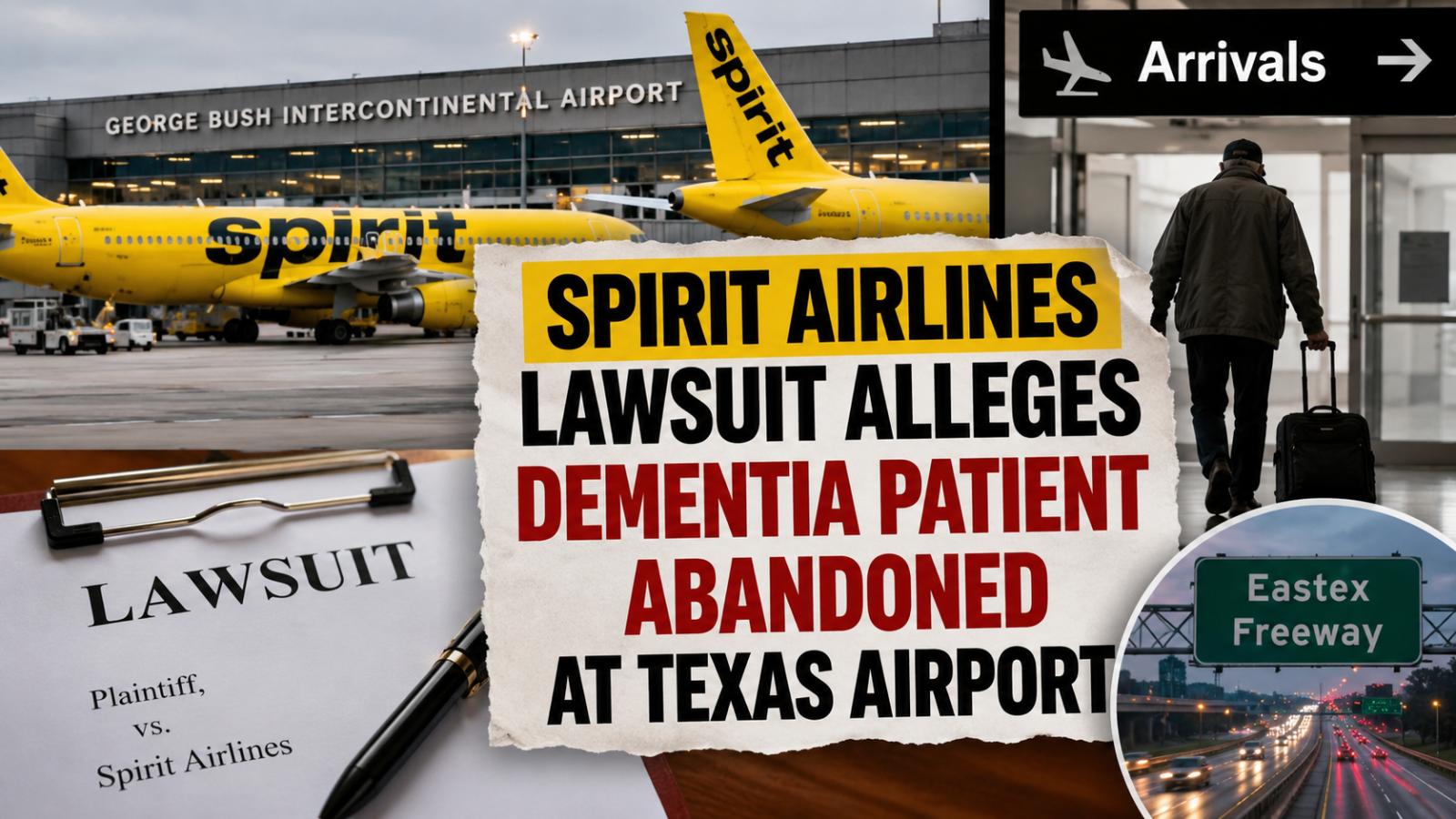
Spirit Airlines Lawsuit: Family Says Dementia Passenger Was Left Alone Before Fatal Houston Freeway Death
Spirit Airlines Lawsuit Filed After Dementia Passenger’s Death A Spirit Airlines lawsuit claims a 75-year-old passenger with dementia was left without required assistance at Houston’s George Bush Intercontinental Airport before he died near the Eastex Freeway. The family of Marcos Humberto Vindel Osorio alleges the airline failed to protect a vulnerable passenger who was traveling with a known cognitive condition. Family Says Airline Was Warned Before Flight According to the complaint, Osorio flew from Palmerola International Airport to Houston on June 8, 2024. His relatives say they told Spirit Airlines at check-in that he had dementia and needed help after landing. The lawsuit says the family was assured assistance would be provided. Instead, Osorio allegedly cleared Customs and Border Protection at 7:43 PM but never reached the arrivals area where relatives were waiting. Houston Airport Incident Led to Fatal Freeway Search After Osorio disappeared, family members contacted authorities. He was later found dead on the Eastex Freeway, where investigators said he had been struck by multiple vehicles. The complaint argues he was “unaccompanied and disoriented” and likely walked for hours from the airport before reaching the highway. Airline Negligence Case Raises Disability Concerns The lawsuit cites airline disability rules, including passenger assistance duties under the Air Carrier Access Act. Family attorney Russ Brudner called the incident “every family’s nightmare.” Spirit Airlines has not publicly responded to the allegations. The case now raises wider questions about elderly passenger assistance, dementia travel risks, and whether airlines are doing enough to protect vulnerable travelers.
Spirit Airlines Lawsuit: Family Says Dementia Passenger Was Left Alone Before Fatal Houston Freeway Death
Spirit Airlines Lawsuit Filed After Dementia Passenger’s Death A Spirit Airlines lawsuit claims a 75-year-old passenger with dementia was left without required assistance at Houston’s George Bush Intercontinental Airport before he died near the Eastex Freeway. The family of Marcos Humberto Vindel Osorio alleges the airline failed to protect a vulnerable passenger who was traveling with a known cognitive condition. Family Says Airline Was Warned Before Flight According to the complaint, Osorio flew from Palmerola International Airport to Houston on June 8, 2024. His relatives say they told Spirit Airlines at check-in that he had dementia and needed help after landing. The lawsuit says the family was assured assistance would be provided. Instead, Osorio allegedly cleared Customs and Border Protection at 7:43 PM but never reached the arrivals area where relatives were waiting. Houston Airport Incident Led to Fatal Freeway Search After Osorio disappeared, family members contacted authorities. He was later found dead on the Eastex Freeway, where investigators said he had been struck by multiple vehicles. The complaint argues he was “unaccompanied and disoriented” and likely walked for hours from the airport before reaching the highway. Airline Negligence Case Raises Disability Concerns The lawsuit cites airline disability rules, including passenger assistance duties under the Air Carrier Access Act. Family attorney Russ Brudner called the incident “every family’s nightmare.” Spirit Airlines has not publicly responded to the allegations. The case now raises wider questions about elderly passenger assistance, dementia travel risks, and whether airlines are doing enough to protect vulnerable travelers.
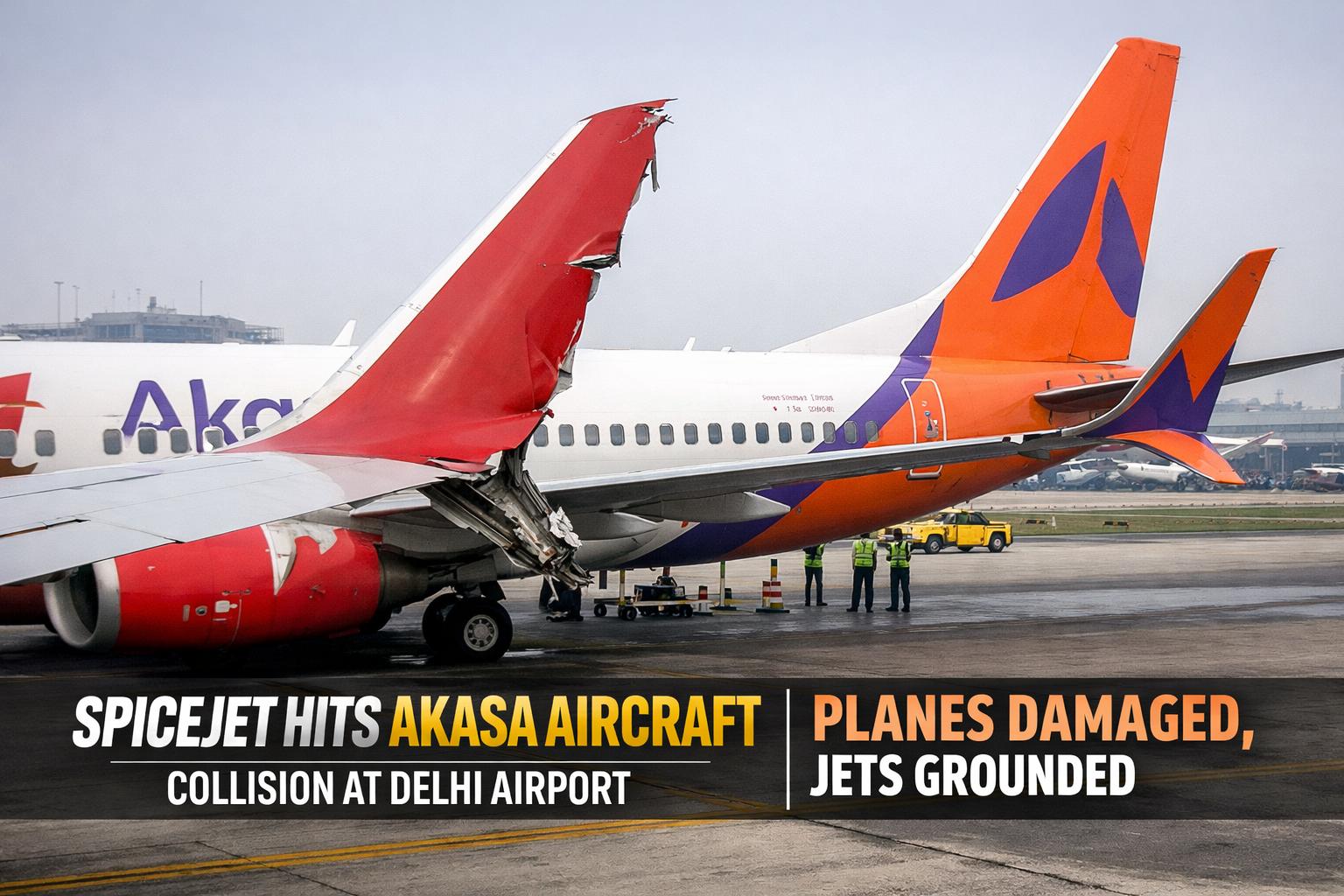
SpiceJet Plane Hits Akasa Aircraft at Delhi Airport, Both Jets Damaged During Taxiing
A serious ground incident at Indira Gandhi International Airport has raised fresh concerns over aviation safety after a SpiceJet aircraft collided with a stationary Akasa Air plane while taxiing on Thursday. The
SpiceJet Plane Hits Akasa Aircraft at Delhi Airport, Both Jets Damaged During Taxiing
A serious ground incident at Indira Gandhi International Airport has raised fresh concerns over aviation safety after a SpiceJet aircraft collided with a stationary Akasa Air plane while taxiing on Thursday. The
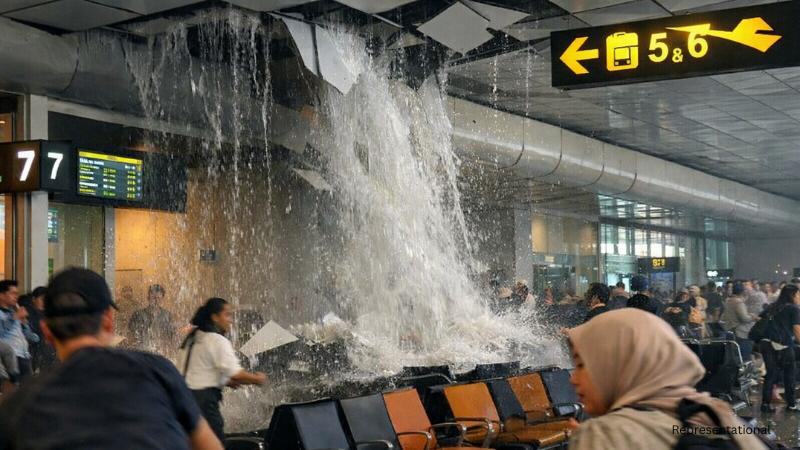
Ceiling failure at Jakarta airport triggers panic amid heavy rainfall
A section of the ceiling collapsed at Soekarno-Hatta International Airport in Jakarta, Indonesia, at approximately 1:40 PM local time (WIB) on Monday, April 6, 2026, sending debris and a surge of water into a crowded departure lounge at Terminal 3. The incident occurred near Gate 7 during a busy boarding period, when multiple flights were preparing for departure. Passengers in the area reported that water initially began leaking from above before rapidly intensifying, eventually cau
Ceiling failure at Jakarta airport triggers panic amid heavy rainfall
A section of the ceiling collapsed at Soekarno-Hatta International Airport in Jakarta, Indonesia, at approximately 1:40 PM local time (WIB) on Monday, April 6, 2026, sending debris and a surge of water into a crowded departure lounge at Terminal 3. The incident occurred near Gate 7 during a busy boarding period, when multiple flights were preparing for departure. Passengers in the area reported that water initially began leaking from above before rapidly intensifying, eventually cau
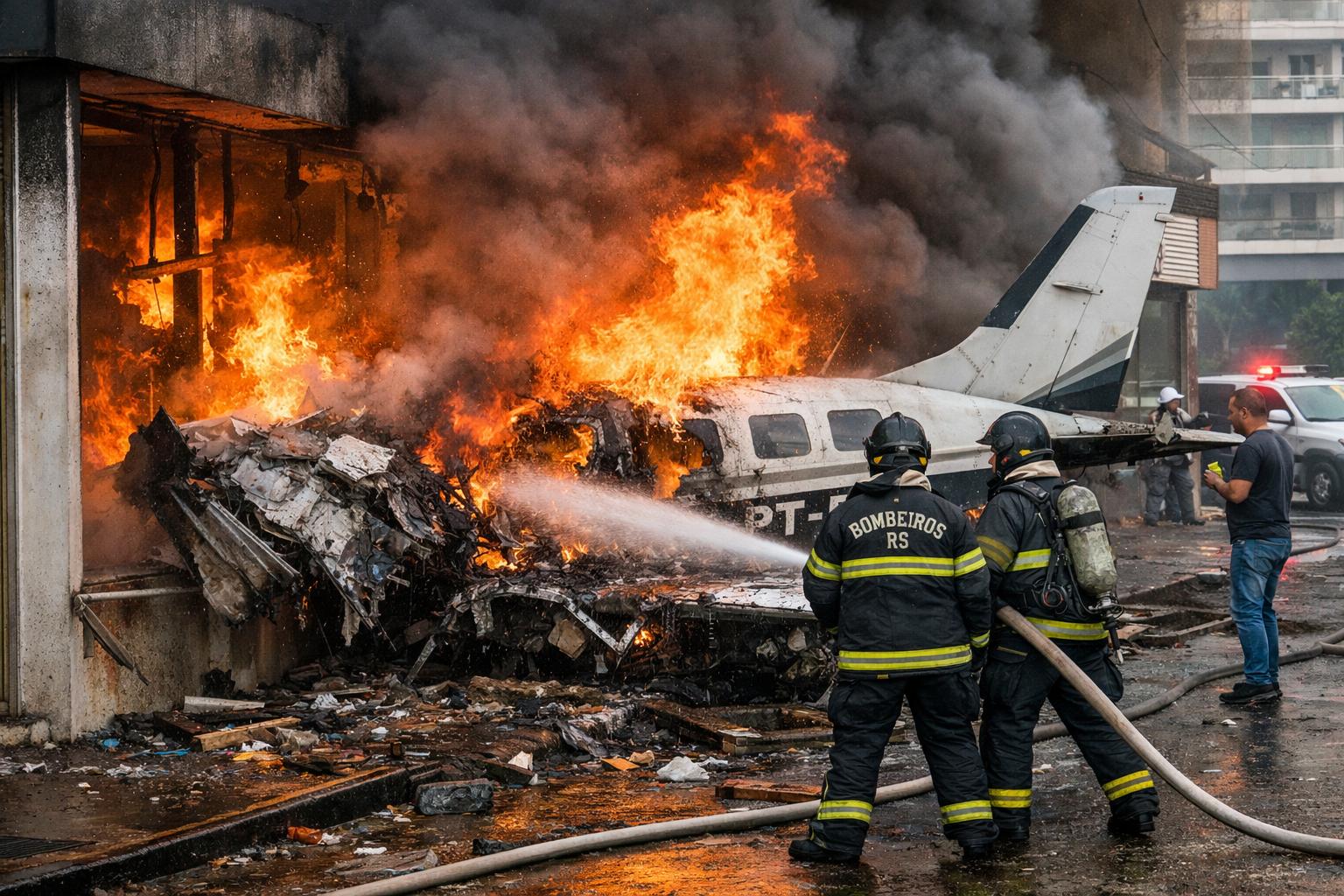
Four dead after aircraft crashes into restaurant in southern Brazil
A small aircraft crashed into a restaurant in southern Brazil on Friday, April 3, 2026, resulting in the deaths of all four people on board, according to local authorities. The incident occurred in the coastal city of Capão da Canoa, located in the state of Rio Grande do Sul, shortly after the plane took off. Officials reported that the aircraft, identified as a Piper Malibu, experienced a loss of altitude moments after departure. The plane subsequently struck a building that house
Four dead after aircraft crashes into restaurant in southern Brazil
A small aircraft crashed into a restaurant in southern Brazil on Friday, April 3, 2026, resulting in the deaths of all four people on board, according to local authorities. The incident occurred in the coastal city of Capão da Canoa, located in the state of Rio Grande do Sul, shortly after the plane took off. Officials reported that the aircraft, identified as a Piper Malibu, experienced a loss of altitude moments after departure. The plane subsequently struck a building that house
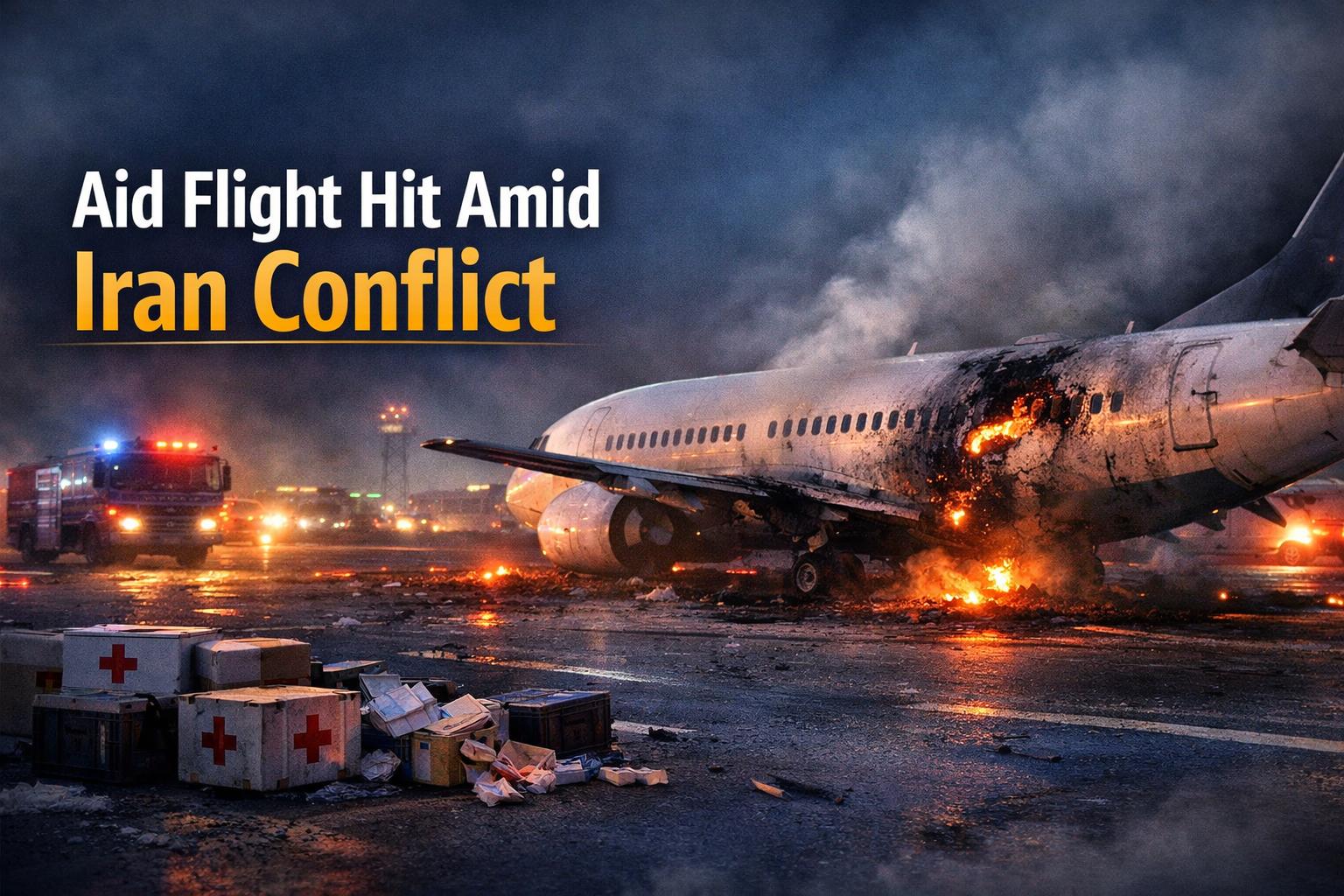
US strike at Mashhad airport damages India‑bound aircraft amid Iran conflict
An aircraft bound for India was reportedly damaged in a strike at Mashhad International Airport in Iran on Monday, March 30, 2026, disrupting a planned humanitarian aid mission and drawing sharp condemnation from Iranian authorities. Iranian officials described the incident as a “war crime” and a violation of international law as regional tensions continue to escalate. The civilian aircraft was stationed on the ground at Mashhad International Airport when it was struck during a re
US strike at Mashhad airport damages India‑bound aircraft amid Iran conflict
An aircraft bound for India was reportedly damaged in a strike at Mashhad International Airport in Iran on Monday, March 30, 2026, disrupting a planned humanitarian aid mission and drawing sharp condemnation from Iranian authorities. Iranian officials described the incident as a “war crime” and a violation of international law as regional tensions continue to escalate. The civilian aircraft was stationed on the ground at Mashhad International Airport when it was struck during a re
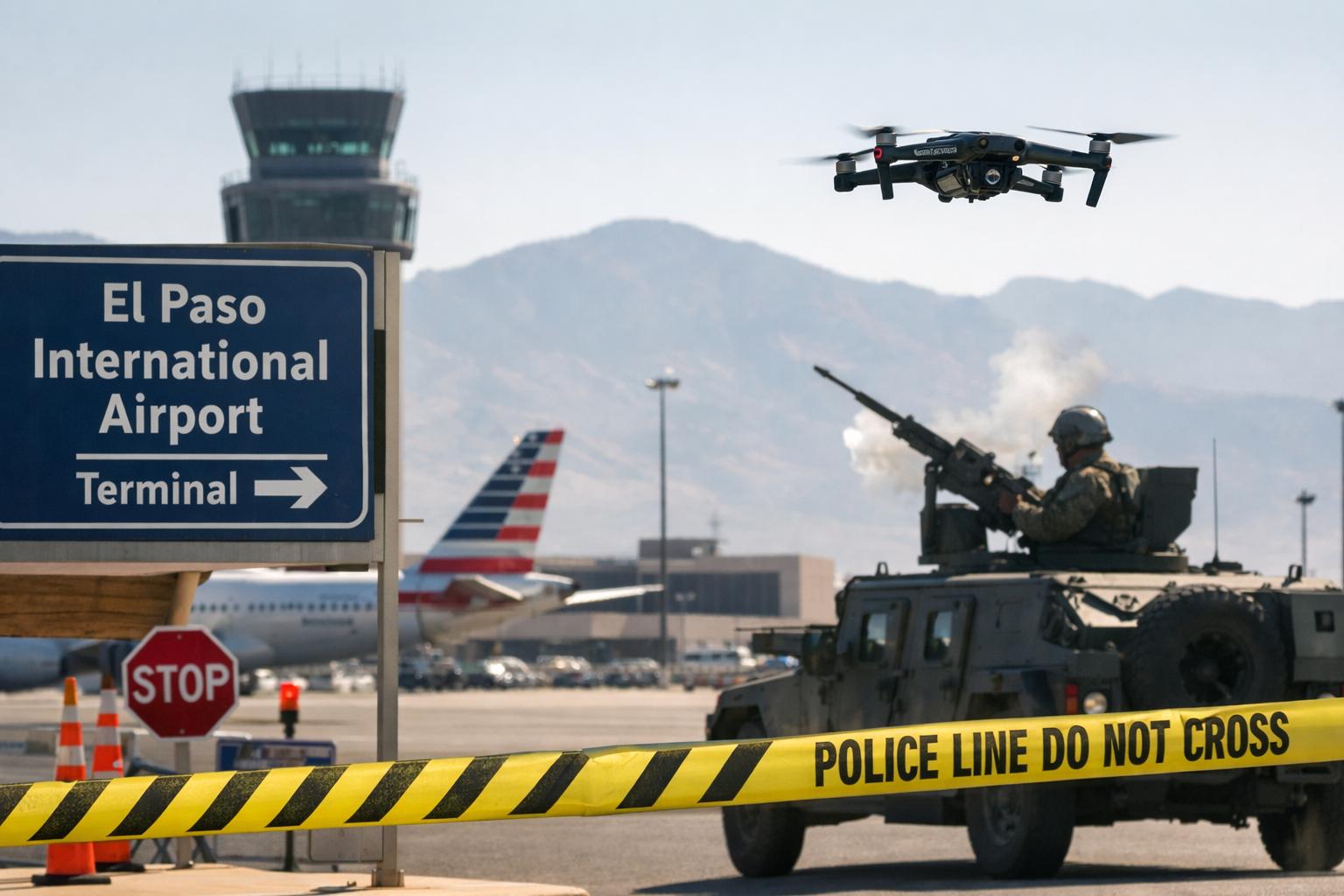
Flights Resume in Texas After Defense Neutralizes Cross-Border Drones
Flight operations at El Paso International Airport were briefly suspended on Wednesday after several drones believed to be linked to a Mexican drug cartel entered United States airspace near the Texas border, prompting swift action from federal authorities and defense officials. According to a senior administration official familiar with the matter, the unmanned aircraft crossed into restricted airspace during the early hours of the morning. Security forces quickly intervened and to
Flights Resume in Texas After Defense Neutralizes Cross-Border Drones
Flight operations at El Paso International Airport were briefly suspended on Wednesday after several drones believed to be linked to a Mexican drug cartel entered United States airspace near the Texas border, prompting swift action from federal authorities and defense officials. According to a senior administration official familiar with the matter, the unmanned aircraft crossed into restricted airspace during the early hours of the morning. Security forces quickly intervened and to
O'Hare Airport faces widespread delays after burst pipe disrupts air traffic control
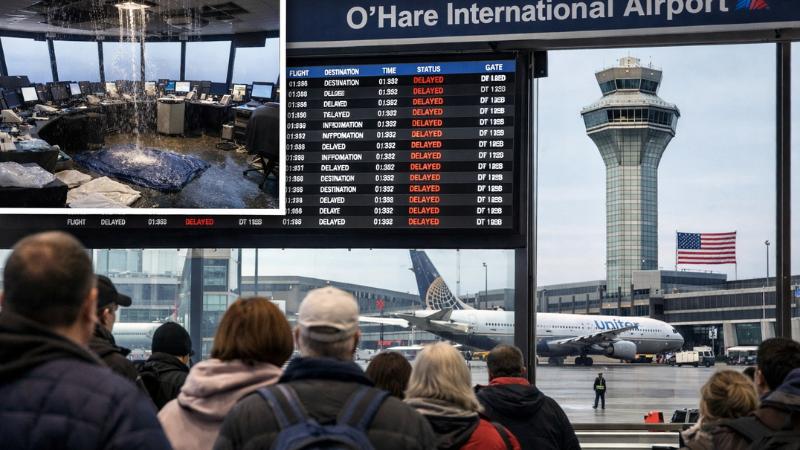
Operations at Chicago’s O’Hare International Airport were significantly disrupted Tuesday after a burst water pipe forced the evacuation of the airport’s primary air traffic control tower, triggering a prolonged ground delay program and affecting hundreds of flights throughout the day. Federal aviation officials confirmed the incident occurred during the early morning hours and continued to impact air traffic well into the evening. The situation began at approximately 1:10 a.m. when a water pipe failed inside the main air traffic control tower. The incident prompted the immediate evacuation of air traffic controllers working in the facility as a safety precaution. Controllers were temporarily relocated to the airport’s south control tower, where they resumed operations under adjusted procedures to maintain essential flight management functions. Shortly after the evacuation, the Federal Aviation Administration implemented a ground delay program for O’Hare. The measure was designed to manage air traffic flow while staffing and operational capacity were reduced. As of mid-morning, the FAA indicated that the ground delay program remained in effect and was expected to continue for much of the day, with projected delays extending into the evening hours. Flight tracking data showed widespread disruption across the airport, one of the busiest aviation hubs in the United States. More than 400 flights were reported delayed by Tuesday morning, with many experiencing wait times exceeding 45 minutes. The delays affected both arriving and departing flights, creating a ripple effect across domestic and international travel schedules. FAA officials confirmed that the main air traffic control tower remained closed as crews assessed the extent of the damage caused by the water intrusion. The full impact on equipment and infrastructure had not yet been determined, and officials said it was too early to estimate when normal operations would be fully restored. An investigation was launched to determine the cause of the pipe failure and to evaluate any structural or maintenance issues that may have contributed to the incident. Airport authorities worked alongside federal officials to manage passenger flow and minimize congestion within terminals. Travelers were advised to check directly with airlines for updated flight information and to allow extra time when traveling to or from the airport. Airlines adjusted schedules and staffing as they worked to accommodate delayed passengers and reposition aircraft. Despite the disruption, officials emphasized that safety remained the top priority and that the relocation of controllers allowed critical air traffic services to continue. The incident underscored the complexity of airport operations and the cascading impact that infrastructure issues can have on air travel, particularly at major hubs such as O’Hare. As repair efforts and inspections continued, officials said updates would be provided as more information became available. The FAA noted that restoring full capacity would depend on the outcome of the damage assessment and the completion of necessary repairs, while reiterating its commitment to maintaining safe and efficient air travel operations.
O'Hare Airport faces widespread delays after burst pipe disrupts air traffic control
Operations at Chicago’s O’Hare International Airport were significantly disrupted Tuesday after a burst water pipe forced the evacuation of the airport’s primary air traffic control tower, triggering a prolonged ground delay program and affecting hundreds of flights throughout the day. Federal aviation officials confirmed the incident occurred during the early morning hours and continued to impact air traffic well into the evening. The situation began at approximately 1:10 a.m. when a water pipe failed inside the main air traffic control tower. The incident prompted the immediate evacuation of air traffic controllers working in the facility as a safety precaution. Controllers were temporarily relocated to the airport’s south control tower, where they resumed operations under adjusted procedures to maintain essential flight management functions. Shortly after the evacuation, the Federal Aviation Administration implemented a ground delay program for O’Hare. The measure was designed to manage air traffic flow while staffing and operational capacity were reduced. As of mid-morning, the FAA indicated that the ground delay program remained in effect and was expected to continue for much of the day, with projected delays extending into the evening hours. Flight tracking data showed widespread disruption across the airport, one of the busiest aviation hubs in the United States. More than 400 flights were reported delayed by Tuesday morning, with many experiencing wait times exceeding 45 minutes. The delays affected both arriving and departing flights, creating a ripple effect across domestic and international travel schedules. FAA officials confirmed that the main air traffic control tower remained closed as crews assessed the extent of the damage caused by the water intrusion. The full impact on equipment and infrastructure had not yet been determined, and officials said it was too early to estimate when normal operations would be fully restored. An investigation was launched to determine the cause of the pipe failure and to evaluate any structural or maintenance issues that may have contributed to the incident. Airport authorities worked alongside federal officials to manage passenger flow and minimize congestion within terminals. Travelers were advised to check directly with airlines for updated flight information and to allow extra time when traveling to or from the airport. Airlines adjusted schedules and staffing as they worked to accommodate delayed passengers and reposition aircraft. Despite the disruption, officials emphasized that safety remained the top priority and that the relocation of controllers allowed critical air traffic services to continue. The incident underscored the complexity of airport operations and the cascading impact that infrastructure issues can have on air travel, particularly at major hubs such as O’Hare. As repair efforts and inspections continued, officials said updates would be provided as more information became available. The FAA noted that restoring full capacity would depend on the outcome of the damage assessment and the completion of necessary repairs, while reiterating its commitment to maintaining safe and efficient air travel operations.
DGCA fines IndiGo Rs 22.2 crore after mass flight disruptions in December
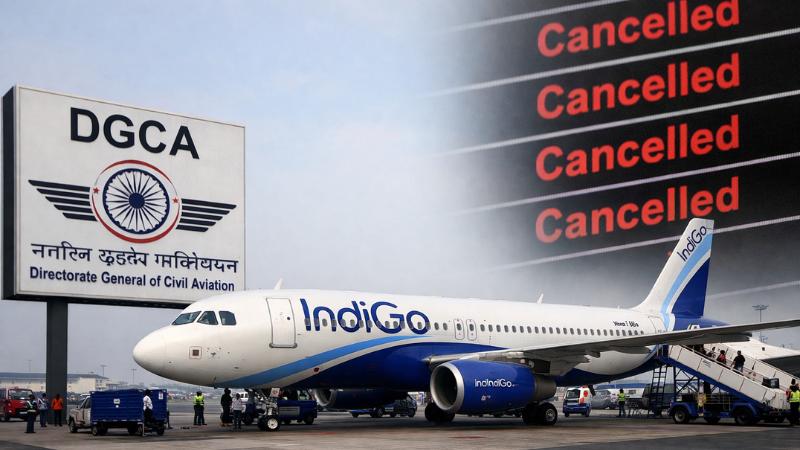
India’s aviation regulator has imposed a financial penalty of Rs 22.20 crore on IndiGo following a series of large-scale flight disruptions in early December 2025 that left more than three lakh passengers stranded across multiple airports. The action was taken after a detailed inquiry concluded that operational shortcomings within the airline significantly contributed to widespread cancellations and delays, triggering prolonged disruption across its network. According to the findi
DGCA fines IndiGo Rs 22.2 crore after mass flight disruptions in December
India’s aviation regulator has imposed a financial penalty of Rs 22.20 crore on IndiGo following a series of large-scale flight disruptions in early December 2025 that left more than three lakh passengers stranded across multiple airports. The action was taken after a detailed inquiry concluded that operational shortcomings within the airline significantly contributed to widespread cancellations and delays, triggering prolonged disruption across its network. According to the findi

US warns of restricted airspace as tensions with Venezuela escalate
Amid heightened tensions in Latin America, the United States has issued a strong warning advising pilots, airlines, and operators to treat the airspace over and around Venezuela as closed. The statement was delivered by US President Donald Trump, who posted the alert during a period of intensified American counterdrug operations targeting trafficking networks operating near Venezuelan borders. His message underscored what officials describe as an increasingly unstable security climate, citing
US warns of restricted airspace as tensions with Venezuela escalate
Amid heightened tensions in Latin America, the United States has issued a strong warning advising pilots, airlines, and operators to treat the airspace over and around Venezuela as closed. The statement was delivered by US President Donald Trump, who posted the alert during a period of intensified American counterdrug operations targeting trafficking networks operating near Venezuelan borders. His message underscored what officials describe as an increasingly unstable security climate, citing
Airbus software glitch grounds A320 jets worldwide, disrupting peak travel
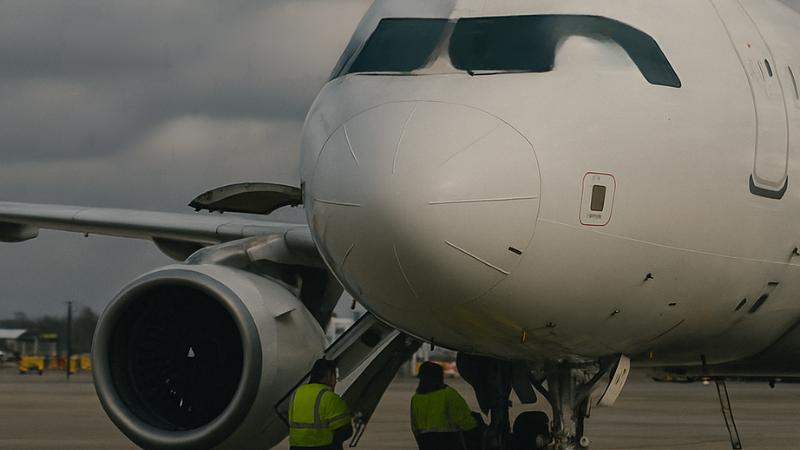
Thousands of passengers across multiple continents faced significant travel disruptions after Airbus ordered an immediate software update for approximately 6,000 A320-series aircraft. The unexpected directive, one of the largest issued in the manufacturer’s history, resulted in widespread grounding of narrow-body jets during a peak travel period and triggered delays and cancellations across Asia, Europe, the United States, and Australia. Airlines were instructed to complete the corrective a
Airbus software glitch grounds A320 jets worldwide, disrupting peak travel
Thousands of passengers across multiple continents faced significant travel disruptions after Airbus ordered an immediate software update for approximately 6,000 A320-series aircraft. The unexpected directive, one of the largest issued in the manufacturer’s history, resulted in widespread grounding of narrow-body jets during a peak travel period and triggered delays and cancellations across Asia, Europe, the United States, and Australia. Airlines were instructed to complete the corrective a

Ethiopian volcanic plume moves across Delhi-NCR; flyers warned of disruptions
A sulphur dioxide–laden ash plume originating from Ethiopia’s Hayli Gubbi volcano has drifted across parts of north India, raising concerns about potential effects on regional air quality and aviation movement. According to meteorological observers tracking the plume from the Afar Rift region, the cloud has moved over Delhi-NCR, Haryana and portions of Uttar Pradesh, carried eastward by upper-level wind patterns. While the ash concentration remains low at the surface, satellite readings i
Ethiopian volcanic plume moves across Delhi-NCR; flyers warned of disruptions
A sulphur dioxide–laden ash plume originating from Ethiopia’s Hayli Gubbi volcano has drifted across parts of north India, raising concerns about potential effects on regional air quality and aviation movement. According to meteorological observers tracking the plume from the Afar Rift region, the cloud has moved over Delhi-NCR, Haryana and portions of Uttar Pradesh, carried eastward by upper-level wind patterns. While the ash concentration remains low at the surface, satellite readings i
Flight suspensions grow as US alert highlights military risks near Venezuela
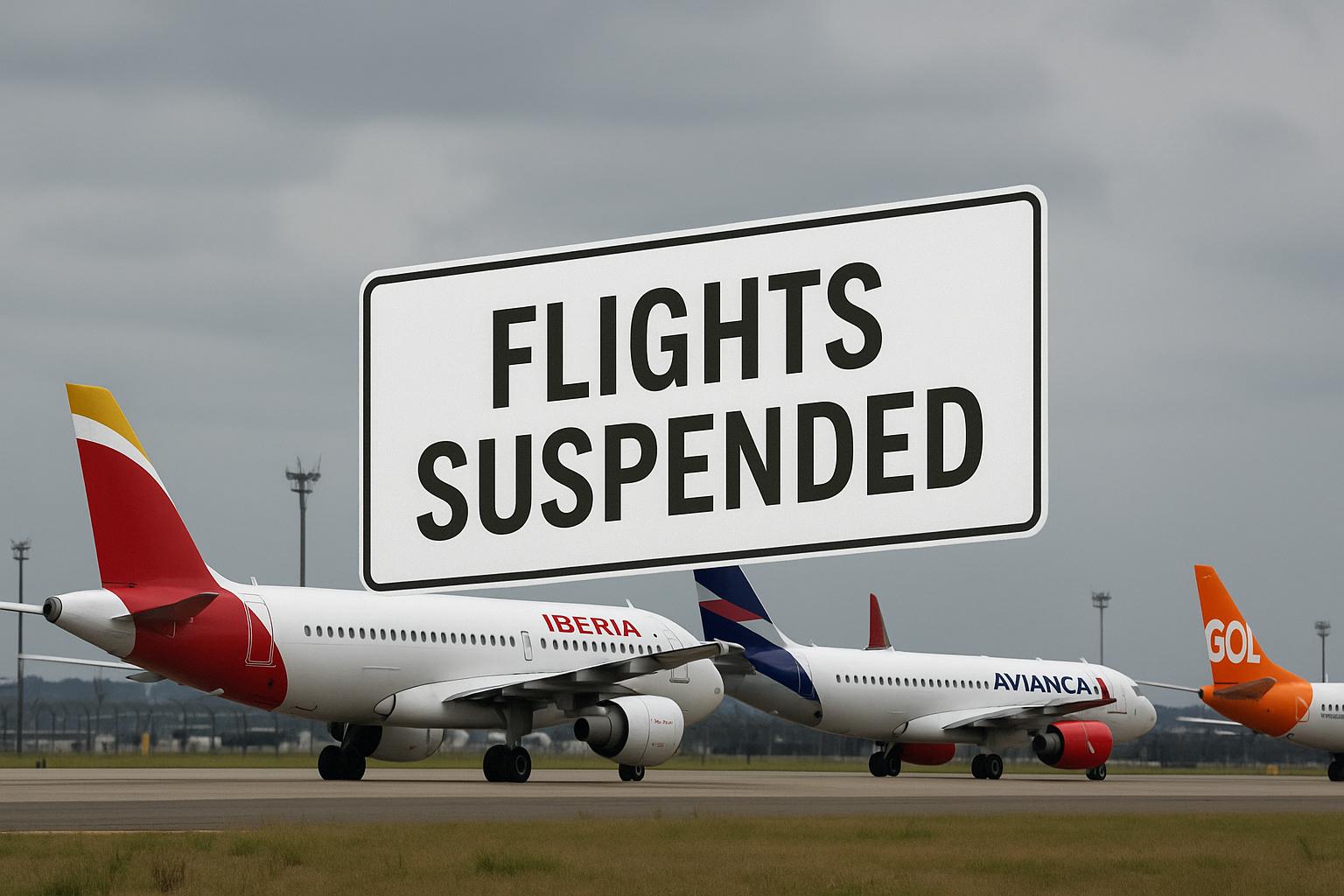
Several international airlines suspended their commercial operations to Venezuela on Saturday after a safety alert from United States aviation authorities warned of increased security risks in the region. The developments came amid a significant buildup of US military assets near the country and rising tensions that have raised concerns about the safety of civilian aircraft. Marisela de Loaiza, president of the Venezuelan Airlines Association, confirmed that Iberia, TAP, LATAM, Avianca, and Brazil’s GOL temporarily halted their flights to Venezuela. She did not indicate when these services might resume, noting only that the carriers had taken the decision in response to growing caution over regional security conditions. A few airlines, including Panama’s Copa Airlines, Air Europa, PlusUltra, and Venezuela’s LASER, continued operating scheduled flights, though industry observers say they are closely monitoring any changes in regulatory guidance. Turkish Airlines also announced that it would cancel flights between November 24 and 28. The suspensions followed a detailed advisory issued on Friday by the US Federal Aviation Administration. The agency urged all civilian aircraft in Venezuelan airspace to exercise heightened caution, citing what it described as a worsening security situation and increased military activity around the country. The FAA noted that potential threats could affect aircraft at any altitude and during any phase of flight, including overflights, arrivals, departures, and even when aircraft are parked on the ground. The alert came at a time when US military forces have expanded their presence in the broader region. Washington has deployed an aircraft carrier strike group, several naval vessels, and stealth aircraft as part of operations it says are aimed at countering drug trafficking networks. Officials in Caracas, however, have expressed alarm, fearing that the mobilization may be intended to exert political pressure or signal preparations for more direct action. Tensions escalated further ahead of a US terrorism designation taking effect against an alleged drug cartel that authorities say is linked to Venezuelan leader Nicolas Maduro. The designation has fueled speculation that new punitive measures could follow and may be connected to the military deployments nearby. Since early September, US forces have conducted multiple strikes against what they described as drug-smuggling vessels in the Caribbean Sea and the eastern Pacific Ocean, resulting in more than 80 deaths. Despite the scale of the operation, the United States has not publicly presented detailed evidence confirming that the targeted vessels were actively involved in drug trafficking or posed a direct threat. The lack of transparency has unsettled several governments in the region and contributed to concerns about escalating military tensions. The combination of aviation warnings, expanding military activity, and the diplomatic strain surrounding Venezuela has created uncertainty for airlines and travelers. Industry officials say flight operations will continue to be reassessed as conditions evolve and as regulatory authorities issue further guidance.
Flight suspensions grow as US alert highlights military risks near Venezuela
Several international airlines suspended their commercial operations to Venezuela on Saturday after a safety alert from United States aviation authorities warned of increased security risks in the region. The developments came amid a significant buildup of US military assets near the country and rising tensions that have raised concerns about the safety of civilian aircraft. Marisela de Loaiza, president of the Venezuelan Airlines Association, confirmed that Iberia, TAP, LATAM, Avianca, and Brazil’s GOL temporarily halted their flights to Venezuela. She did not indicate when these services might resume, noting only that the carriers had taken the decision in response to growing caution over regional security conditions. A few airlines, including Panama’s Copa Airlines, Air Europa, PlusUltra, and Venezuela’s LASER, continued operating scheduled flights, though industry observers say they are closely monitoring any changes in regulatory guidance. Turkish Airlines also announced that it would cancel flights between November 24 and 28. The suspensions followed a detailed advisory issued on Friday by the US Federal Aviation Administration. The agency urged all civilian aircraft in Venezuelan airspace to exercise heightened caution, citing what it described as a worsening security situation and increased military activity around the country. The FAA noted that potential threats could affect aircraft at any altitude and during any phase of flight, including overflights, arrivals, departures, and even when aircraft are parked on the ground. The alert came at a time when US military forces have expanded their presence in the broader region. Washington has deployed an aircraft carrier strike group, several naval vessels, and stealth aircraft as part of operations it says are aimed at countering drug trafficking networks. Officials in Caracas, however, have expressed alarm, fearing that the mobilization may be intended to exert political pressure or signal preparations for more direct action. Tensions escalated further ahead of a US terrorism designation taking effect against an alleged drug cartel that authorities say is linked to Venezuelan leader Nicolas Maduro. The designation has fueled speculation that new punitive measures could follow and may be connected to the military deployments nearby. Since early September, US forces have conducted multiple strikes against what they described as drug-smuggling vessels in the Caribbean Sea and the eastern Pacific Ocean, resulting in more than 80 deaths. Despite the scale of the operation, the United States has not publicly presented detailed evidence confirming that the targeted vessels were actively involved in drug trafficking or posed a direct threat. The lack of transparency has unsettled several governments in the region and contributed to concerns about escalating military tensions. The combination of aviation warnings, expanding military activity, and the diplomatic strain surrounding Venezuela has created uncertainty for airlines and travelers. Industry officials say flight operations will continue to be reassessed as conditions evolve and as regulatory authorities issue further guidance.










