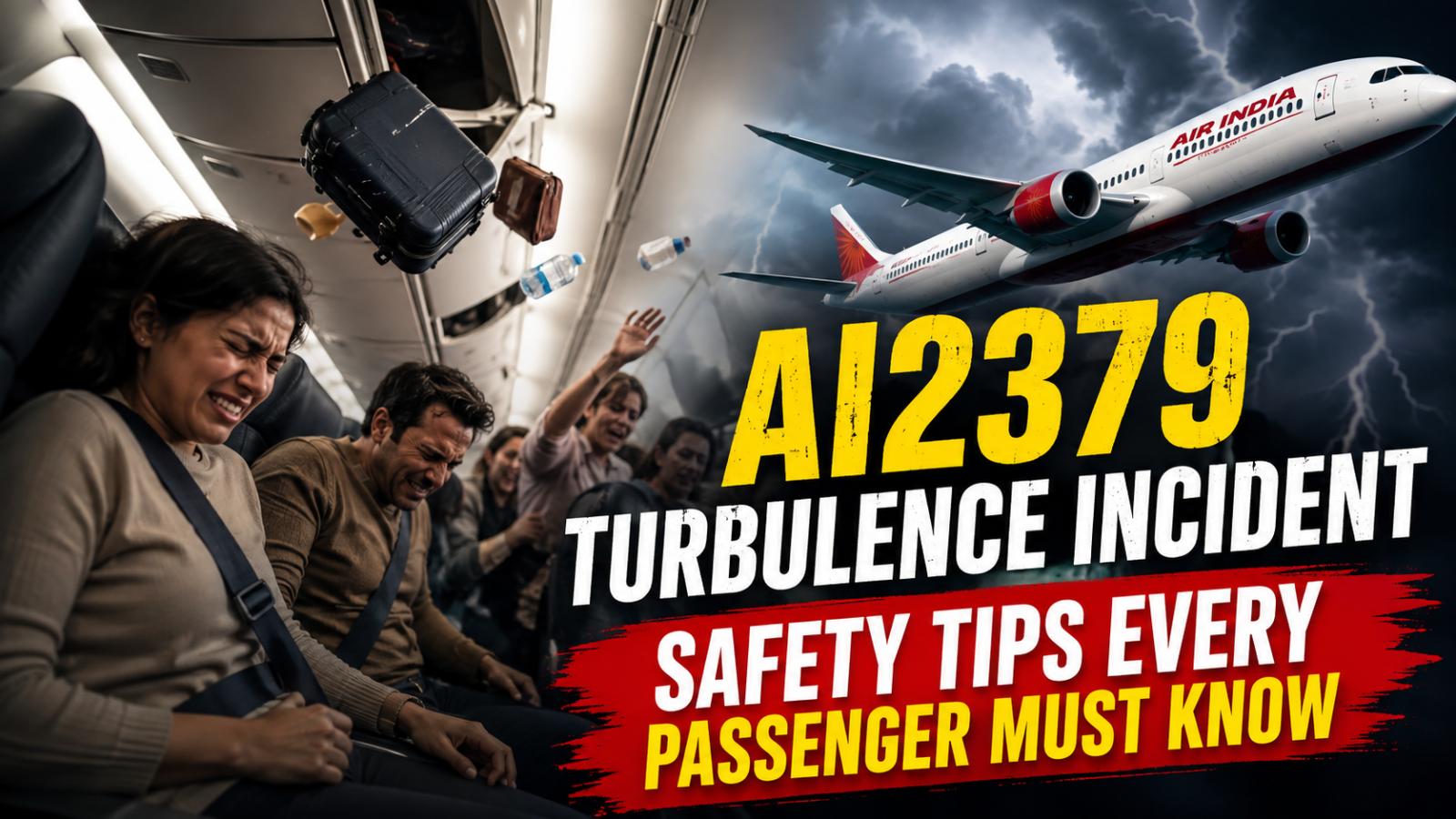
ir India AI2379 turbulence safety has drawn attention after the Phuket-Delhi flight experienced a sudden altitude variation on August 4, 2026. The incident underlines why seatbelts, crew instructions, secured baggage, emergency exits and medical preparedness matter throughout a flight.
Air India flight AI2379, travelling from Phuket to Delhi, encountered severe turbulence during its journey on Tuesday. Reports citing the airline said the aircraft experienced a brief but sudden change in altitude, estimated at about 300 feet, before continuing safely to Delhi.
Later reports placed the number of injured at 17, including 13 passengers and four crew members, although early accounts carried different figures. Medical teams attended to those requiring assistance after the aircraft landed safely. Aviation authorities subsequently began examining the incident and secured flight-recording equipment as part of the investigation.
The incident is also a practical reminder that turbulence can occur with little warning. Passengers cannot prevent unstable air conditions, but following basic cabin-safety procedures can significantly reduce the risk of being thrown from a seat or struck by loose objects.
Seatbelts Reduce Turbulence Injuries
Passengers should keep their seatbelts fastened whenever they are seated, even when the seatbelt sign is switched off. The belt should remain low and tight across the hips rather than the abdomen.
Unexpected turbulence is particularly dangerous for unrestrained passengers because a sudden vertical movement can lift them from their seats. The US Federal Aviation Administration advises travellers to remain buckled while seated and identifies seatbelt use as the most effective way passengers can protect themselves during turbulence.
Passengers must remain seated when the warning sign is illuminated and should avoid walking to the restroom or opening overhead compartments until the cabin crew confirms that it is safe.
Crew Instructions Must Be Followed Immediately
The pre-flight briefing is not a routine announcement to ignore. It explains how to fasten the seatbelt, locate emergency exits, use oxygen masks and adopt the brace position.
During turbulence or another emergency, passengers should stop using electronic devices, remain calm and follow instructions without arguing or attempting to collect belongings. Cabin crew members receive training to assess risks, communicate with pilots and manage passenger movement during emergencies.
DGCA guidance states that passengers should read the safety card and keep their seatbelts fastened when instructed. Aviation procedures also require passengers to remain seated during turbulence.
Baggage Must Be Stored Securely
Cabin baggage should be placed completely inside an overhead compartment or beneath the seat in front. Heavy objects, bottles, laptops and loose personal items can become dangerous projectiles during a sudden altitude change.
Passengers should keep the aisle and the space around their feet clear. Overhead compartments must also be opened carefully after landing because luggage may have shifted during the journey.
In an evacuation, passengers must leave their bags behind. Attempting to retrieve luggage can block the aisle, damage evacuation equipment and delay other travellers trying to reach an exit.
Exits and Emergency Equipment Should Be Located
Before takeoff, passengers should identify the nearest available emergency exit and count the number of seat rows between their position and that exit. The closest usable exit may be behind the passenger rather than in front.
Travellers should read the safety card to understand oxygen-mask operation, life-jacket use and the correct brace position. During cabin depressurisation, passengers must secure their own oxygen mask before assisting children or other travellers.
Smoke, fire, an emergency landing or cabin-pressure loss requires immediate compliance with crew commands. Passengers should stay low when smoke is present and move towards the instructed exit without carrying baggage.
Medicine and Medical Readiness Matter
Essential medicines should always be carried in cabin baggage rather than checked luggage. Passengers with serious medical conditions should keep prescriptions, emergency contact information and required medication easily accessible.
Anyone experiencing chest pain, breathing difficulty, severe dizziness, an allergic reaction or another medical problem should alert the crew immediately. Delaying disclosure can make treatment more difficult.
The AI2379 incident demonstrates that even a routine flight can encounter unexpected conditions. Staying buckled, securing belongings, understanding emergency procedures and following cabin-crew instructions are simple actions, but they can prevent avoidable injuries when turbulence strikes.