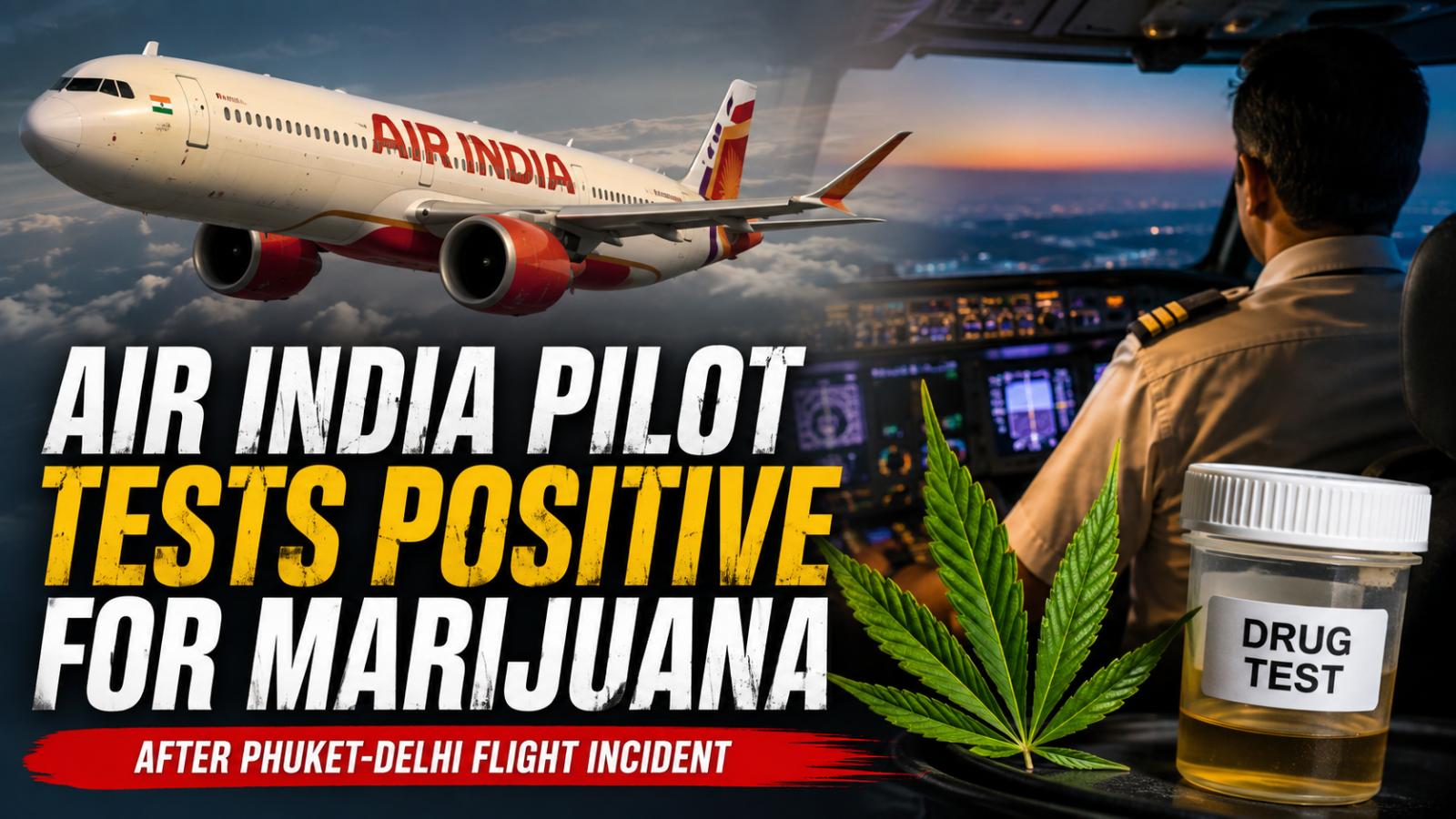
An Air India pilot drug test is under scrutiny after the captain of a Phuket-Delhi flight tested positive for marijuana following a 300-foot altitude loss. The case has raised fresh questions about pilot tests, DGCA rule enforcement, THC risks, cockpit safety and possible licence ban action in India.
Phuket Jet Incident Raises Fresh Safety Questions
The Airbus A320neo was carrying 137 passengers and eight crew members when it experienced a sudden loss of around 300 feet in altitude. Thirteen passengers and four crew members were injured, although the aircraft later landed safely in Delhi. The Aircraft Accident Investigation Bureau has urged against drawing conclusions before investigators examine all available evidence.
Authorities are examining the circumstances surrounding the altitude loss and the actions of the flight crew. The investigation is expected to consider flight data, cockpit information, operational factors and the aircraft's condition before determining what caused the incident.
Pilot Tests and What a Positive Result Means
The captain initially returned a non-negative screening result for psychoactive substances, leading to further laboratory testing. A source familiar with the matter later said the confirmatory test was positive for marijuana.
A positive cannabis result, however, does not automatically prove that a pilot was impaired at the exact time of a flight. Cannabis and its metabolites may remain detectable after the strongest effects have passed. Investigators must therefore separate evidence of cannabis exposure from evidence of actual impairment while operating the aircraft.
DGCA Rule on Alcohol and Psychoactive Substances
India maintains specific procedures to prevent aviation personnel from performing safety-sensitive duties after consuming prohibited psychoactive substances. The DGCA has rules covering testing, medical assessment and action following confirmed results, with its psychoactive-substance framework remaining an active area of regulatory oversight.
Alcohol and drug testing also follow different processes. Breath analysers can detect alcohol before flights, while suspected drug consumption generally requires biological screening followed by laboratory confirmation.
THC Risks in a Safety-Critical Cockpit
Cannabis can affect attention, reaction time, coordination, judgement and perception. These THC risks are particularly important in aviation, where a pilot may need to respond quickly to unexpected altitude changes, weather conditions or technical warnings.
Even so, investigators cannot conclude that cannabis caused the altitude loss solely because the captain tested positive. The A320's technical condition, crew actions, cockpit information and flight data must also be assessed before responsibility or causation can be established.
Licence Ban Possible After Repeat Violations
A confirmed drug violation can remove a pilot from active flying duties while medical, regulatory and rehabilitation requirements are completed. Repeat violations can result in significantly tougher action, including licence suspension and possible cancellation under applicable aviation rules.
The case has also renewed attention on international pilot testing standards. In the United States, FAA rules under 14 CFR Part 120 require drug and alcohol testing programmes for employees performing safety-sensitive aviation functions. The UK Civil Aviation Authority similarly requires operators to maintain procedures designed to prevent and detect misuse of psychoactive substances among flight and other safety-sensitive crew.
The central question now is whether human factors, a technical issue or a combination of both caused the Phuket-Delhi incident. Until the AAIB completes its investigation, the positive marijuana test remains an important safety finding, but not proof that cannabis caused the aircraft's sudden altitude loss.