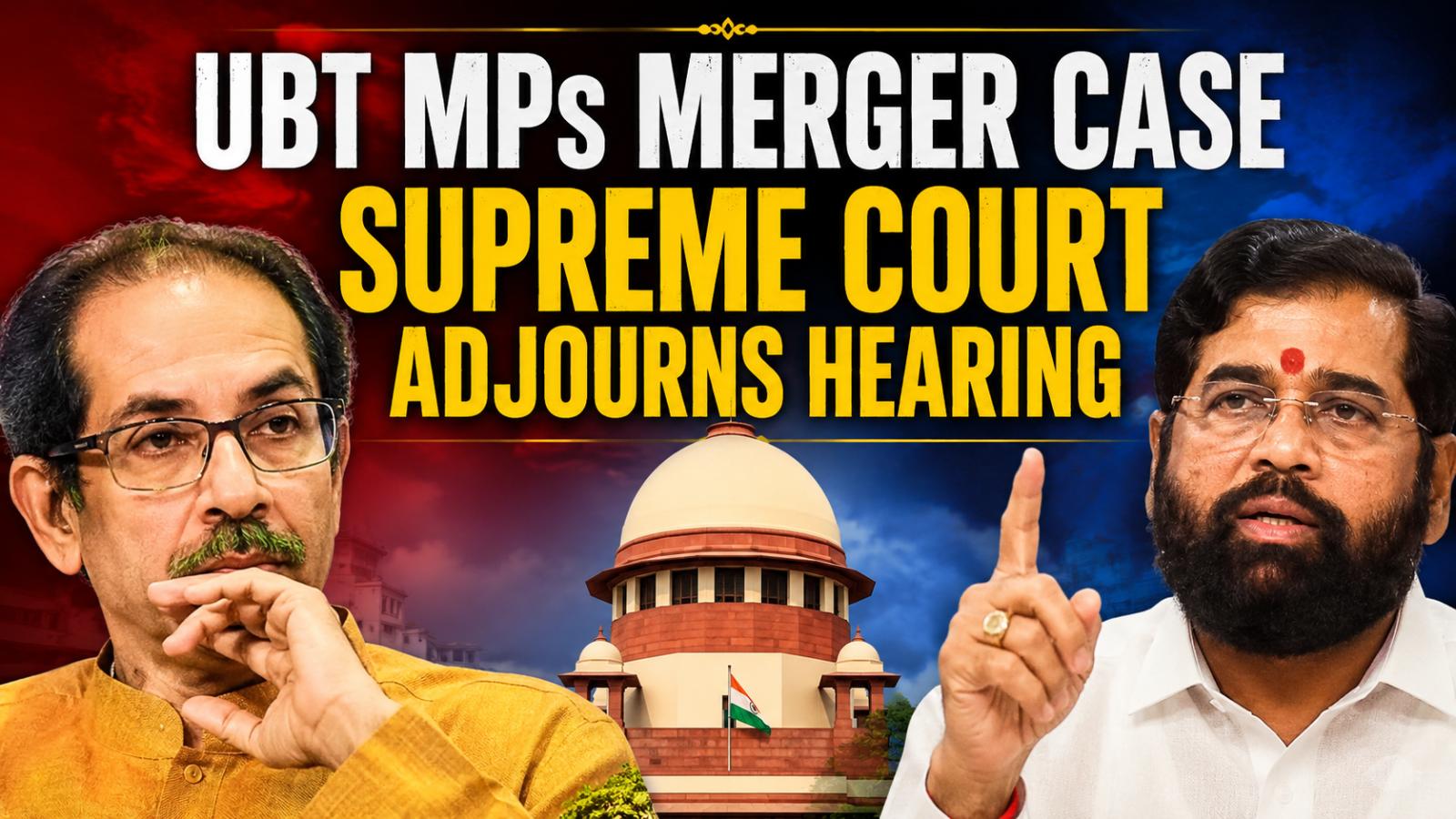
The UBT MPs merger case remains before the Supreme Court after Shiv Sena (UBT) challenged the Lok Sabha Speaker’s recognition of six of its MPs joining the Eknath Shinde-led Shiv Sena. The Speaker order remains effective, leaving the Shinde faction with 13 Lok Sabha MPs while the legal dispute continues.
UBT plea
Shiv Sena (UBT), through party leader Arvind Sawant, moved the Supreme Court against the recognition of six MPs who shifted to the Eknath Shinde-led Shiv Sena. The petition challenges the constitutional validity of recognising the group as having merged with the rival faction.
The six MPs are Sanjay Jadhav, Sanjay Dina Patil, Sanjay Deshmukh, Omprakash Rajenimbalkar, Nagesh Patil-Ashtikar and Bhausaheb Wakchaure. They had been elected in the 2024 Lok Sabha election on Shiv Sena (UBT) tickets.
Shinde MPs
The political shift substantially changed the two factions’ strength in Parliament. Lok Sabha Speaker Om Birla recognised the merger on July 18, ahead of Parliament’s Monsoon Session. Following the recognition, the Shinde-led Shiv Sena’s strength increased from seven MPs to 13, while Shiv Sena (UBT) was reduced from nine MPs to three.
The development carries wider political significance because the rival camps have been fighting over the Shiv Sena’s organisation, political legacy and representation since the party split led by Eknath Shinde in 2022.
Speaker order
The UBT camp argues that the Speaker could not simply recognise the MPs as a merged group without satisfying the constitutional requirements governing defections and mergers.
During the proceedings, senior counsel appearing for UBT argued that no disqualification proceedings were pending against the MPs and questioned the Speaker’s authority to approve such a merger independently. The party has also argued that it was not given an opportunity to be heard before the recognition was granted.
SC update
On July 22, the Supreme Court issued notice to the Lok Sabha Speaker and sought a response to the challenge. The bench, however, refused Shiv Sena (UBT)’s request for an immediate interim stay, meaning the Speaker’s recognition continued to operate.
When the case came up again on August 10, the Supreme Court adjourned proceedings after noting that there was no appearance for the Lok Sabha Speaker or the Joint Secretary of the Lok Sabha. The case is registered as Arvind Ganpat Sawant v. Hon’ble Speaker, Lok Sabha and Others.
Tenth Schedule
A key legal question concerns the Tenth Schedule of the Constitution, which contains India’s anti-defection provisions. UBT’s side has argued that the Speaker’s authority to determine a merger under the Tenth Schedule normally arises while deciding a disqualification issue, rather than through an independent recognition exercise.
The Supreme Court has not delivered a final ruling on the validity of the merger. Therefore, the refusal to grant interim relief should not be treated as judicial approval of the Speaker’s decision. For now, the six-member merger remains recognised in the Lok Sabha and the Shinde-led Sena retains its expanded parliamentary strength while the constitutional challenge continues.