As India marks Independence Day 2026, the freedom struggle is often remembered through marches, protests, imprisonment and political leadership. But the role of press in India freedom struggle was equally significant. Newspapers carried nationalist ideas beyond public meetings, challenged colonial policies and connected Indians living across distant regions.
Nationalist Newspapers Spread the Freedom Message
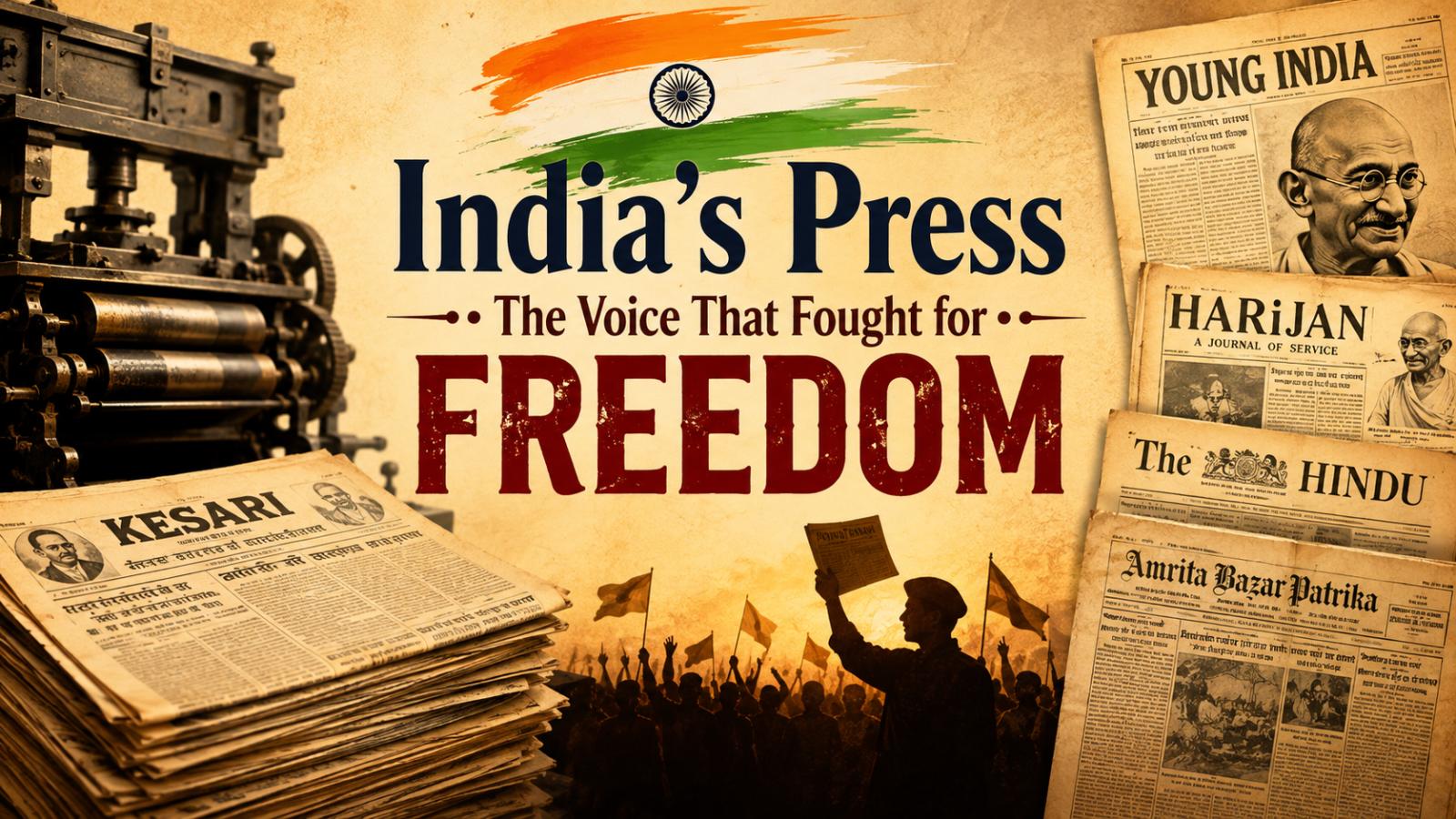
Before television and digital communication, nationalist newspapers gave political movements a wider voice. Publications such as Kesari, Young India, Harijan and Amrita Bazar Patrika discussed political rights, social reform, Swaraj and resistance to British rule.
Bal Gangadhar Tilak used journalism to popularise political ideas, while Mahatma Gandhi treated publishing as an important way to communicate directly with the public. The Gandhi Heritage Portal preserves journals that Gandhi owned, edited or published, including Young India, Navajivan and Harijan, showing how central journalism was to his public communication.
Newspapers helped readers understand that problems affecting one province could form part of a much larger national struggle. Political arguments that might otherwise remain confined to meetings could reach homes, towns and communities through print.
Colonial Press Censorship Challenged Indian Editors
The growing influence of the Indian press also attracted colonial scrutiny. British authorities introduced restrictions, prosecuted writers and attempted to suppress publications considered hostile to the government.
Indian editors nevertheless continued questioning colonial policies. Journalism increasingly became more than a profession; publishing criticism could carry political and personal consequences.
Printed material from the freedom movement became important enough for the British government to prohibit newspapers, pamphlets, handbills and other publications. Government archival material preserved under Azadi Ka Amrit Mahotsav describes these banned publications as an important record of India’s freedom struggle.
Vernacular Press Act Became a Symbol of Colonial Control
The Vernacular Press Act of 1878 became closely associated with colonial attempts to restrict criticism appearing in Indian-language publications. The measure showed how seriously the government viewed the expanding influence of regional journalism.
Restrictions could disrupt newspapers, but they could not permanently stop political debate. Editors and publishers continued finding ways to communicate nationalist arguments, while government action itself strengthened discussions about civil liberties and freedom of expression.
Gandhi Journalism Built Direct Public Communication
Mahatma Gandhi understood the ability of newspapers to explain political campaigns rather than simply announce them. Young India, Navajivan and later Harijan gave him platforms to discuss political strategy, social questions and public responsibility.
The Gandhi Heritage Portal records hundreds of issues of these journals and states that Gandhi used periodical publications, including editions in different languages, to reach as many people and viewpoints as possible.
Through such journalism, complex ideas including non-cooperation, civil disobedience and Swaraj could reach audiences far beyond major political gatherings.
Press Legacy Remains Part of India’s Freedom Story
The freedom movement required leaders and protesters, but it also required information to travel. Newspapers reported arrests, political campaigns, government restrictions and debates taking place across different regions.
That circulation of information helped build awareness of a common national cause. India’s press did not merely watch history unfold from the sidelines. Editors, printers and journalists helped circulate the arguments that shaped public opinion and strengthened the freedom movement.
As the Tricolour rises on August 15, 2026, India can remember not only those who marched and went to prison, but also those who kept printing when publication itself carried risks. The newspapers of the freedom era did more than record the struggle for independence. They helped give that struggle a national voice.