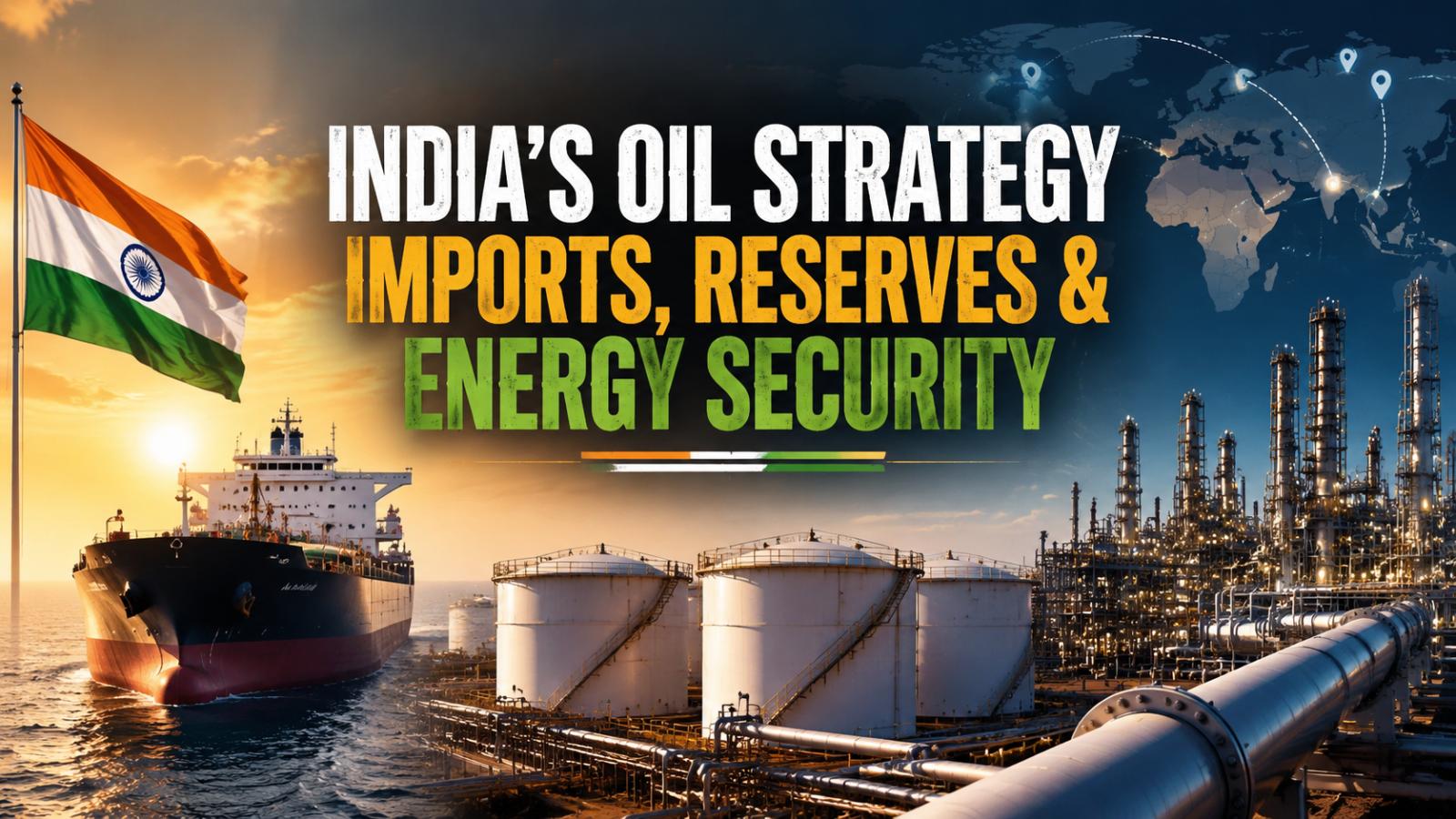
India relies heavily on imported crude oil, with domestic production covering only 10–15% of demand. Historically dependent on Middle Eastern oil, India is now sourcing crude from the U.S., West Africa, and Russia to reduce vulnerability to geopolitical risks. Very Large Crude Carriers (VLCCs) transport oil in shipments of 200,000–300,000 DWT to key ports on the west coast—Mumbai, Mundra, Kandla, Jamnagar—and east coast—Paradip, Visakhapatnam, Chennai. From ports, extensive pipelines such as Salaya–Jamnagar and Mumbai–Pune–Bangalore deliver crude efficiently to refineries, with road and rail transport providing backup support.
Strategic Petroleum Reserves and Commercial Storage
Oil companies like IOC, BPCL, and HPCL maintain storage facilities near ports and refineries to ensure continuous supply. Strategic Petroleum Reserves (SPR) at Visakhapatnam, Mangaluru, and Padur currently hold 5.3 million metric tonnes, enough for 9–10 days of consumption. Refineries keep 2–3 weeks of crude inventory to handle sudden disruptions. The SPR locations cover key supply chains: Visakhapatnam for the east coast, Mangaluru for the south, and Padur for the west-southwest. Expansion plans aim to increase SPR capacity to 15 million tonnes with new sites at Chandikhole and Padur Phase II.
Diversifying Crude Sources
India is increasing imports of shale crude from the U.S., medium and sweet crude from West Africa, and some Russian crude. This strategy reduces reliance on Middle Eastern sour crude, provides price advantages, and enhances overall energy security.
Managing Supply Disruptions and Price Spikes
In times of supply interruptions or sudden price surges, India relies on strategic drawdowns from reserves, adjusts refinery operations, and applies financial tools such as limited fuel subsidies, tax adjustments, hedging, forward contracts, and foreign exchange management. This multi-pronged approach helps stabilize fuel prices domestically.
Domestic Production and Renewable Transition
Domestic oil production comes from Oil India, ONGC, and private operators in Assam, Gujarat, and offshore fields like Mumbai High and the Krishna–Godavari basin. However, production is gradually declining. To strengthen long-term energy security, India plans to:
- Expand strategic storage capacity
- Accelerate domestic exploration
- Diversify import sources
- Transition toward renewable energy
India aims to achieve 20% renewable energy by 2030 and increase LNG imports as a cleaner alternative, reducing overall oil dependency.
Conclusion
Through strategic reserves, efficient pipelines, diverse imports, and renewable energy initiatives, India is building a resilient energy framework. These measures ensure continuous crude supply, mitigate global volatility risks, and support long-term energy security.