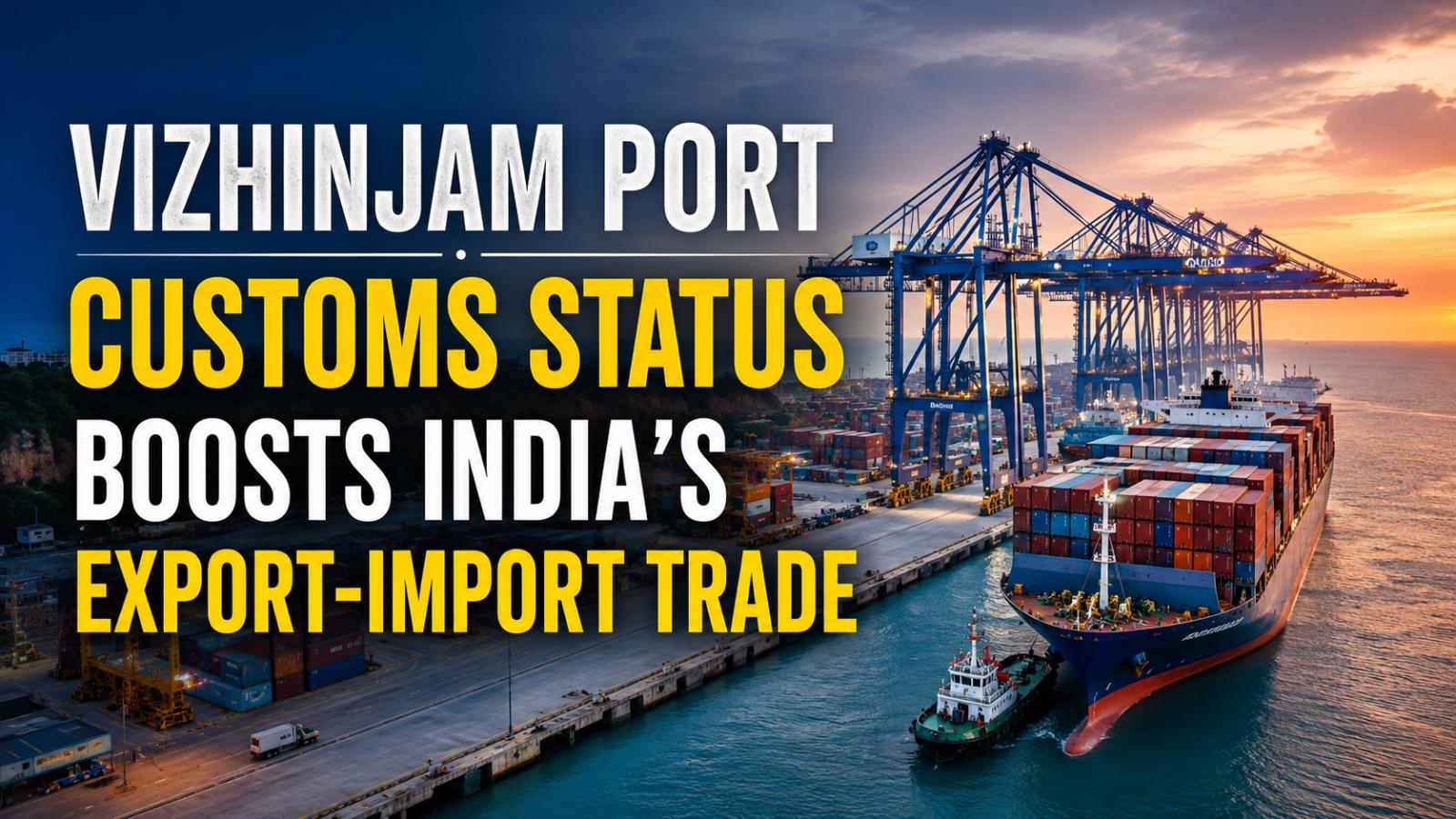
Vizhinjam Port customs status clears the way for direct export-import operations from August 18. The move strengthens the Kerala deepwater port as an India trade gateway, while improving EXIM cargo movement, logistics efficiency and business opportunities.
Vizhinjam Export-Import Operations To Begin
Vizhinjam International Seaport in Kerala has been notified as a customs port, allowing it to handle direct export and import cargo. EXIM operations are scheduled to begin on August 18, marking a major shift for a port that has so far mainly handled international transshipment traffic.
The customs status will allow eligible containers to enter or leave India directly through Vizhinjam instead of being transferred only between vessels. This is expected to give exporters and importers another major gateway on India’s southern coast and reduce dependence on overseas transshipment hubs.
Vizhinjam began trial operations in July 2024 and moved into regular commercial operations in December 2024. Since then, the port has expanded rapidly and crossed two million TEUs of container traffic, becoming the fastest Indian port to reach the milestone.
The project was developed at an estimated cost of around Rs 8,900 crore under a public-private partnership model. The Kerala government owns the port project through Vizhinjam International Seaport Limited, while Adani Ports develops and operates the terminal under a concession agreement.
The port’s deep draft and location close to major international shipping routes allow it to receive some of the world’s largest container vessels. Direct EXIM services could now improve cargo turnaround time and help Indian businesses connect more efficiently with global markets.
Kerala Deepwater Port Strengthens India Trade Gateway
The customs notification places certain limits on cargo handling during the initial phase. Since no container freight station has yet been designated for Vizhinjam, the port will handle only fully loaded containers moving directly between the terminal and the importer or exporter.
Loose cargo and containers requiring de-stuffing or examination at a freight station will not be accepted for now. Imported containers must be moved directly from the terminal to the importer’s premises within 48 hours, while exporters must bring fully loaded containers that are ready for shipment.
The start of direct trade operations is expected to lower logistics costs, improve supply chain efficiency and increase the competitiveness of Indian exporters. It may also attract investment in warehousing, transportation, shipping services and other port-related industries in Kerala.
Road access for container movement has already been completed. A dedicated rail link of about 10.7 kilometres is also planned to connect Vizhinjam with Balaramapuram. The proposed route includes a long underground tunnel, although the project has faced delays linked to land acquisition.
With customs clearance, deepwater access and growing container traffic, Vizhinjam is moving beyond its original transshipment role. Its next challenge will be to build reliable rail connectivity, cargo support facilities and faster customs systems so that the expected economic benefits translate into sustained trade growth.