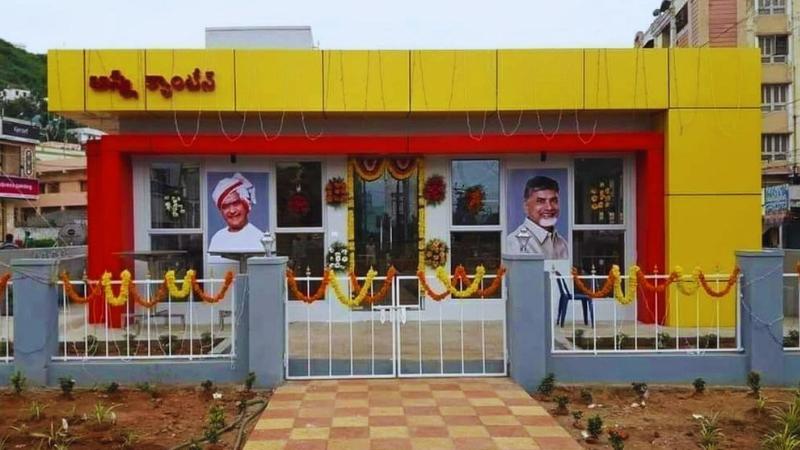
The Andhra Pradesh government led by N. Chandrababu Naidu has revived the Anna Canteens scheme, which is now witnessing an overwhelming response across urban areas. These canteens, known for providing affordable meals to the poor and working class, are serving breakfast, lunch, and dinner at a highly subsidized price of just ₹5. The scheme, which was discontinued during the tenure of Y. S. Jagan Mohan Reddy, has now regained strong public support after its relaunch.
At present, around 207 Anna Canteens are operational in urban regions, collectively serving approximately 2.10 lakh meals every day. The scheme has already benefited nearly 8.8 crore people, underlining its massive reach and importance. The daily operational cost of these canteens is estimated at ₹54 lakh, with the majority of the expenditure covered by government subsidies. In some cases, generous contributions from donors also help sustain the initiative.
The government has so far spent around ₹243 crore on the scheme, showcasing its commitment to ensuring food security for economically weaker sections. Encouraged by the strong response, authorities are now planning to expand Anna Canteens into rural areas as well, which is expected to cost an additional ₹58 crore.
The success of Anna Canteens has sparked discussions in political circles, especially regarding its earlier discontinuation. Many believe that the scheme plays a crucial role in addressing hunger and supporting daily wage workers, making it one of the most impactful welfare initiatives in the state.
Similar models have been implemented in other regions too. The concept traces back to initiatives like Annapurna Canteens introduced during the tenure of N. Kiran Kumar Reddy in undivided Andhra Pradesh. Later, K. Chandrashekar Rao continued and expanded such schemes in Telangana. Currently, the government led by Revanth Reddy is also running a similar initiative under a different name, further enhancing its reach and facilities.
The resurgence of Anna Canteens highlights the importance of affordable food programs in urban India. With plans to expand further, the scheme is expected to benefit even more people in the coming years, reinforcing its role as a key pillar in public welfare and poverty alleviation.