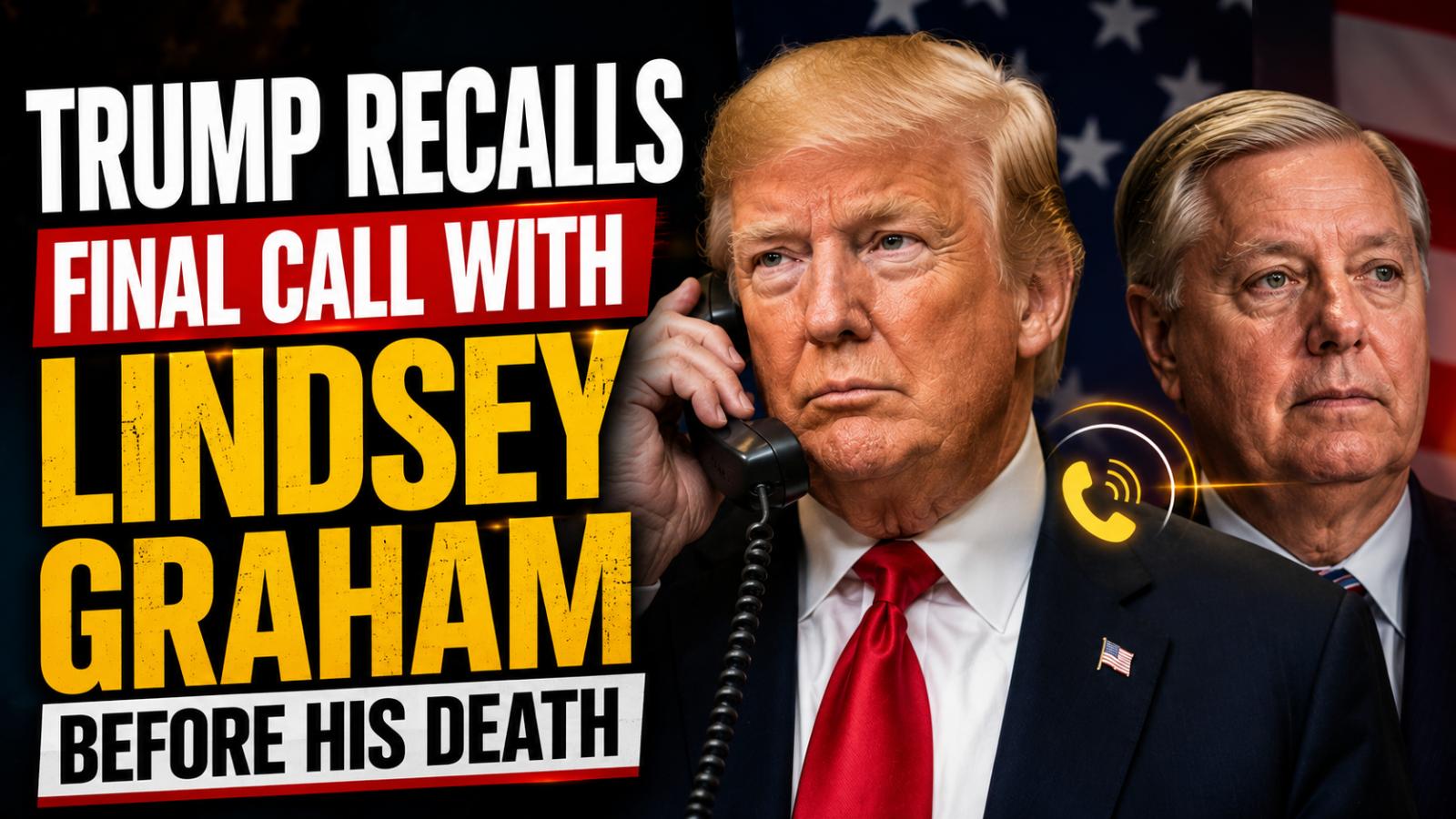
President Donald Trump has described his final phone conversation with South Carolina Senator Lindsey Graham, saying the two spoke shortly before Graham’s sudden death. Trump said the senator sounded tired but remained focused on advancing legislation and expected to meet with him again the following day.
Trump recalls final call with Lindsey Graham
Background: Lindsey Graham's Death
Republican Senator Lindsey Graham of South Carolina died on July 12, 2026, at the age of 71 after suffering a sudden medical emergency. Preliminary findings from his office stated that the cause of death was an aortic dissection resulting from arteriosclerotic cardiovascular disease. Graham had served in the US Senate since 2003 and was one of President Donald Trump's closest political allies, playing a leading role on national security, foreign policy, judicial nominations and defence issues. His death prompted tributes from leaders across Washington and led President Trump to order US flags to be flown at half-staff nationwide in his honour while South Carolina prepares to appoint a temporary replacement to his Senate seat.
Trump also ordered US flags across the United States to fly at half-staff in honor of Graham, a tribute that later sparked online speculation before officials clarified the reason. Read more: Why US flags were lowered for Lindsey Graham, not Trump's health.
Speaking during a Sunday television interview, Trump said Graham contacted him on Saturday evening to discuss the SAVE America Act. According to the president, Graham said he felt tired but otherwise appeared well and remained determined to secure passage of the legislation.
Trump said he reassured Graham that they would continue working on the measure and expected to see him soon. Graham had been scheduled to appear on the same Sunday political program before his death. His passing at age 71 was confirmed through statements from Senate colleagues and his office, prompting tributes from across Washington.
Graham’s final political request
The SAVE America Act was one of the final issues Graham raised with Trump. The legislation centers on federal voter eligibility requirements and had become a Republican priority, although it continued to face significant opposition in the Senate.
Trump’s account portrayed Graham as politically active until the final hours of his life. The president said they had planned to meet on Sunday, making the unexpected news particularly difficult to process.
Officials have described Graham’s death as sudden. Reporting based on medical information later identified a torn aorta linked to hardened arteries, although early public statements referred only to a brief illness.
Trump praises Graham’s political skills
Trump called Graham a member of his political family and praised his ability to handle difficult negotiations. He described the senator as a tough political operator who could often find ways to resolve disputes with Democrats.
That reputation developed during Graham’s more than two decades in the Senate. Although he became a prominent Republican partisan, he also worked across party lines on immigration, national security and foreign policy. His relationships with lawmakers from both parties often gave him a role in negotiations that other senators could not easily fill.
Trump and Graham did not begin as allies. Graham strongly criticized Trump during the 2016 presidential campaign before gradually becoming one of his closest supporters in Congress. Their partnership later centered on judicial appointments, national security, Israel, Ukraine and Iran policy.
South Carolina Senate replacement considered
Trump also said he had a preferred candidate in mind to replace Graham but declined to identify the person publicly. He said announcing a name immediately would be inappropriate while tributes and funeral arrangements were still underway.
South Carolina’s governor is expected to appoint a temporary senator, while the state prepares for the process required to fill the seat more permanently. Graham had represented South Carolina in the Senate since 2003 and was seeking another term.
His death removes one of Washington’s most experienced Republican voices and creates uncertainty around several legislative and foreign policy initiatives he supported. Trump’s final-call account also underscores how closely Graham remained engaged in political work until his death.