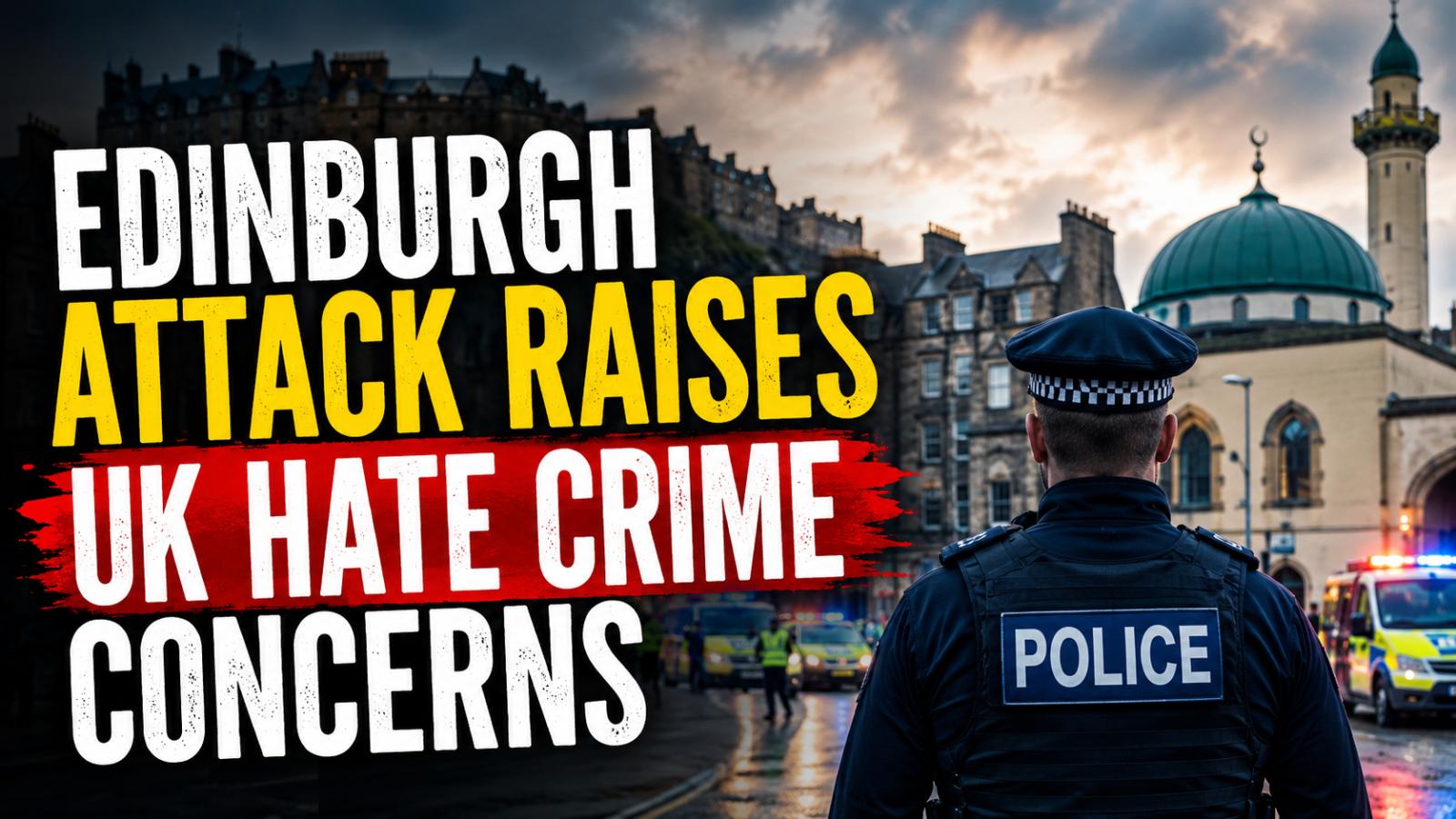
An attack in Edinburgh on June 19 has raised fresh concern over hate crime, anti-Muslim abuse and community safety in the UK. Five men were injured after a 36-year-old man allegedly attacked people while shouting religious abuse. Some of the victims were Muslim, and two men were reportedly returning from mosque prayers when the incident happened. Police and counter-terrorism officers are investigating the case as a suspected hate crime, making it a sensitive moment for minority communities in Scotland and across Britain.
Police investigation under focus
The case has drawn attention because the alleged attack was not seen as ordinary street violence. The suspect is accused of using a bladed weapon and directing abuse at people based on religion. Police have appealed for calm and warned the public not to spread rumours while the investigation continues. For many Muslim families, however, the incident has created fear that public anger over migration, crime and identity can quickly turn into direct hostility against people because of their faith or appearance.
Migration debate adds to tension
Immigration remains one of the most divisive issues in the UK. Many voters are concerned about housing, jobs, public services and border control. Those concerns are part of a legitimate political debate, but the danger begins when frustration is turned against entire communities. Muslim, South Asian and asylum-seeking families often say they are blamed for wider social problems they did not create. The Edinburgh case has therefore become part of a larger discussion about how Britain handles migration, policing and public trust without allowing hate to grow.
Political language faces scrutiny
Public figures and campaigners on the right have increasingly used strong language around migration, national identity and border security. Supporters say they are reflecting real public anger, while critics argue that harsh rhetoric can fuel racism and Islamophobia. The key issue is not whether immigration policy can be debated, but whether political language encourages suspicion toward Muslims, migrants or ethnic minorities. In a tense climate, careless words can make extremist views feel acceptable.
Britain has seen similar warning signs
The UK has faced race and religion-based tensions before, especially during periods of economic pressure or political uncertainty. Recent unrest linked to asylum hotels, online rumours and anti-migrant protests has shown how quickly misinformation can lead to threats against mosques, minority-owned businesses and migrant families. The Edinburgh attack has added to fears that hate crime in Scotland and wider Britain may become harder to control if public debate continues to harden.
Clear action needed from leaders
The Edinburgh hate crime investigation must be handled firmly, fairly and transparently. Britain needs serious debate on immigration, policing and public safety, but that debate cannot become a cover for anti-Muslim abuse or attacks on minority communities. Political leaders, police and community groups now face a difficult task: protecting free speech while making clear that religious hatred and street violence have no place in public life.