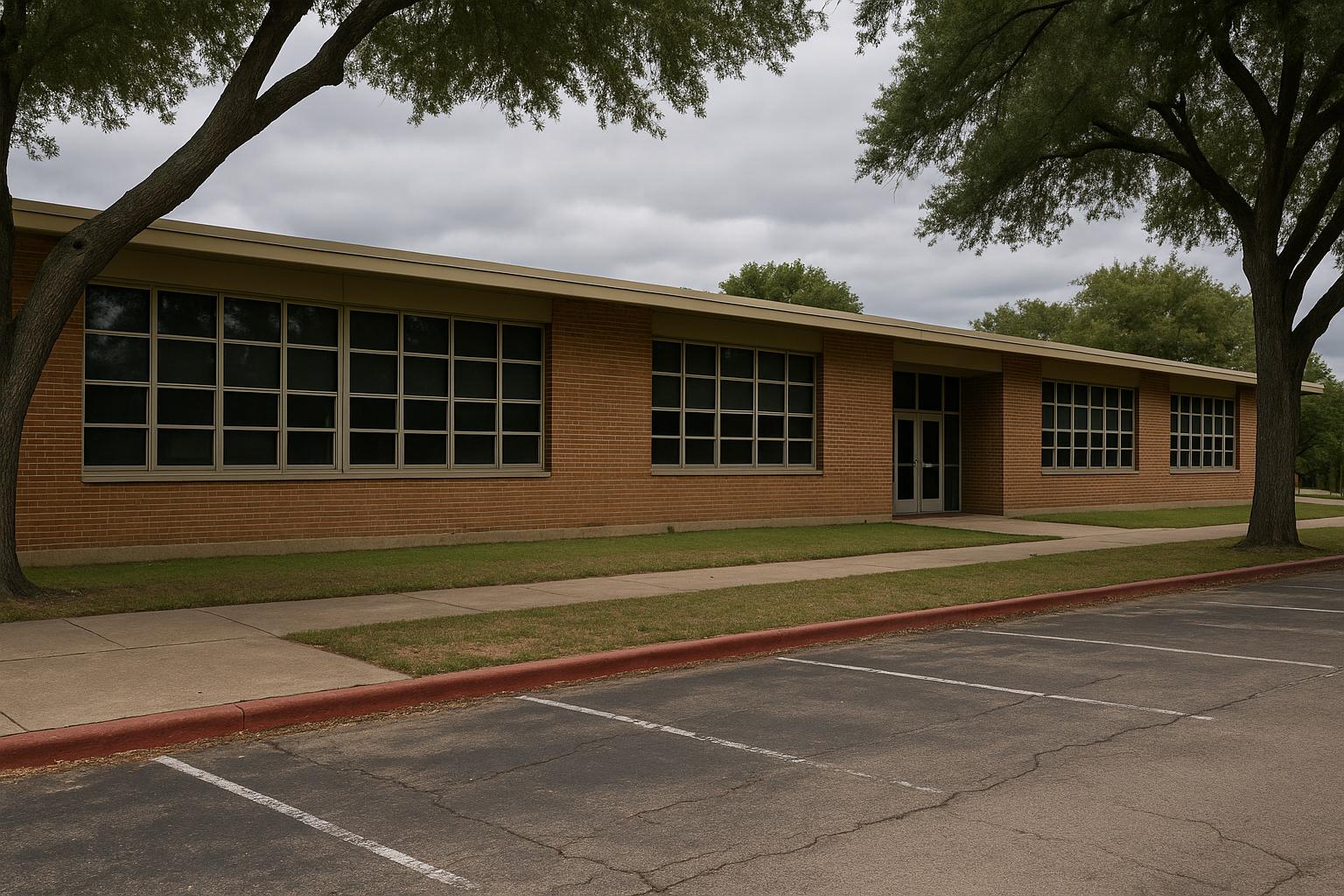
Austin, Texas — The Austin Independent School District (AISD) is confronting a budget deficit exceeding $19.7 million and the looming possibility of state intervention if it fails to stabilize its finances and improve underperforming campuses. While no final decisions have been made, district officials have begun a series of public meetings to address community concerns, explain their financial situation, and present a preliminary plan aimed at long-term sustainability.
The district’s financial challenges come after several consecutive years of declining student enrollment and repeated academic struggles in multiple campuses. According to district data, Austin ISD currently operates with capacity for more than 95,000 students but serves only about 70,000. That leaves roughly 25,000 empty seats across the district, a significant imbalance that contributes to rising operational costs. Superintendent Matias Segura said that continuing to fund under-enrolled schools is no longer viable without additional state or federal support.
“The budget deficit we have is growing,” Segura said. “It’s something that has not been offset by any state or federal funding. If we don’t tackle this together, we could reach a point where we’re unable to make payroll.”
District administrators believe school consolidation is the most practical step to reduce expenses while maintaining educational quality. The preliminary proposal would close 11 elementary schools and two middle schools — a total of 13 campuses. Segura explained that by concentrating resources, the district can offer stronger academic programs, maintain staff salaries, and modernize existing facilities rather than spreading limited funds thinly across too many underpopulated schools.
Parents, however, have voiced deep concerns about how the closures could disrupt neighborhoods and student communities. “When my older daughter graduated from Blanton Elementary in 2022, her small fifth-grade class of about 50 students went on to 12 different middle schools,” said parent Cori Hash. “That fractured feeder pattern already hurts our sense of community, and closing more schools will make it worse.”
The Texas Education Agency’s latest accountability report has intensified pressure on the district. Austin ISD received an overall grade of 79, but nearly one-third of its campuses were rated as failing. Of the schools identified for potential consolidation, about half have recorded consecutive failing grades. The district is now required to develop targeted improvement plans for these campuses. If those plans do not yield measurable progress, the TEA has the authority to take over district operations.
“We have to focus on providing the highest quality education across all of our schools,” Segura said, adding that the goal is not just financial recovery but also academic renewal. “By consolidating resources, we can better support teachers and improve outcomes for students.”
Another major impact of the proposal will be changes to zoning boundaries. Students may find themselves reassigned to new campuses, altering established feeder patterns and commuting distances. Some parents are already preparing for those transitions. “My son is in eighth grade and currently zoned to McCallum,” one parent said. “If this plan passes, he’ll be rezoned to Northeast Early College High School.”
The proposed restructuring could generate more than $20 million in savings. Segura noted that the estimate — about $20.4 million — is conservative and may rise once administrative efficiencies are fully implemented. “We will be better able to manage administrative costs and redirect those funds into classrooms,” he said.
The timeline for the plan extends over the next two years. District officials intend to identify which campuses will be consolidated by this fall. The actual mergers and closures would take effect in the 2026–2027 academic year, giving families and staff time to adjust.
AISD leaders emphasized that community input remains central to the process. Additional district-wide meetings will continue through October to allow residents to ask questions and propose alternatives. The next meeting is scheduled for Monday, October 27, at 5:30 p.m., and the final vote on the consolidation plan is set for November 20.
If approved, the plan will reshape the educational landscape of Austin ISD — reducing costs, realigning resources, and potentially averting a full state takeover. Whether it will restore long-term stability and community trust remains to be seen, but for now, district officials and families alike are bracing for difficult changes that could define the future of public education in Austin.