Edit
U.S. Secretary Rubio calls for peace and anti-terror steps in talks with Pakistan’s Sharif amid India concerns
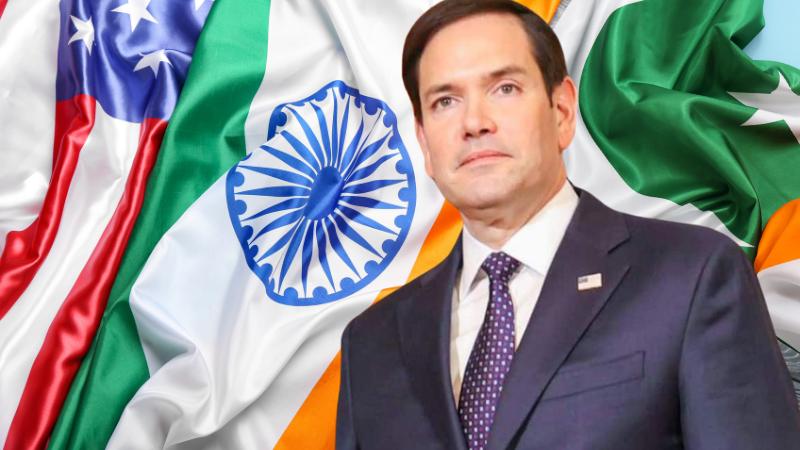
In a critical diplomatic engagement focused on regional peace and stability, Secretary of State Marco Rubio held a direct phone conversation with Pakistani Prime Minister Muhammad Shehbaz Sharif to address escalating tensions between India and Pakistan. The call came amid rising concerns over renewed conflict risks in South Asia, where historical rivalries and recent developments have strained relations.
Secretary Rubio emphasized the urgent need for immediate de-escalation on all sides. Stressing the importance of diplomacy over confrontation, he reaffirmed the United States’ long-standing support for direct and constructive dialogue between India and Pakistan. His remarks conveyed Washington’s position that peaceful communication is essential to diffusing tensions and preventing further instability in the region.
A significant portion of the discussion revolved around the recent reports of civilian casualties linked to regional unrest. Rubio expressed his sorrow over the loss of innocent lives, reinforcing the humanitarian aspect of U.S. foreign policy in volatile zones. He underlined the need for all involved parties to prioritize the safety and rights of civilians, encouraging responsible leadership and mutual restraint.
The issue of terrorism featured prominently in the exchange. Secretary Rubio called upon Pakistan to take clear, concrete steps to end any form of support for terrorist groups. The United States has consistently advocated for stronger global action against extremist organizations, particularly those operating across borders or contributing to regional conflicts. Rubio’s message reinforced that expectation and urged Pakistan to demonstrate tangible progress in that regard.
While details of Prime Minister Sharif’s response have not been made public, the tone of the conversation suggested a mutual acknowledgment of the seriousness of the situation. The call represents a continuation of the United States' diplomatic engagement with South Asian leaders, seeking to play a stabilizing role at a time of heightened tension.
Secretary Rubio’s outreach also included an encouragement for improved communication channels between Islamabad and New Delhi. He noted that open lines of dialogue can help avoid dangerous miscalculations and reduce the risk of conflict escalation. Establishing reliable diplomatic backchannels and confidence-building measures has been a key recommendation by global conflict analysts for years.
This engagement signals the United States' broader strategic interest in maintaining peace and order in South Asia. With long-standing partnerships in the region, the U.S. is uniquely positioned to influence both India and Pakistan toward de-escalation and conflict resolution. The call highlights ongoing efforts to use diplomatic leverage to address both the immediate risks and the underlying issues fueling bilateral tensions.
In recent weeks, increased military posturing, public accusations, and incidents along shared borders have brought renewed international attention to the India-Pakistan dynamic. Rubio’s intervention reflects a belief that outside diplomatic pressure, particularly from influential global powers, can create space for dialogue where domestic politics often hinder progress.
While much remains uncertain, this latest step in diplomatic outreach offers a glimmer of hope for reducing tensions and steering the region back from the brink. The message was clear: the United States wants to see Pakistan take firm action against terrorism while simultaneously promoting peace with its neighbors. In doing so, Rubio outlined a vision of stability, dialogue, and mutual accountability.
As diplomatic communications continue, both regional and global observers await further developments. Whether this conversation leads to meaningful policy shifts remains to be seen, but it underscores an international push to turn attention away from conflict and toward cooperation.
Secretary Rubio emphasized the urgent need for immediate de-escalation on all sides. Stressing the importance of diplomacy over confrontation, he reaffirmed the United States’ long-standing support for direct and constructive dialogue between India and Pakistan. His remarks conveyed Washington’s position that peaceful communication is essential to diffusing tensions and preventing further instability in the region.
A significant portion of the discussion revolved around the recent reports of civilian casualties linked to regional unrest. Rubio expressed his sorrow over the loss of innocent lives, reinforcing the humanitarian aspect of U.S. foreign policy in volatile zones. He underlined the need for all involved parties to prioritize the safety and rights of civilians, encouraging responsible leadership and mutual restraint.
The issue of terrorism featured prominently in the exchange. Secretary Rubio called upon Pakistan to take clear, concrete steps to end any form of support for terrorist groups. The United States has consistently advocated for stronger global action against extremist organizations, particularly those operating across borders or contributing to regional conflicts. Rubio’s message reinforced that expectation and urged Pakistan to demonstrate tangible progress in that regard.
While details of Prime Minister Sharif’s response have not been made public, the tone of the conversation suggested a mutual acknowledgment of the seriousness of the situation. The call represents a continuation of the United States' diplomatic engagement with South Asian leaders, seeking to play a stabilizing role at a time of heightened tension.
Secretary Rubio’s outreach also included an encouragement for improved communication channels between Islamabad and New Delhi. He noted that open lines of dialogue can help avoid dangerous miscalculations and reduce the risk of conflict escalation. Establishing reliable diplomatic backchannels and confidence-building measures has been a key recommendation by global conflict analysts for years.
This engagement signals the United States' broader strategic interest in maintaining peace and order in South Asia. With long-standing partnerships in the region, the U.S. is uniquely positioned to influence both India and Pakistan toward de-escalation and conflict resolution. The call highlights ongoing efforts to use diplomatic leverage to address both the immediate risks and the underlying issues fueling bilateral tensions.
In recent weeks, increased military posturing, public accusations, and incidents along shared borders have brought renewed international attention to the India-Pakistan dynamic. Rubio’s intervention reflects a belief that outside diplomatic pressure, particularly from influential global powers, can create space for dialogue where domestic politics often hinder progress.
While much remains uncertain, this latest step in diplomatic outreach offers a glimmer of hope for reducing tensions and steering the region back from the brink. The message was clear: the United States wants to see Pakistan take firm action against terrorism while simultaneously promoting peace with its neighbors. In doing so, Rubio outlined a vision of stability, dialogue, and mutual accountability.
As diplomatic communications continue, both regional and global observers await further developments. Whether this conversation leads to meaningful policy shifts remains to be seen, but it underscores an international push to turn attention away from conflict and toward cooperation.