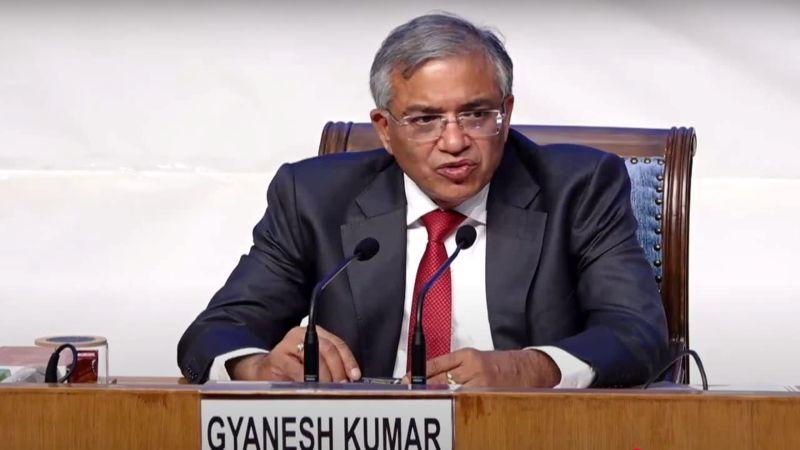
The Election Commission of India (ECI) strongly refuted allegations of “vote chori” made by Congress leader Rahul Gandhi, assuring citizens that electoral rolls remain transparent and credible. At a press conference in New Delhi, Chief Election Commissioner (CEC) Gyanesh Kumar clarified that assigning house number zero and instances of duplicate names did not amount to electoral fraud. He further challenged Gandhi to provide proof through an affidavit within seven days or apologize to the nation for misleading claims.
CEC Kumar rejected the notion that the draft electoral rolls under the Special Intensive Revision (SIR) exercise in Bihar were being rushed. He explained that the process, which began on June 24 and ended on July 20, was in line with legal requirements under the Representation of the People Act, mandating updated voter rolls before elections. He stressed that the last similar revision in Bihar in 2003 also took place during the monsoon months, making the timing neither unusual nor irregular.
On the issue of house number zero in electoral rolls, Kumar explained that lakhs of households in panchayat areas lack formal numbering. To ensure no voter is left behind, the ECI assigns a notional “0” to such addresses. Similarly, for those living under bridges, near lampposts, or in unauthorized settlements, the poll body provides addresses to ensure universal enfranchisement. Kumar emphasized that address details are not prerequisites for voting, but nationality, booth proximity, and age eligibility are.
Responding to the charge of duplicate names, the CEC highlighted that while a voter’s name may appear in more than one roll, it does not permit multiple voting. Casting more than one vote is a criminal offence, and strict laws govern the distinction between voter lists and actual polling. On claims that 22 lakh voters were shown as deceased in Bihar within six months, Kumar clarified that these deaths were accumulated over two decades, as no door-to-door intensive revision had been conducted since 2003.
The ECI also appealed to political parties to submit complaints on the draft rolls before the September 1 deadline. After this date, no changes can be made, and the focus will shift to the voting phase. Kumar reiterated that electoral roll preparation and the act of voting are governed by separate laws, ensuring that vote theft is impossible. He said the Commission “stood like a rock with voters of all religions and sections of society” and called the Congress leader’s accusations a “misrepresentation of facts.”
With the electoral list covering nearly 100 crore voters, the Election Commission defended the sanctity of India’s democratic process while firmly countering allegations of manipulation. By insisting on evidence rather than rhetoric, the poll body underscored its commitment to conducting free, fair, and inclusive elections in the country.