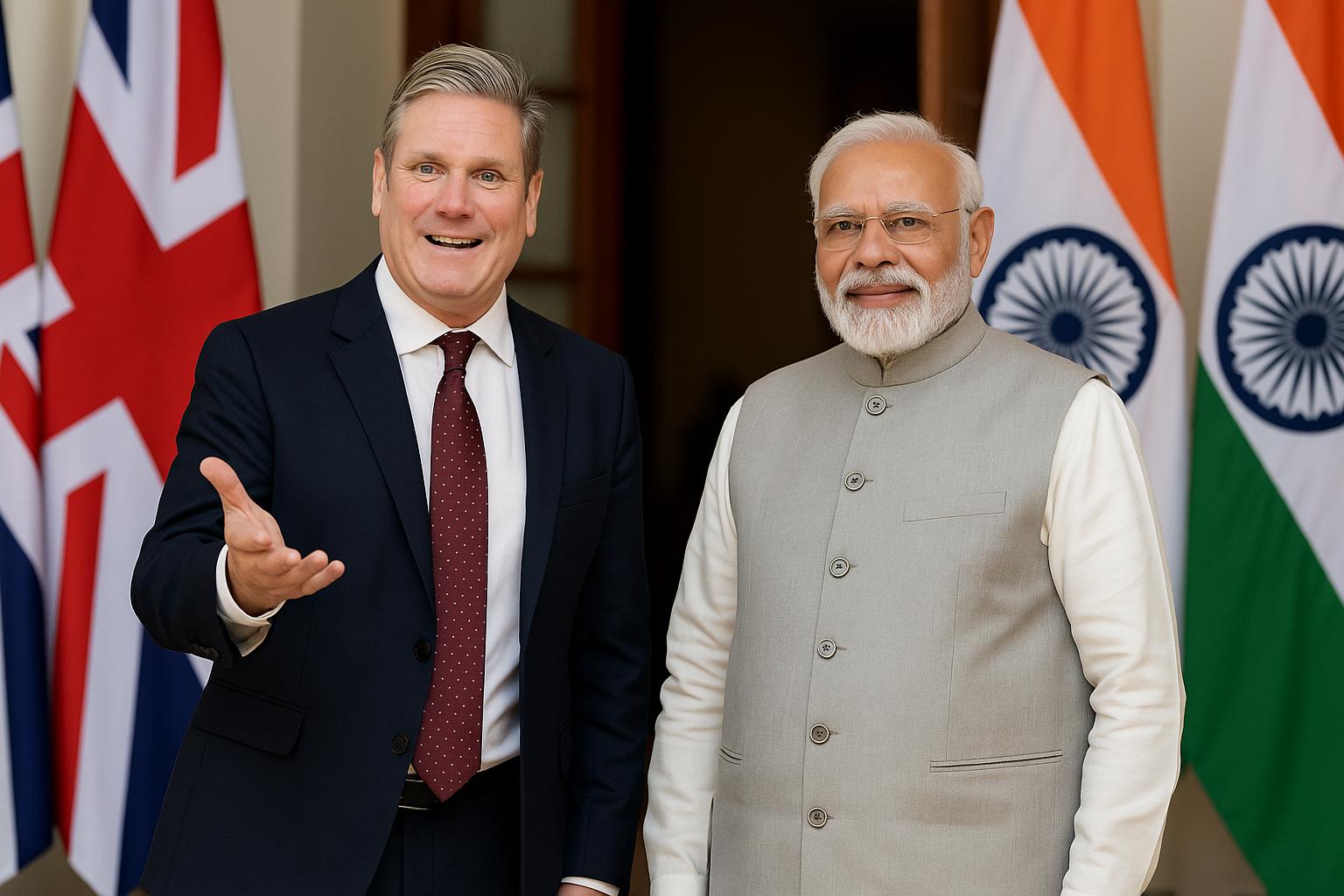
Starmer began his address by greeting the audience in Hindi and congratulated India’s leadership for its commitment to development and transformation. Referring to India’s progress under its national vision for 2047, he said that the goal of making India a fully developed nation was not only realistic but also achievable given its pace of advancement. He highlighted that India had already surpassed Japan to become the world’s fourth-largest economy, adding that all indicators point to India moving further upward in the next few years.
“Everything I have seen since I have been here is absolute proof to me that you are on track to succeed,” Starmer said. He added that the United Kingdom wishes to be a strong and reliable partner on India’s journey toward becoming one of the leading global economies. His remarks reflected a tone of admiration and partnership, showcasing a desire for closer cooperation between the two countries in trade, investment, and innovation.
Starmer’s statement also came in contrast to critical comments made recently about India’s economy by international political figures. In July, a remark describing India’s economy as “dead” sparked reactions globally. Starmer’s speech was viewed as a clear response to that perspective, underlining that India’s economy is far from stagnant and continues to thrive even amid challenging global conditions. His message was reinforced by his decision to bring a large delegation of business and academic leaders with him, signaling strong interest from the United Kingdom in strengthening economic ties with India.
The visiting delegation included over a hundred representatives from diverse sectors, such as business, education, and culture. The visit underscored growing cooperation between the two nations and reflected the UK’s recognition of India’s importance as a major global player. Discussions during the visit focused on advancing collaboration in areas such as renewable energy, digital technology, education, and sustainable growth.
Starmer highlighted India’s potential to drive future innovation and contribute significantly to the global economy. He pointed to the country’s expanding digital infrastructure, growing startup ecosystem, and demographic advantage as major strengths that are propelling its rise. He emphasized that the United Kingdom seeks to build a modern partnership based on shared values, mutual benefit, and long-term trust.
His speech also reflected on India’s evolving role in global affairs. He noted that India’s progress is reshaping economic dynamics and serving as an example for developing nations aiming to combine rapid industrial growth with sustainable practices. Starmer said that the country’s achievements in technology, manufacturing, and renewable energy demonstrate how ambition, reform, and innovation can transform a nation’s economic destiny.
The visit marked a significant milestone in the relationship between the two countries, highlighting a shared commitment to expanding economic and strategic collaboration. Starmer reiterated that the partnership between India and the United Kingdom is based on respect and opportunity, not dependency. He assured that both sides would continue to work closely in fostering trade, education exchanges, and climate initiatives.
Observers saw Starmer’s visit and his positive remarks as a diplomatic move aimed at reaffirming confidence in India’s economic future. His recognition of India’s progress also strengthens the narrative that India is one of the fastest-growing major economies in the world. The tone of his address suggested that the UK views India not only as a trading partner but also as a strategic ally in shaping global economic trends.
As the visit concluded, Starmer’s comments stood as a clear signal of optimism and support. He reinforced that India’s economy is dynamic, ambitious, and future-ready, with the potential to achieve unprecedented milestones by 2028 and beyond. The message was one of partnership and admiration — a reflection of how India’s growth story continues to inspire global confidence and reshape international perspectives on its economic strength.