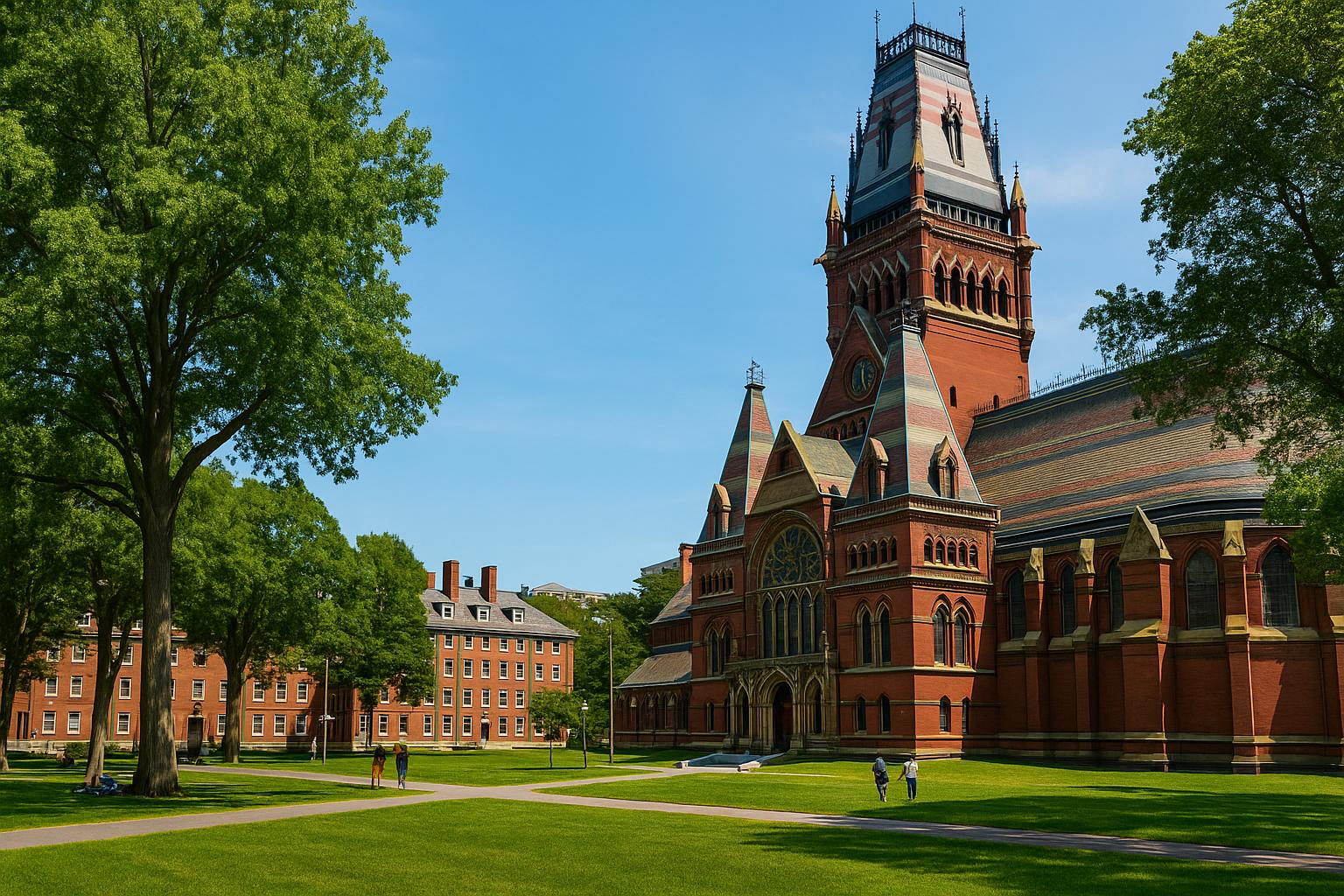
New research from Harvard economists is reshaping the long-held belief that a college degree guarantees long-term financial success. Once viewed as a secure investment in the future, many traditional majors are now delivering diminishing returns, as automation and evolving job markets rapidly redefine the worth of academic credentials.
According to Harvard labor economist David J. Deming and researcher Kadeem Noray, the value of applied degrees such as business, computer science, and engineering declines faster than previously believed. Their 2020 study found that while these degrees often provide strong early career returns, those advantages fade over time as industries evolve and new skills become essential. This phenomenon, described as “degree fatigue,” highlights the growing need for continual learning and adaptability among graduates.
The researchers noted that even degrees from elite institutions are not immune. Recent observations from career centers in early 2025 suggest that top MBA graduates are finding it increasingly difficult to secure high-paying roles that once seemed assured. The weakening correlation between prestige and placement reflects a broader shift in employer expectations. Recruiters are prioritizing tangible skills and practical experience over the reputation of an alma mater.
Meanwhile, the humanities and social sciences have faced a decade-long decline in student interest. Enrollment data show that the number of students pursuing majors like English, history, and philosophy has steadily dropped since 2013. Many students are now turning toward science, technology, engineering, and mathematics (STEM) fields, or career-oriented programs that appear to promise clearer job outcomes. Experts believe this shift is driven by both student pragmatism and employer behavior. Companies are increasingly valuing specific technical competencies—such as data analytics, coding, and digital literacy—over broad academic credentials.
Harvard’s 2025 research and market reports identify several degrees that have lost long-term market value. Fields such as general business administration, computer science, mechanical engineering, accounting, and biochemistry no longer guarantee sustainable career returns. Even traditionally respected disciplines like psychology, sociology, and philosophy now struggle to offer clear professional pathways without further specialization or advanced degrees.
However, not all fields face decline. A 2025 Student Choice report found that degrees combining technical rigor with human-centered problem-solving—such as nursing, data science, and interdisciplinary engineering—still yield strong returns on investment. The study emphasized that adaptability, critical thinking, and creativity remain the most valuable assets in an unpredictable job market. Graduates who can navigate shifting technological landscapes and merge analytical skills with emotional intelligence are expected to thrive.
Harvard’s findings suggest that the future of higher education will depend on flexibility rather than prestige. The modern economy rewards those who see learning as an ongoing process, continuously updating their skills to remain relevant. In this new paradigm, the true measure of education is not the degree itself but the ability to evolve with the times.
In conclusion, the college degree remains an important milestone, but its meaning has changed. As industries transform and automation accelerates, success will increasingly favor lifelong learners—those who combine technical expertise with creativity, empathy, and adaptability. The lesson from Harvard’s research is clear: education is no longer a one-time achievement but a continuous journey of reinvention.