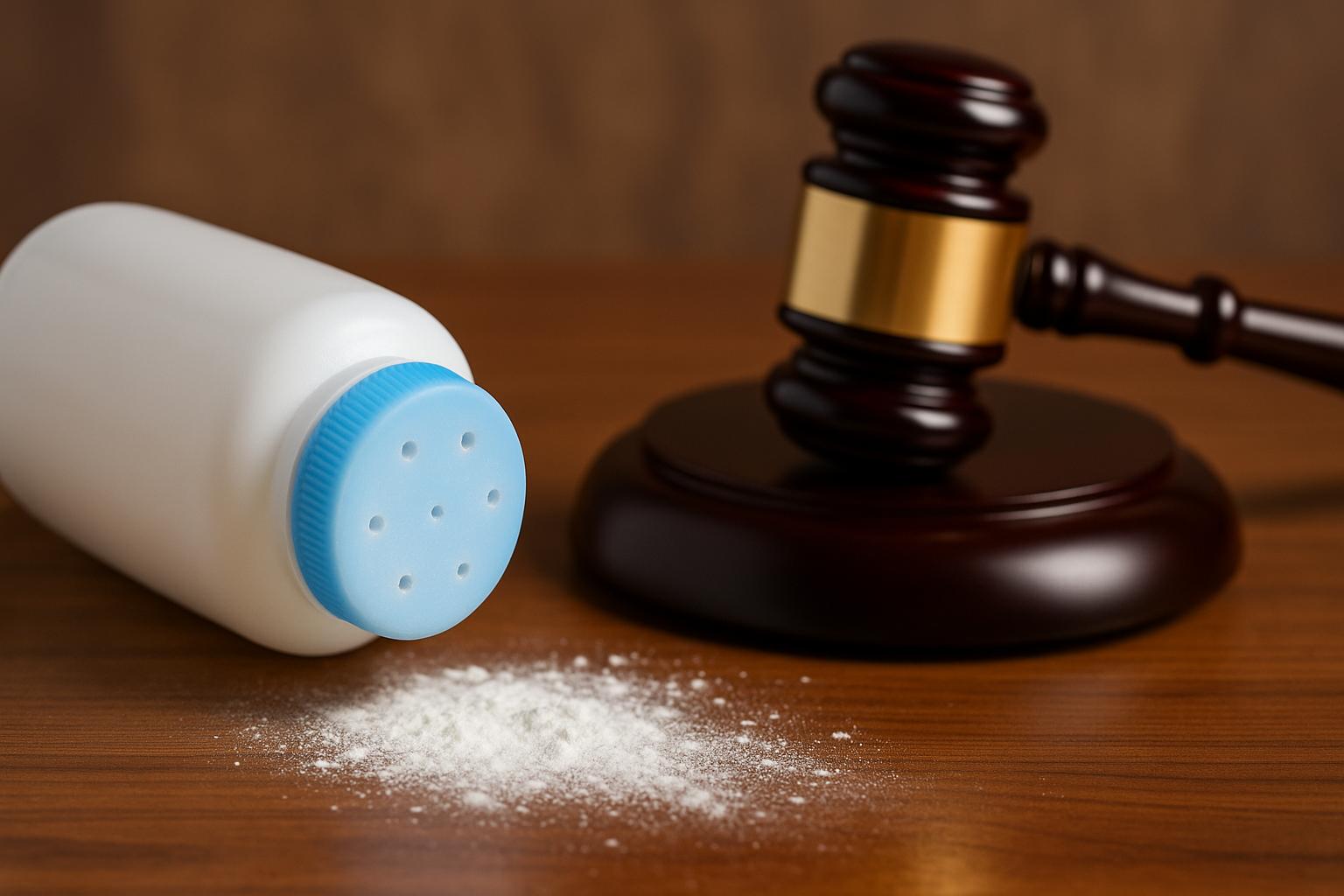
American healthcare giant Johnson & Johnson is confronting one of its most serious legal battles in the United Kingdom, as thousands of claimants have filed a collective lawsuit alleging that the company’s talc-based baby powder contained asbestos, a known carcinogen. The case, now moving through UK courts, accuses the multinational of knowingly selling contaminated products for decades while misleading consumers about their safety.
According to court filings, the lawsuit involves approximately 3,000 people who claim they developed cancer after using Johnson & Johnson’s talcum powder. The claimants argue that internal company documents and scientific studies dating back to the 1960s reveal the firm’s awareness of asbestos contamination risks in its talc supply. The allegations assert that company scientists had identified fibrous minerals, including tremolite and actinolite—both classified as forms of asbestos—within samples of the product but failed to issue warnings or withdraw the powder from the market.
The claim further points to a 1973 internal memo reportedly acknowledging “sub-trace quantities” of tremolite and actinolite in the powder. Despite such findings, Johnson & Johnson continued promoting the product as “pure and safe for daily use,” maintaining its reputation as a trusted household brand. Plaintiffs argue that this decision placed millions of consumers at risk, especially mothers and infants who used the baby powder regularly.
Talc, a soft mineral used for its moisture-absorbing properties, is commonly mined from areas located near asbestos deposits. Because of this geological proximity, contamination during extraction is possible unless rigorous testing and purification methods are applied. Legal representatives of the claimants maintain that the company failed to ensure adequate quality control, allowing asbestos fibres to enter its supply chain and reach finished products.
In response, Johnson & Johnson has strongly denied all accusations, reiterating that its talc-based products are safe and do not contain asbestos. The company stated that it has complied with all applicable safety and regulatory standards worldwide. “Our products do not cause cancer and have always been tested to meet international quality benchmarks,” a company spokesperson said. The firm emphasized that extensive testing by independent laboratories and regulatory agencies has consistently found no evidence of asbestos contamination.
Johnson & Johnson discontinued its talc-based baby powder in the UK in 2023, shifting to a cornstarch-based alternative. The company explained that the move was part of a broader global transition aimed at meeting evolving consumer preferences rather than a safety-related decision. However, lawyers representing the claimants argue that the discontinuation reflects growing awareness of the health concerns surrounding talc-based products.
If the UK lawsuit succeeds, legal experts say it could become the largest product liability case in the country’s history, with damages potentially reaching hundreds of millions of pounds. The case is being closely watched by consumer rights advocates and health organizations, as it could set a precedent for corporate accountability in product safety.
The ongoing litigation mirrors the extensive legal challenges Johnson & Johnson has faced in the United States. Over 67,000 individuals in the US have accused the company of causing cancers such as mesothelioma and ovarian cancer through its talc-based products. In several cases, American juries have awarded significant compensation to plaintiffs, although the company continues to appeal many of those verdicts.
Legal analysts note that the UK proceedings may have a profound impact on the company’s global reputation and financial exposure. Beyond the financial implications, the lawsuit underscores the growing scrutiny multinational corporations face regarding transparency, consumer protection, and ethical responsibility.
As the trial process unfolds, the focus will likely center on scientific evidence linking asbestos exposure to cancer and the extent of corporate knowledge within Johnson & Johnson over the past six decades. For now, the company maintains its stance that its products are safe, while thousands of claimants seek justice for what they describe as decades of corporate negligence and concealment.