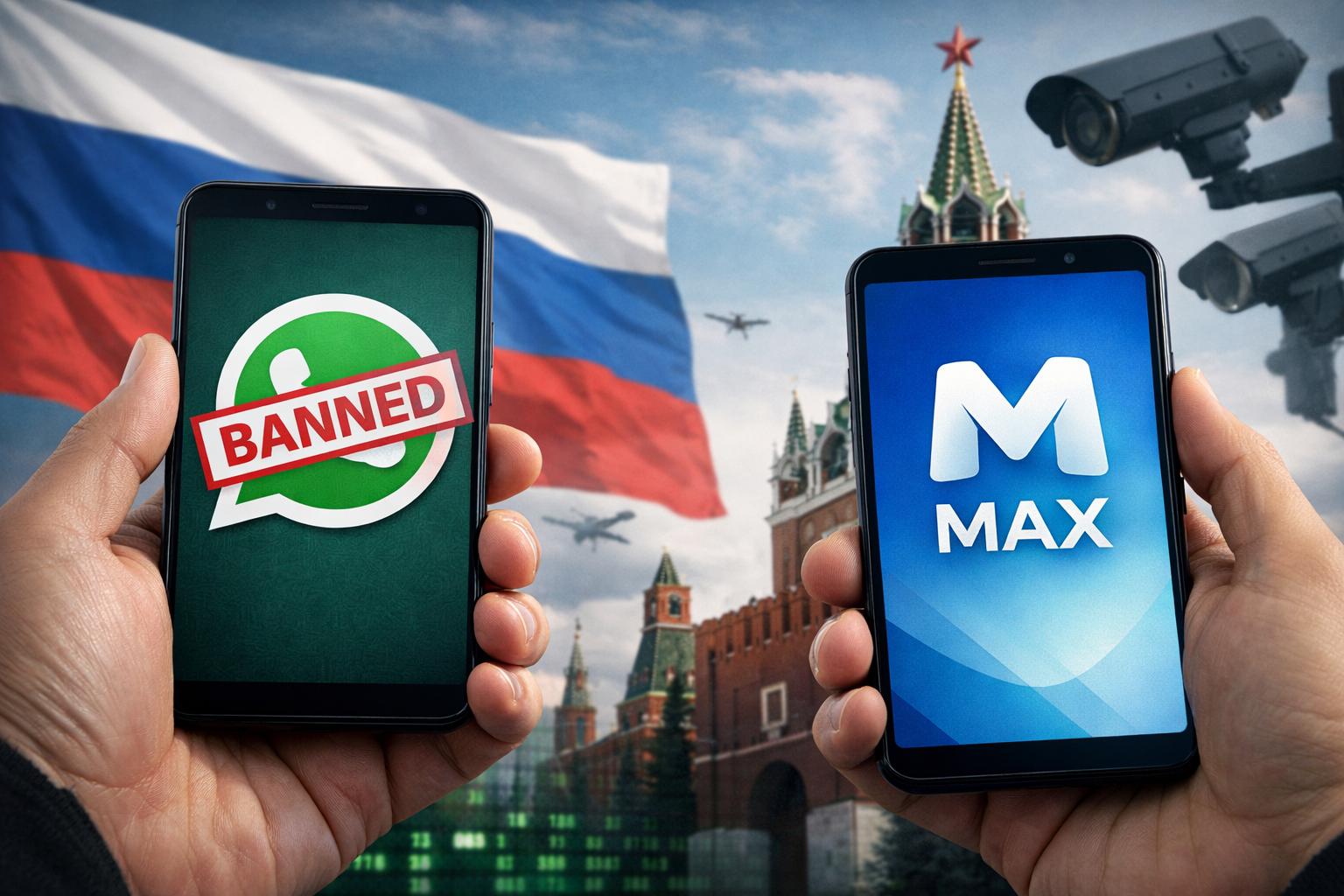
According to the Kremlin, the decision to block WhatsApp stems from what it called Meta’s failure to comply with Russian law. Kremlin spokesperson Dmitry Peskov stated that the platform had not met regulatory requirements set by the government, prompting authorities to restrict its operations nationwide. The move effectively removes one of the most widely used messaging apps in the country, forcing millions of users to seek alternative communication tools.
As part of its transition strategy, Moscow has introduced MAX, a multifunctional mobile application launched in 2025. Officials describe the platform as more than a standard messaging service, positioning it as a “super app” that integrates communication, social media features, digital identification, and access to government services. Through MAX, users will reportedly be able to manage electronic signatures, verify digital identities, and interact with Gosuslugi, the state’s online public services portal.
The government has also taken steps to ensure rapid adoption. Smartphones sold within the Russian Federation from September 2025 onward come with MAX pre-installed, making the app immediately accessible to new device owners. Authorities argue that the measure is intended to simplify digital services and provide citizens with a reliable domestic alternative that operates under national regulations. Peskov described MAX as an accessible and developing option that offers functionality comparable to foreign platforms while remaining aligned with Russian legal standards.
However, the rollout has drawn criticism from privacy advocates and policy analysts who warn that consolidating multiple digital services into a single state-controlled platform could increase surveillance risks. Because the app combines messaging, personal identification, and official documentation tools, critics argue it could allow authorities to track user activity across several aspects of daily life.
The Centre for European Policy Analysis has raised particular concerns, characterizing MAX as a system that embeds monitoring into civic life. Analysts suggest that unlike other countries where similar digital ecosystems have been adopted alongside economic incentives, Russian citizens may face expanded oversight without comparable benefits. Such concerns have intensified debate about the balance between national security, technological independence, and individual privacy.
The ban on WhatsApp underscores Russia’s broader strategy to reduce dependence on foreign technology companies and assert greater control over its digital infrastructure. While officials maintain that the shift promotes sovereignty and compliance with domestic law, the transition is likely to reshape how millions of Russians communicate and interact online in the years ahead.


 Joyful
0%
Joyful
0%
 Cool
0%
Cool
0%
 Thrilled
0%
Thrilled
0%
 Upset
0%
Upset
0%
 Unhappy
0%
Unhappy
0%