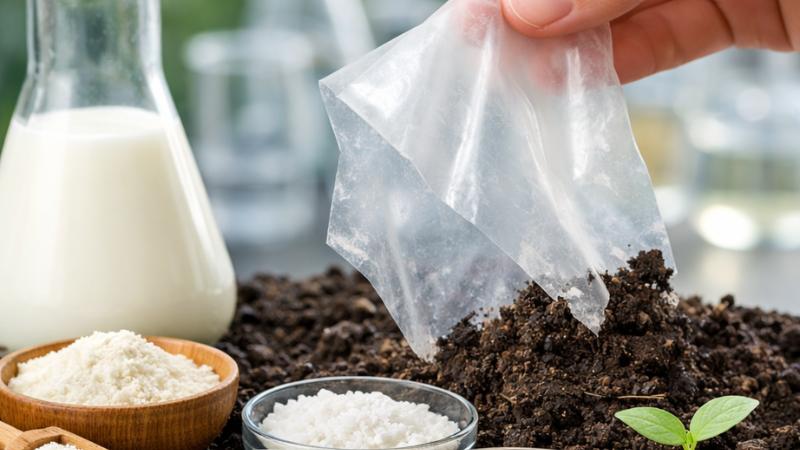
In a groundbreaking development, researchers at Flinders University in Australia have unveiled a biodegradable plastic-like film made from milk protein. This innovative material, designed for food packaging, can break down entirely in soil within just 13 weeks, offering a potential eco-friendly alternative to traditional single-use plastics that are a major contributor to global pollution.
The biodegradable material, created using calcium caseinate, a protein derived from milk, is combined with modified starch and natural clay (bentonite nanoclay). Other ingredients like glycerol and polyvinyl alcohol were added to enhance the flexibility and durability of the film. The goal was to create a packaging film that mimics the properties of conventional plastic but with significantly reduced environmental impact.
Laboratory testing demonstrated that the film gradually decomposes in soil, disappearing completely in about 13 weeks. This suggests the material could replace certain types of single-use plastic packaging, particularly in the food industry, where plastic waste is a significant concern.
Microbial testing on the material indicated that bacterial growth levels were within acceptable limits, ensuring that it remains safe for use in food packaging. However, the research team noted that further antibacterial testing will be necessary before the material is widely adopted.
This new alternative to plastic is part of the urgent global push to find biodegradable solutions to the ever-growing plastic pollution problem. The Organisation for Economic Co-operation and Development has warned that global plastic production could rise by 70% by 2040 unless significant changes are made. Currently, most plastic waste is discarded after a single use, and only a small percentage is recycled.
The project also involved collaboration with researchers from Universidad de Bogotá Jorge Tadeo Lozano in Colombia, who helped refine the material. By combining natural ingredients like starch, clay, and milk proteins, scientists aim to create low-cost, biodegradable packaging materials that can be more easily adopted across industries. This innovation is a crucial step in reducing plastic waste while meeting the increasing demand for packaging. With growing concerns over environmental sustainability, developments like this offer hope for a greener future.