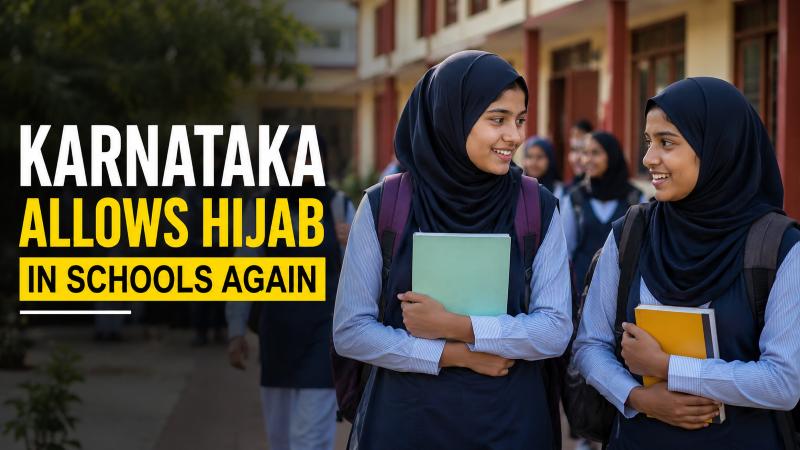
On Thursday, May 14, 2026, The Karnataka government has officially withdrawn the controversial 2022 order linked to restrictions on wearing hijab in educational institutions, allowing students to wear headscarves again in schools and colleges across the state. The latest decision has reopened nationwide discussions around religious freedom, dress code policies, student rights, and education politics in India.
The hijab issue first became a major national controversy in early 2022 after several students in Karnataka protested against restrictions imposed by colleges over wearing Islamic headscarves inside classrooms. The matter quickly escalated into a legal and political debate, drawing attention from courts, political parties, student groups, and civil rights organizations across the country. The previous BJP-led Karnataka government had supported uniform dress code policies, which indirectly led to hijab restrictions in many institutions.
With the new order now revoked, the Karnataka government stated that students should have access to education without facing barriers connected to religion or personal identity. Supporters of the move welcomed the decision, saying it would help students continue their studies peacefully and reduce tensions that had affected campuses over the last few years. Several education activists and minority organizations described the decision as an important step toward inclusiveness and equal opportunities in the education system.
Why The Karnataka Hijab Issue Became National News
The hijab row became one of the most debated education and political issues in India because it involved questions related to constitutional rights, religious freedom, and institutional discipline. During the controversy, protests and counter-protests were reported in different colleges across Karnataka, while social media discussions intensified nationwide. The issue also reached the Karnataka High Court, where legal arguments focused on whether wearing hijab should be considered an essential religious practice or whether schools had the authority to enforce strict uniform rules.
Many students claimed the restrictions affected their education, attendance, and emotional well-being. Families and student groups argued that denying entry to classrooms over religious attire created unnecessary pressure on young students. Others, however, supported uniform policies, saying educational institutions should maintain common dress standards for all students.
Political Reactions And Impact On Students
The latest decision by the Karnataka government has triggered fresh political reactions ahead of future elections in the state. Opposition leaders criticized the move and accused the government of encouraging identity politics, while ruling party representatives defended the decision as one that protects educational access and democratic rights.
Education experts believe the controversy reflects broader discussions taking place in India regarding secularism, individual freedom, and institutional regulations. Students affected by the earlier restrictions expressed relief after the latest announcement, saying the focus can now return to academics instead of prolonged political debates.
Analysts also believe the Karnataka hijab issue may continue influencing discussions around school dress codes and religious expression in public institutions across India. As debates continue, the government’s decision is expected to remain an important topic in both Karnataka politics and national education policy conversations.