Gunmen Kill Workers And Police In Honduras Coastal Attacks
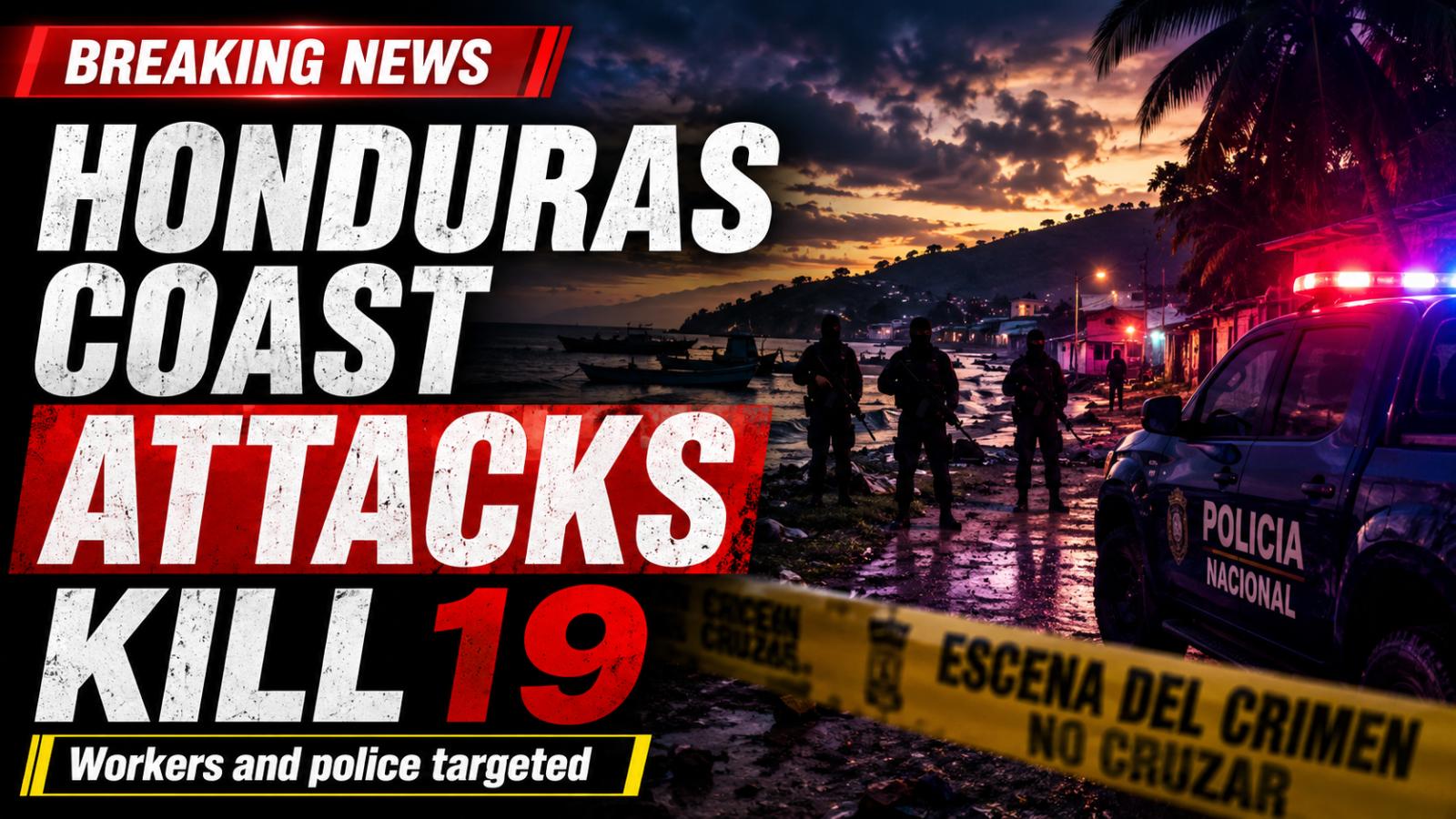
Gunmen carried out two separate attacks along the coast of Honduras on May,21,2026, killing at least 19 people, including six police officers, authorities said. The first attack took place at a plantation in the municipality of Trujillo, where at least 10 workers were shot dead, according to National Police spokesperson Edgardo Barahona. Officials said the exact death toll from the Trujillo attack remains uncertain because some victims’ bodies had been removed by relatives before investigators reached the scene.
Trujillo Attack Raises Land Conflict Concerns
The northern region has long faced agrarian disputes linked to land ownership and control of natural resources. Human rights groups have previously raised concerns about threats, surveillance and intimidation targeting environmental and land-rights activists in the area. Honduras remains one of the world’s most dangerous countries for environmental defenders, with activists facing violence connected to land disputes, organized crime and weak accountability.
Police Officers Killed In Omoa Ambush
In the second attack, armed assailants ambushed police officers in Omoa, near the Guatemalan border in the Cortes department. Police said six officers, including a senior commander, were killed while traveling from Tegucigalpa to Omoa as part of an anti-gang operation. The Security Ministry said the National Police and armed forces would respond to both attacks, while special investigative teams, forensic experts and prosecutors were assigned to the case.
Honduras Faces Ongoing Security Challenges
Honduras has long struggled with gang violence, transnational drug trafficking and high levels of impunity, although homicide rates have declined since their peak in 2011. The attacks come amid continuing debate over the country’s reliance on militarized anti-crime strategies. Human rights organizations have criticized those policies, saying they have contributed to abuses including torture, forced disappearances and extrajudicial killings. The criticism intensified during a three-year state of exception that expanded security force powers before ending in January 2026.