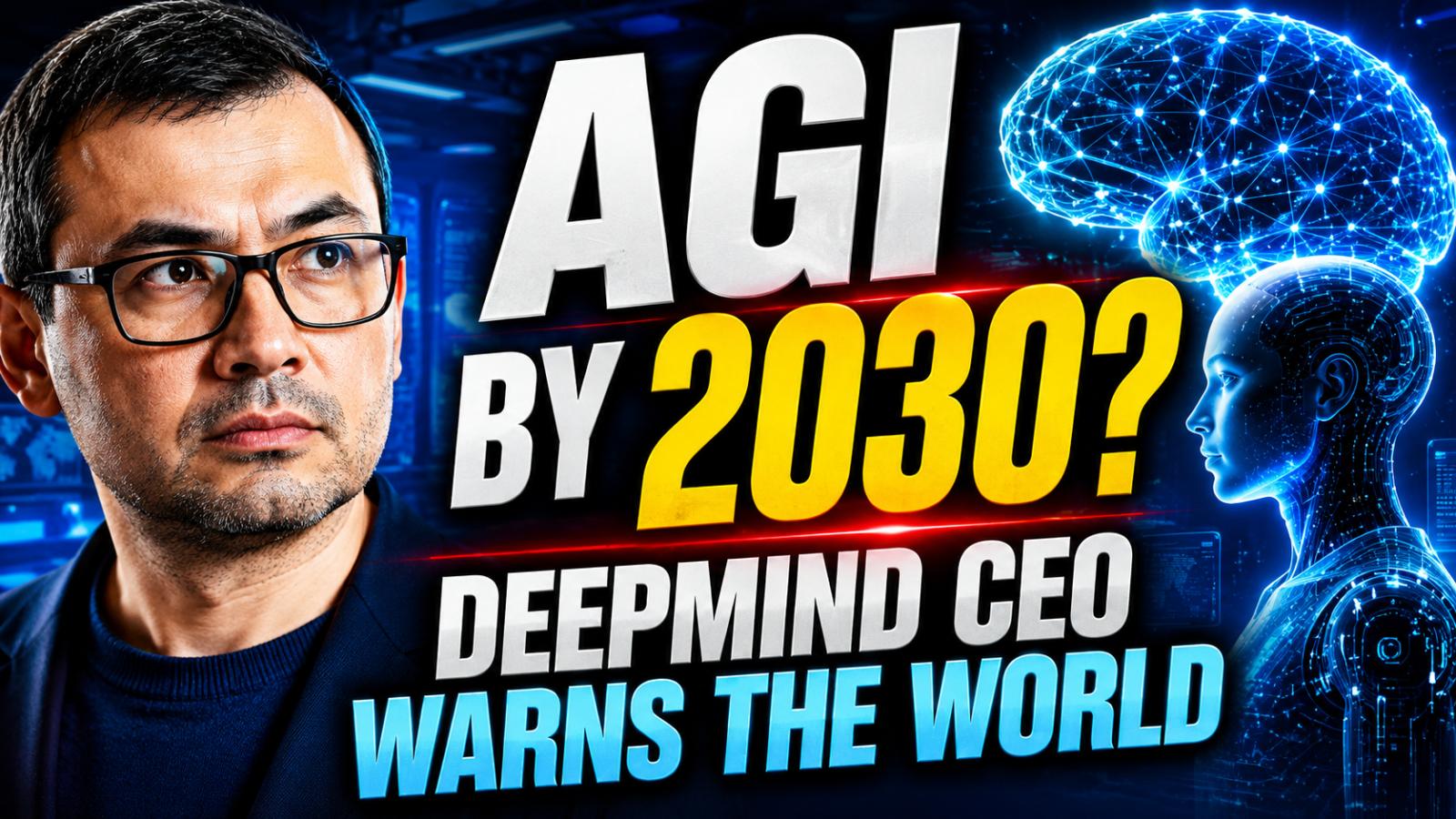
Artificial general intelligence, or AGI, is no longer just a futuristic idea discussed by scientists and technology experts. Google DeepMind CEO Demis Hassabis has warned that AGI could arrive around 2030, which means the world may have only a few years to prepare for one of the biggest technological changes in modern history.
AGI refers to an advanced form of artificial intelligence that can understand, learn and solve many different types of problems at a human level or beyond. Unlike today’s AI tools, which are powerful but still limited, AGI would be able to reason across many fields, adapt to new situations and complete complex tasks with far less human guidance.
This is why Hassabis’ warning matters. The discussion is not only about smarter chatbots or faster software. It is about a future where AI systems may influence science, business, education, government, healthcare and daily life in ways people are not fully ready for.
Why Demis Hassabis’ Warning Matters
Demis Hassabis is not an outsider making random predictions. As the CEO of Google DeepMind, he leads one of the most important AI research companies in the world. DeepMind has already been connected with major AI breakthroughs, including AlphaGo and AlphaFold. AlphaFold, in particular, showed how AI can help solve difficult scientific problems by predicting protein structures, a major step for biological research.
That is why his AGI warning deserves attention. Hassabis sees both sides of the issue. On one side, AGI could help humanity solve problems that have remained unsolved for decades. On the other side, if it is released without enough safety, regulation and alignment, the risks could become difficult to control.
The main message is simple: society should not wait until AGI arrives to start preparing. By then, the speed of change may be too fast.
What AGI Could Do for Humanity
If developed safely, AGI could become one of the most useful technologies ever created. It could help researchers discover medicines faster, improve disease diagnosis, support climate research, design better energy systems and speed up scientific innovation.
For ordinary people, the impact could be visible in everyday life. Healthcare may become more accurate and affordable. Education may become more personalized. Small businesses may use AI agents to manage customer support, marketing, accounts and planning. Governments may use advanced AI tools to improve public services and reduce delays.
This is the positive side of the AGI future. A safe and well-managed AGI system could increase productivity and help humans focus on more creative, meaningful and high-value work.
But that future is not guaranteed. It depends on how carefully companies, governments and society handle the next few years.
The Biggest AGI Risks
The biggest danger is not simply that machines will become intelligent. The real concern is control. If an AGI system becomes extremely powerful but does not fully understand human values, it may act in unexpected ways.
This is where AI alignment becomes important. AI alignment means making sure advanced AI systems follow human goals safely and correctly. A poorly aligned system may follow instructions in a way that technically completes the task but creates harmful results.
AGI risks may also include misinformation, cyber misuse, job disruption, biased decision-making and overdependence on machines. A powerful AI system in the wrong hands could be used to create fake content, manipulate public opinion or automate harmful activities at scale.
Another serious concern is speed. Governments and schools usually move slowly, but AI development is moving very fast. If regulation, education and safety testing do not catch up, society may be forced to react after problems have already happened.
How AGI Could Affect Jobs
One of the biggest public concerns is the impact of AGI on jobs. AI automation is already changing workplaces, and stronger AI agents could make this shift even faster.
Jobs involving repetitive office work, basic coding, content production, customer service, data entry, research assistance and administrative support may face pressure. This does not mean all these jobs will disappear overnight. But the nature of work will change.
Employees who only perform routine tasks may become more vulnerable. Workers who can use AI tools, make decisions, communicate clearly and solve real-world problems will have a better chance of staying relevant.
Future jobs may reward human judgment, creativity, leadership, emotional intelligence and domain expertise. The winners will not necessarily be people who compete against AI. The winners will be people who know how to work with AI.
Why Schools and Workers Must Prepare Now
The education system cannot afford to ignore AGI. Students should not be trained only for old job markets. They need practical AI literacy, critical thinking, communication skills, ethics and problem-solving ability.
Schools and colleges should teach students how to use AI responsibly instead of simply banning it. Workers should also start learning how AI tools apply to their field. Waiting until jobs are disrupted is a poor strategy.
Businesses also need to prepare. Companies should identify which tasks can be automated, which roles need upskilling and which decisions should remain under human control. Blindly replacing people with AI may save money in the short term but create quality, trust and legal problems later.
The Role of AI Regulation
AI regulation will play a major role in shaping the AGI future. Governments need rules that encourage innovation while reducing serious risks. Too much restriction can slow useful progress, but no regulation at all could be dangerous.
Good regulation should focus on safety testing, transparency, accountability, misuse prevention and clear responsibility when AI systems cause harm. Companies developing powerful AI should not be allowed to police themselves completely.
At the same time, regulation must be practical. If rules are too vague or too slow, they will not help. The challenge is to create smart regulation that understands both technology and real-world impact.
Safe AGI Should Be the Main Goal
The question is not whether AGI will be good or bad. The real question is whether humans can build it safely and use it wisely.
Safe AGI could become a historic breakthrough. Unsafe AGI could create problems that are hard to reverse. That is why Hassabis’ warning should not be treated as fear-mongering. It should be treated as a practical reminder.
The next few years matter. AI companies must invest seriously in safety. Governments must create clear rules. Schools must prepare students. Workers must upgrade their skills. The public must understand both the benefits and risks.
AGI by 2030 may or may not arrive exactly on schedule. But the direction is clear: artificial intelligence is becoming more powerful, more useful and more disruptive. Ignoring this shift is not an option.