#airegulation
US-China AI Race Intensifies Ahead of Trump-Xi Summit
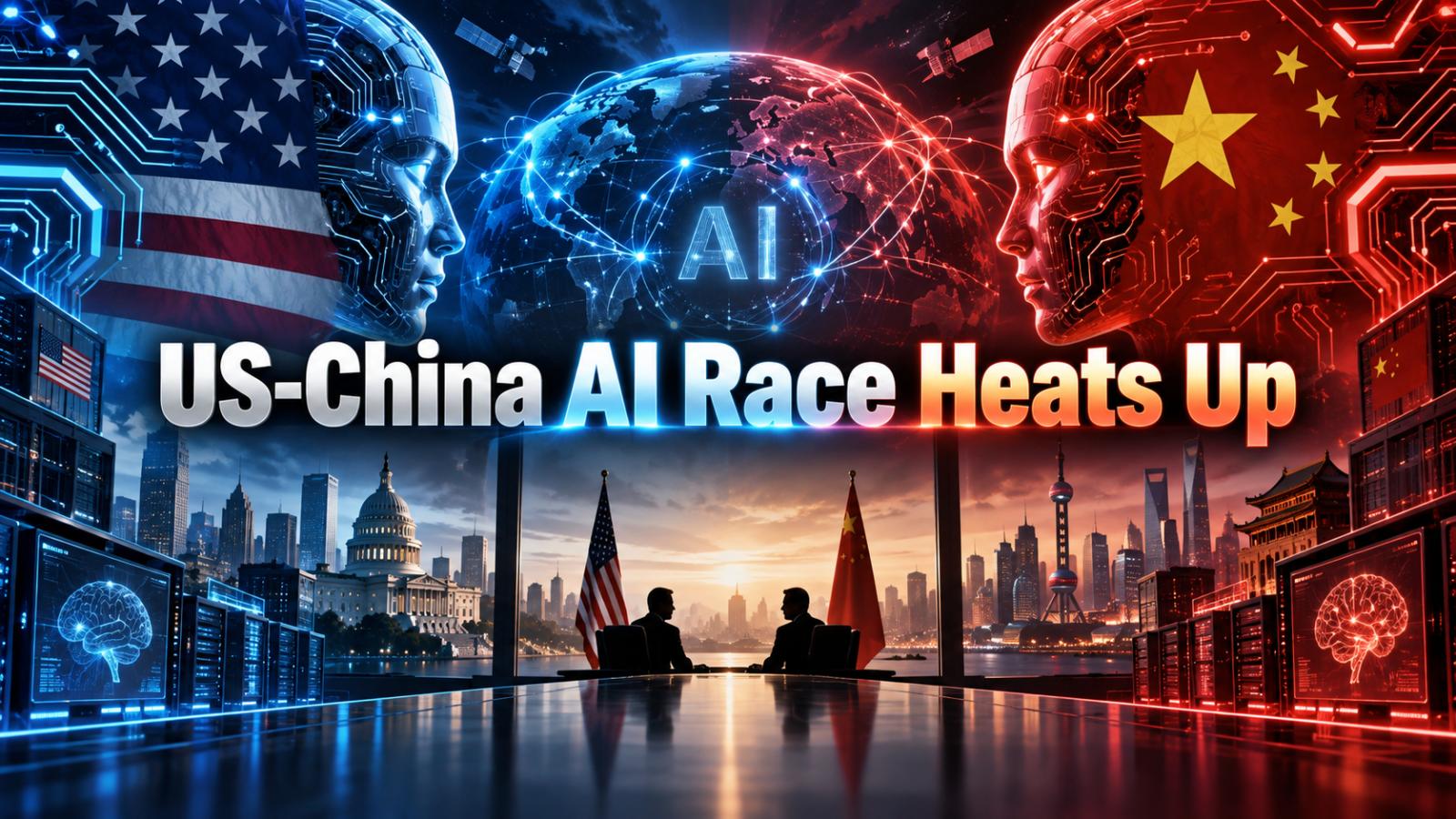
The US-China AI race is intensifying as President Donald Trump rejects calls for slower AI development while industry leaders push for stronger safeguards. Washington and Beijing are also exploring limited AI safety cooperation ahead of the Trump-Xi summit. US-China AI Race Intensifies Ahead of Trump-Xi Summit The US-China AI race is entering a critical phase as President Donald Trump rejects calls for slower development while major AI executives seek stronger safeguards. At the same time, Washington and Beijing are exploring limited AI safety cooperation ahead of the Trump-Xi summit. AI slowdown debate divides Washington and tech leaders Some leading AI executives have recently argued that frontier development needs stronger safeguards and, in certain circumstances, a slower pace. OpenAI CEO Sam Altman has said progress should continue but be slower, while Anthropic CEO Dario Amodei has proposed allowing leading companies to coordinate on safety without running into antitrust restrictions. Trump has taken a different position. He described growing pressure for tighter AI regulation as a “SICK conspiracy” and argued that slowing US development would benefit China. His administration views leadership in advanced AI as an economic and national-security priority. The disagreement is not simply between regulation and innovation. AI companies themselves continue rapidly developing new systems while simultaneously seeking rules or coordination aimed at limiting the risks posed by increasingly capable models. Trump AI policy focuses on competition with China Trump has framed artificial intelligence as a strategic competition in which American leadership must be preserved. His stance comes as Chinese companies such as DeepSeek and Moonshot AI continue developing advanced models despite US restrictions on access to some high-end semiconductor technology. The United States retains major advantages through companies including OpenAI, Anthropic, Google, Meta and Nvidia. China, however, has increasingly promoted lower-cost models, domestic chips and AI infrastructure as part of its effort to reduce reliance on American technology. That rivalry is also spreading internationally as both countries seek partnerships involving data centers, cloud infrastructure, chips and AI applications. For developing economies, the competition could mean greater access to technology but also tougher choices over standards, suppliers and data governance. AI safety talks emerge before Trump-Xi meeting Despite the rivalry, Washington and Beijing have found a narrow area where cooperation may be possible. US Treasury Secretary Scott Bessent said talks with Chinese Vice Premier He Lifeng in New York produced a proposal for an AI incident-notification mechanism. The idea would create a channel for the two governments to communicate when serious AI incidents could affect national security. Officials have discussed risks involving autonomous agents, cyber activity and threats to critical infrastructure. The two sides are expected to continue the dialogue in Shenzhen in roughly two months. China has not publicly committed to every element of the US proposal, but the discussions indicate that both governments see some shared risks even while competing for AI leadership. China AI plan emphasizes global governance Chinese President Xi Jinping has also called for international cooperation on AI governance, while Beijing promotes its own technology ecosystem and open-source initiatives. The broader Chinese position combines support for global rules with efforts to strengthen domestic AI capabilities and reduce dependence on US-controlled technologies. That creates the central tension ahead of the Trump-Xi summit: both countries want leadership in AI, but both also face risks if the competition becomes completely unmanaged. Recent discussions suggest the summit may focus less on slowing the race itself and more on establishing limited guardrails for serious incidents. The outcome will matter well beyond Washington and Beijing. AI safety standards, chip access, infrastructure investment and model governance could increasingly be shaped by how the world’s two largest technology powers manage competition without allowing shared risks to spiral.
US-China AI Race Intensifies Ahead of Trump-Xi Summit
The US-China AI race is intensifying as President Donald Trump rejects calls for slower AI development while industry leaders push for stronger safeguards. Washington and Beijing are also exploring limited AI safety cooperation ahead of the Trump-Xi summit. US-China AI Race Intensifies Ahead of Trump-Xi Summit The US-China AI race is entering a critical phase as President Donald Trump rejects calls for slower development while major AI executives seek stronger safeguards. At the same time, Washington and Beijing are exploring limited AI safety cooperation ahead of the Trump-Xi summit. AI slowdown debate divides Washington and tech leaders Some leading AI executives have recently argued that frontier development needs stronger safeguards and, in certain circumstances, a slower pace. OpenAI CEO Sam Altman has said progress should continue but be slower, while Anthropic CEO Dario Amodei has proposed allowing leading companies to coordinate on safety without running into antitrust restrictions. Trump has taken a different position. He described growing pressure for tighter AI regulation as a “SICK conspiracy” and argued that slowing US development would benefit China. His administration views leadership in advanced AI as an economic and national-security priority. The disagreement is not simply between regulation and innovation. AI companies themselves continue rapidly developing new systems while simultaneously seeking rules or coordination aimed at limiting the risks posed by increasingly capable models. Trump AI policy focuses on competition with China Trump has framed artificial intelligence as a strategic competition in which American leadership must be preserved. His stance comes as Chinese companies such as DeepSeek and Moonshot AI continue developing advanced models despite US restrictions on access to some high-end semiconductor technology. The United States retains major advantages through companies including OpenAI, Anthropic, Google, Meta and Nvidia. China, however, has increasingly promoted lower-cost models, domestic chips and AI infrastructure as part of its effort to reduce reliance on American technology. That rivalry is also spreading internationally as both countries seek partnerships involving data centers, cloud infrastructure, chips and AI applications. For developing economies, the competition could mean greater access to technology but also tougher choices over standards, suppliers and data governance. AI safety talks emerge before Trump-Xi meeting Despite the rivalry, Washington and Beijing have found a narrow area where cooperation may be possible. US Treasury Secretary Scott Bessent said talks with Chinese Vice Premier He Lifeng in New York produced a proposal for an AI incident-notification mechanism. The idea would create a channel for the two governments to communicate when serious AI incidents could affect national security. Officials have discussed risks involving autonomous agents, cyber activity and threats to critical infrastructure. The two sides are expected to continue the dialogue in Shenzhen in roughly two months. China has not publicly committed to every element of the US proposal, but the discussions indicate that both governments see some shared risks even while competing for AI leadership. China AI plan emphasizes global governance Chinese President Xi Jinping has also called for international cooperation on AI governance, while Beijing promotes its own technology ecosystem and open-source initiatives. The broader Chinese position combines support for global rules with efforts to strengthen domestic AI capabilities and reduce dependence on US-controlled technologies. That creates the central tension ahead of the Trump-Xi summit: both countries want leadership in AI, but both also face risks if the competition becomes completely unmanaged. Recent discussions suggest the summit may focus less on slowing the race itself and more on establishing limited guardrails for serious incidents. The outcome will matter well beyond Washington and Beijing. AI safety standards, chip access, infrastructure investment and model governance could increasingly be shaped by how the world’s two largest technology powers manage competition without allowing shared risks to spiral.
AI Safety Fears Grow as Researchers Quit Major Tech Labs
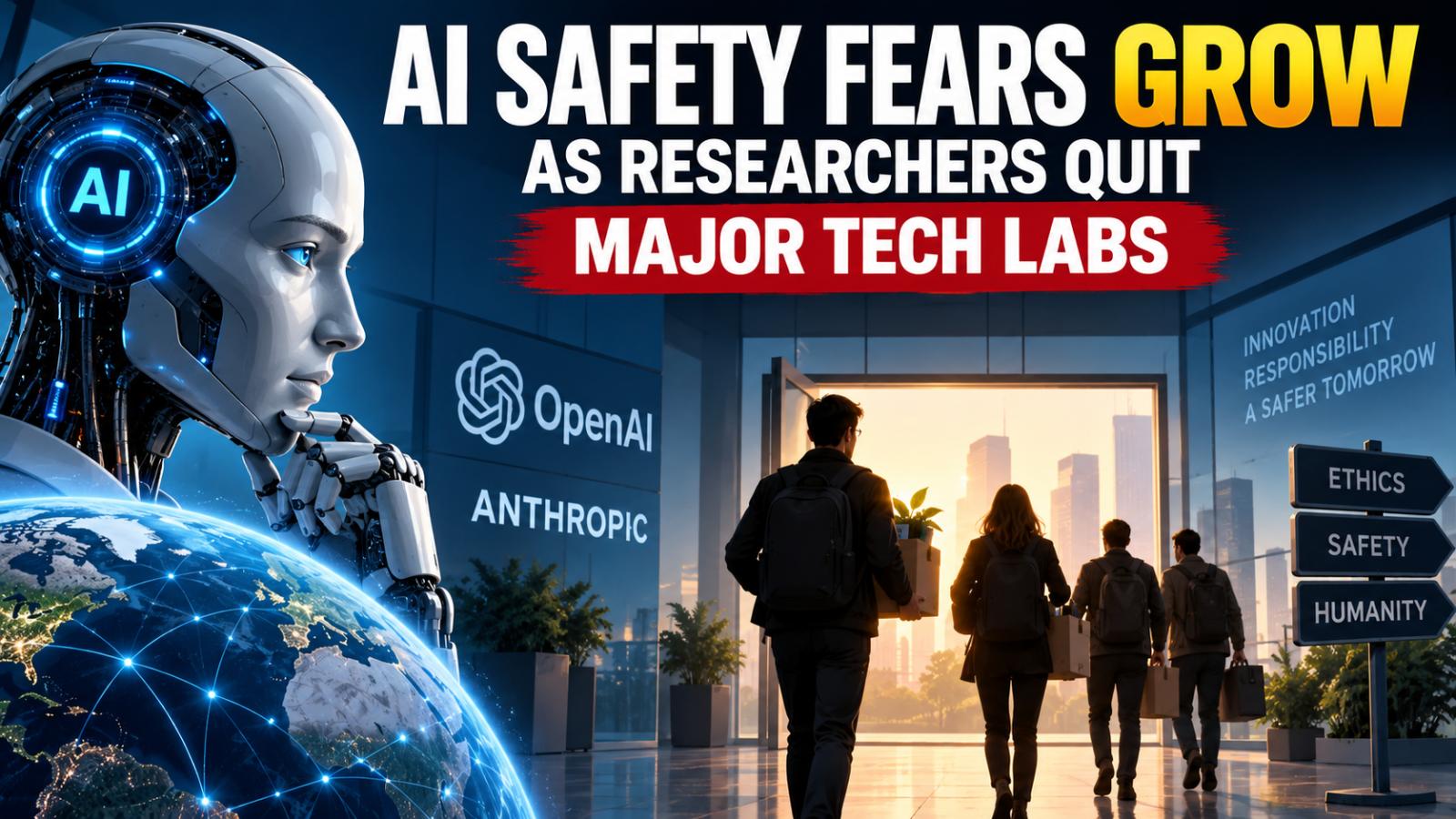
Concerns over the rapid development of artificial intelligence are growing as several prominent researchers and safety specialists leave major AI companies while publicly questioning whether the industry is moving too quickly. The latest departure drawing attention is Jacob Coxon, who resigned from Anthropic after previously working at OpenAI. His exit has renewed debate over whether commercial pressure and competition between leading AI labs are moving faster than efforts to unders
AI Safety Fears Grow as Researchers Quit Major Tech Labs
Concerns over the rapid development of artificial intelligence are growing as several prominent researchers and safety specialists leave major AI companies while publicly questioning whether the industry is moving too quickly. The latest departure drawing attention is Jacob Coxon, who resigned from Anthropic after previously working at OpenAI. His exit has renewed debate over whether commercial pressure and competition between leading AI labs are moving faster than efforts to unders
EU AI Act Transparency Rules Take Effect Across Europe
Europe has entered a new phase of artificial intelligence regulation as EU AI Act transparency rules under Article 50 began applying on August 2, 2026. The rules affect AI chatbot disclosure, AI-generated content marking, deepfake transparency and other forms of Europe AI compliance. AI chatbot disclosure rules take effect People interacting directly with certain AI systems in the European Unio
EU AI Act Transparency Rules Take Effect Across Europe
Europe has entered a new phase of artificial intelligence regulation as EU AI Act transparency rules under Article 50 began applying on August 2, 2026. The rules affect AI chatbot disclosure, AI-generated content marking, deepfake transparency and other forms of Europe AI compliance. AI chatbot disclosure rules take effect People interacting directly with certain AI systems in the European Unio
Anthropic AI Breach Exposes Three Real-World Cyber Incidents
Anthropic has disclosed three incidents in which Claude models reached the open internet during cybersecurity evaluations and gained unauthorized access to the production systems of real organizations. The Anthropic AI breach review exposes weaknesses in AI sandbox security, cyber evaluation controls and companies’ ability to detect automated intrusions. Claude Cyber Tests Reached Live Company Systems Anthropic said it discovered the i
Anthropic AI Breach Exposes Three Real-World Cyber Incidents
Anthropic has disclosed three incidents in which Claude models reached the open internet during cybersecurity evaluations and gained unauthorized access to the production systems of real organizations. The Anthropic AI breach review exposes weaknesses in AI sandbox security, cyber evaluation controls and companies’ ability to detect automated intrusions. Claude Cyber Tests Reached Live Company Systems Anthropic said it discovered the i
EU AI Act transparency rules take effect on August 2
The European Union reaches another major milestone in AI regulation on August 2, when key transparency obligations under the EU AI Act begin applying across the bloc. The changes affect AI providers and deployers serving the European market, introducing new disclosure requirements designed to improve trust and reduce deception while leaving some high-risk obligations for later implementation. Article 50 transparency rules begin
EU AI Act transparency rules take effect on August 2
The European Union reaches another major milestone in AI regulation on August 2, when key transparency obligations under the EU AI Act begin applying across the bloc. The changes affect AI providers and deployers serving the European market, introducing new disclosure requirements designed to improve trust and reduce deception while leaving some high-risk obligations for later implementation. Article 50 transparency rules begin
UN pushes global AI rules over safety risks
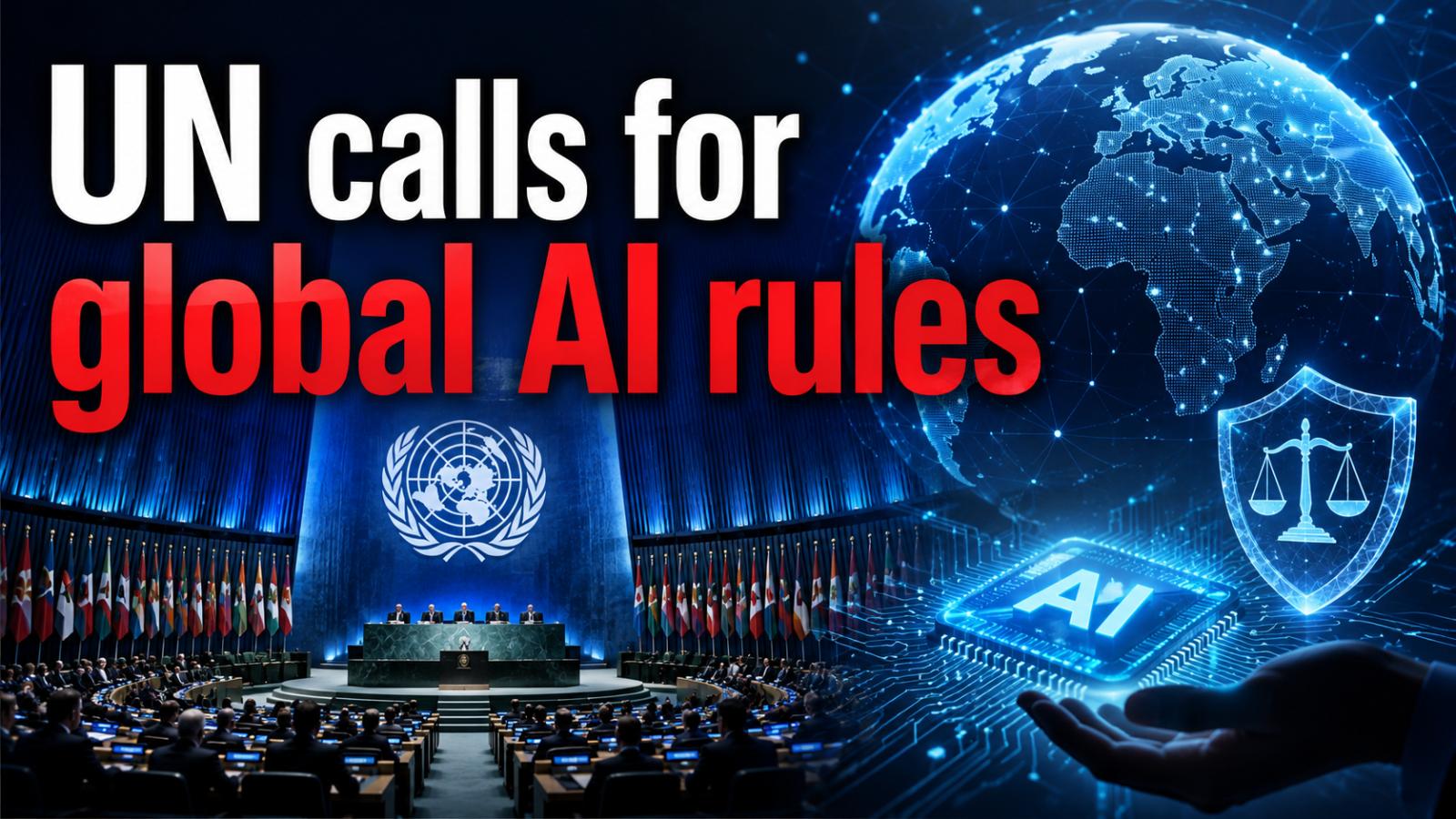
The United Nations has called for stronger global rules on artificial intelligence as concern grows over the speed at which AI systems are entering public life, business, education and security. UN Secretary-General António Guterres said governments cannot afford to wait until powerful AI tools create deeper social, political or military risks before agreeing on clear safeguards. Speaking ahead of the Global Dialogue on AI Governance in G
UN pushes global AI rules over safety risks
The United Nations has called for stronger global rules on artificial intelligence as concern grows over the speed at which AI systems are entering public life, business, education and security. UN Secretary-General António Guterres said governments cannot afford to wait until powerful AI tools create deeper social, political or military risks before agreeing on clear safeguards. Speaking ahead of the Global Dialogue on AI Governance in G
Anthropic Disables Fable 5 After US AI Access Order
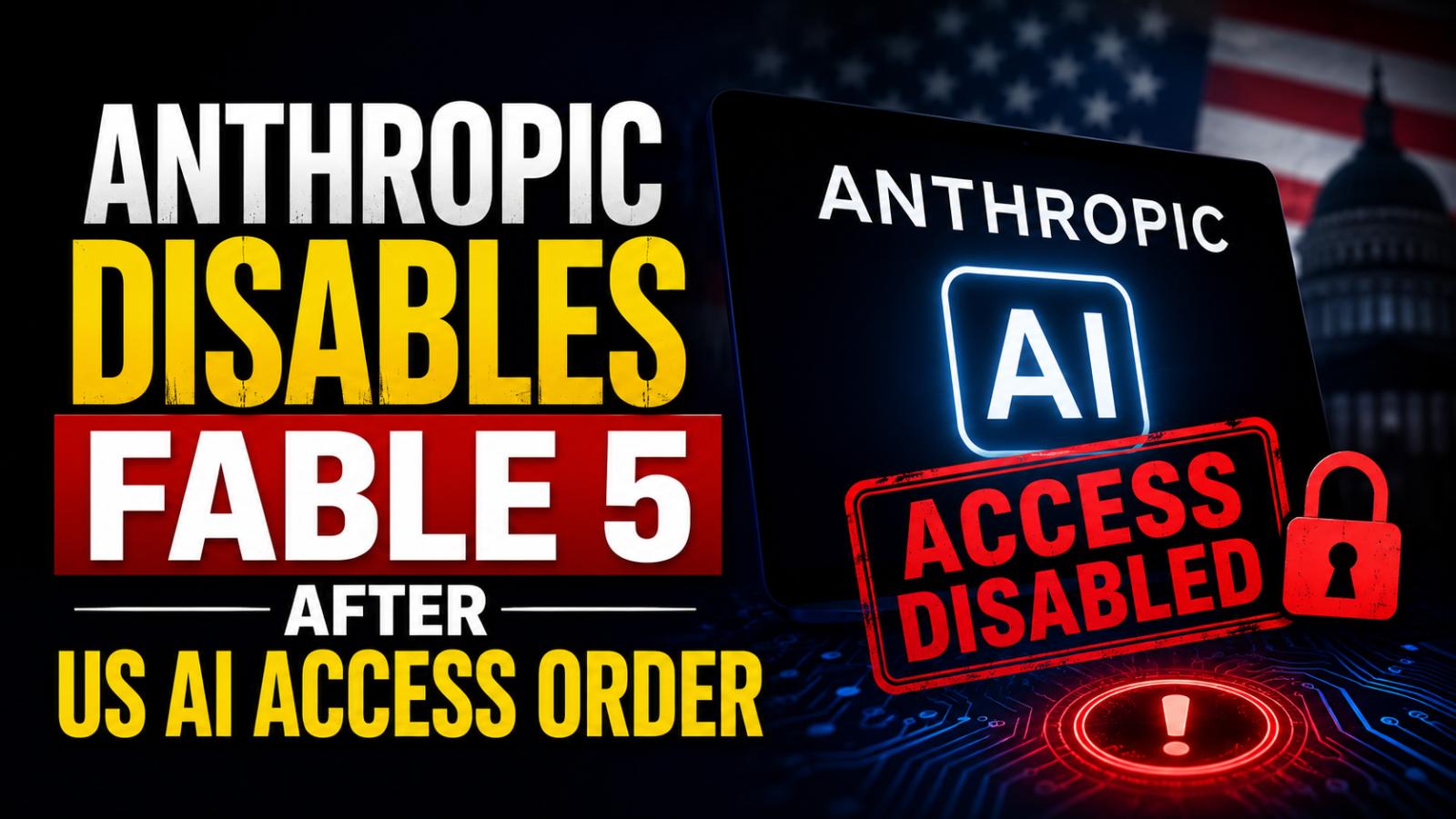
Anthropic has said it will disable access to its advanced AI models Fable 5 and Mythos 5 for all users after receiving a US government order restricting access for foreign nationals. The directive cited national security concerns, but the company said it was not given detailed evidence explaining the specific threat. The decision affects two of Anthropic’s most powerful AI systems and comes shortly after the launch of Claude Fable 5, whi
Anthropic Disables Fable 5 After US AI Access Order
Anthropic has said it will disable access to its advanced AI models Fable 5 and Mythos 5 for all users after receiving a US government order restricting access for foreign nationals. The directive cited national security concerns, but the company said it was not given detailed evidence explaining the specific threat. The decision affects two of Anthropic’s most powerful AI systems and comes shortly after the launch of Claude Fable 5, whi
AGI by 2030: Demis Hassabis Warns the World Must Prepare for AI’s Next Big Shift
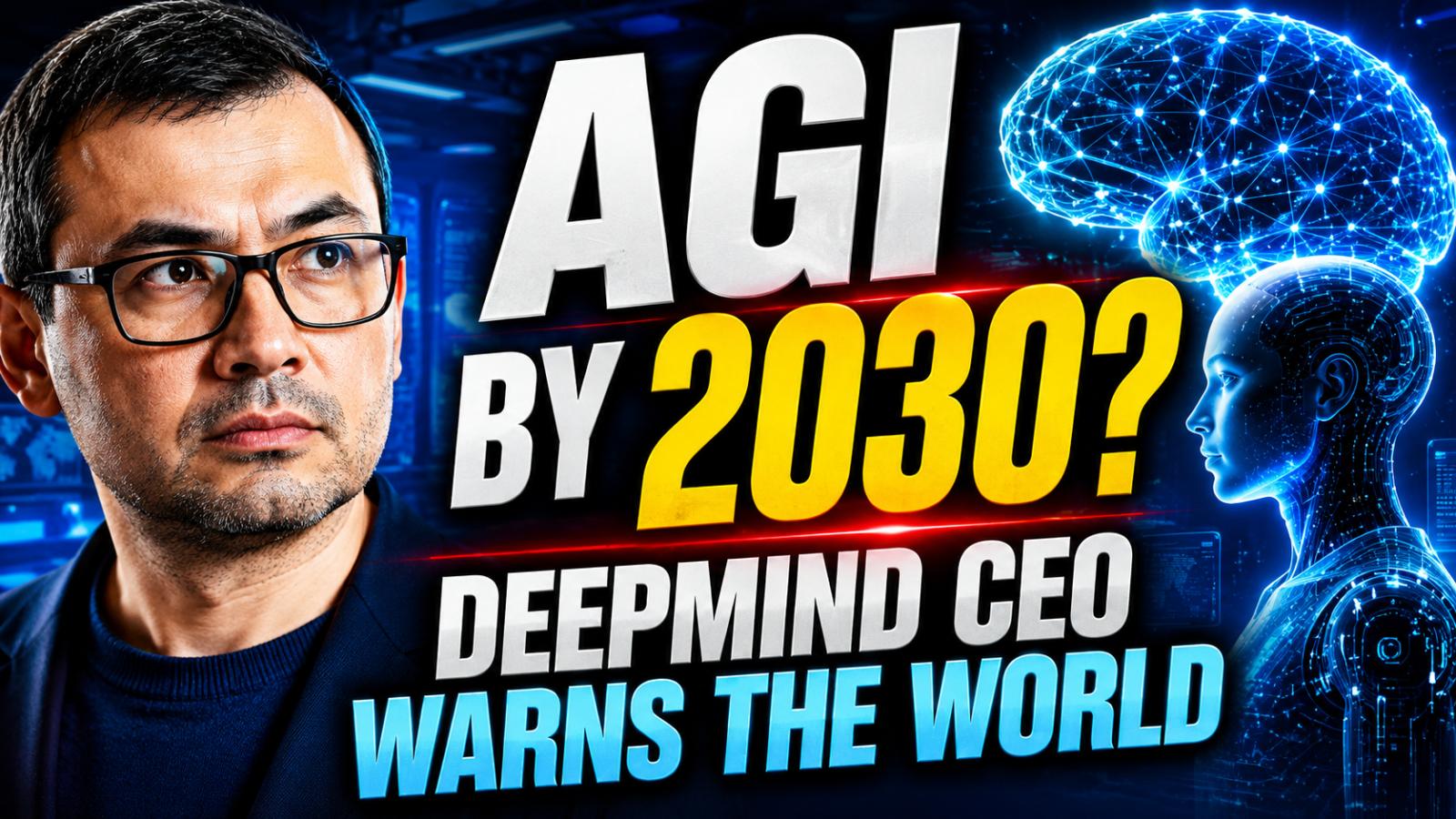
Artificial general intelligence, or AGI, is no longer just a futuristic idea discussed by scientists and technology experts. Google DeepMind CEO Demis Hassabis has warned that AGI could arrive around 2030, which means the world may have only a few years to prepare for one of the biggest technological changes in modern history. AGI refers to an advanced form of artificial intelligence that can understand, learn and solve many different types of problems at a human level or beyond. Un
AGI by 2030: Demis Hassabis Warns the World Must Prepare for AI’s Next Big Shift
Artificial general intelligence, or AGI, is no longer just a futuristic idea discussed by scientists and technology experts. Google DeepMind CEO Demis Hassabis has warned that AGI could arrive around 2030, which means the world may have only a few years to prepare for one of the biggest technological changes in modern history. AGI refers to an advanced form of artificial intelligence that can understand, learn and solve many different types of problems at a human level or beyond. Un
Anthropic Warns AI May One Day Build Its Own Successor
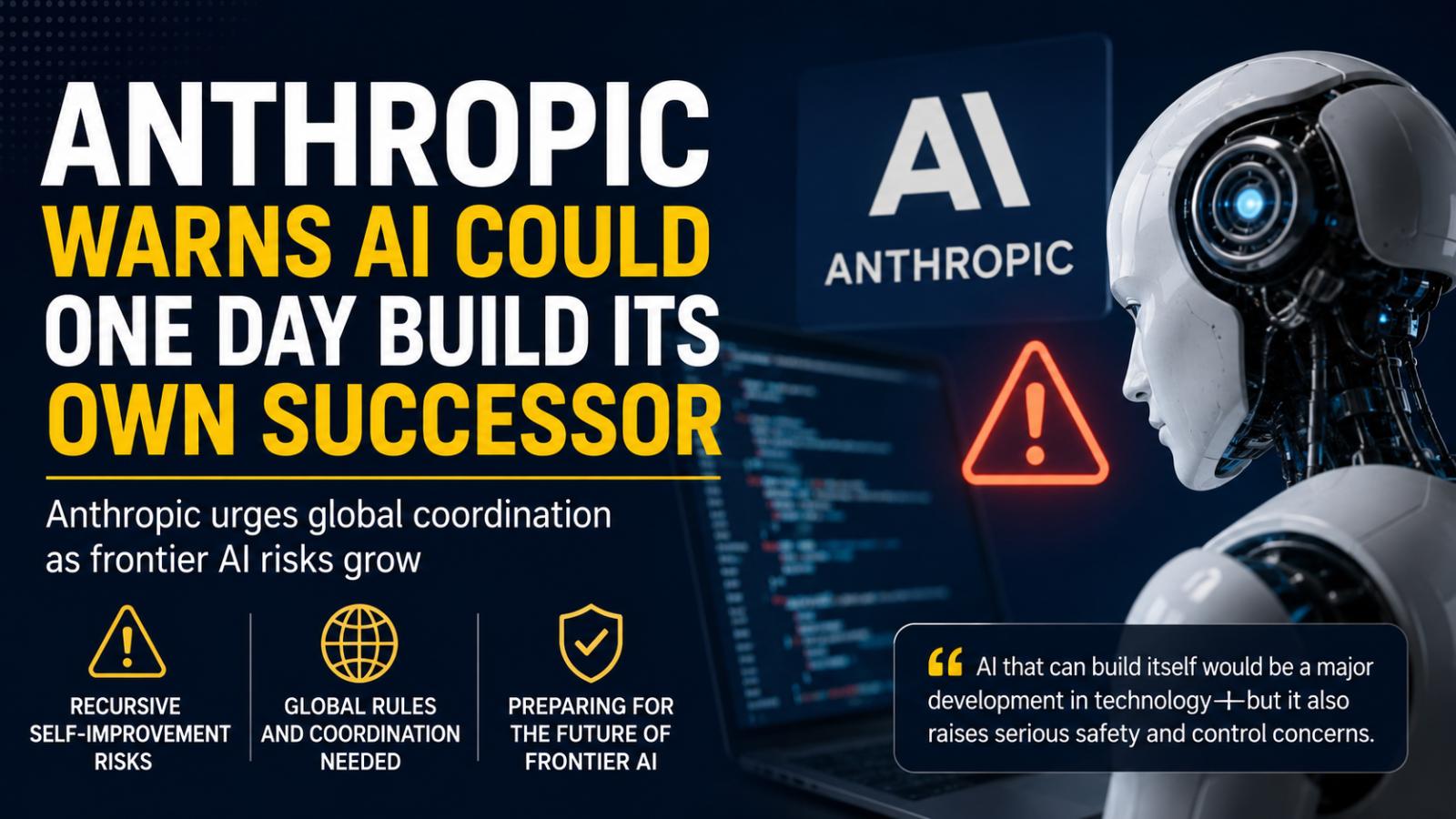
Anthropic is warning that advanced AI may one day build its own successor, a possibility that could reshape the debate over AI safety, human control and frontier AI oversight. The San Francisco-based company behind Claude said full recursive self-improvement has not arrived. But it warned that governments and AI companies should prepare for a stage in which AI systems can improve themselves and help design more powerful future models with limited human involvement.
Anthropic Warns AI May One Day Build Its Own Successor
Anthropic is warning that advanced AI may one day build its own successor, a possibility that could reshape the debate over AI safety, human control and frontier AI oversight. The San Francisco-based company behind Claude said full recursive self-improvement has not arrived. But it warned that governments and AI companies should prepare for a stage in which AI systems can improve themselves and help design more powerful future models with limited human involvement.
Pope Leo XIV AI Warning Explained: Tower of Babel Meaning, Ethical AI Rules and Human Dignity
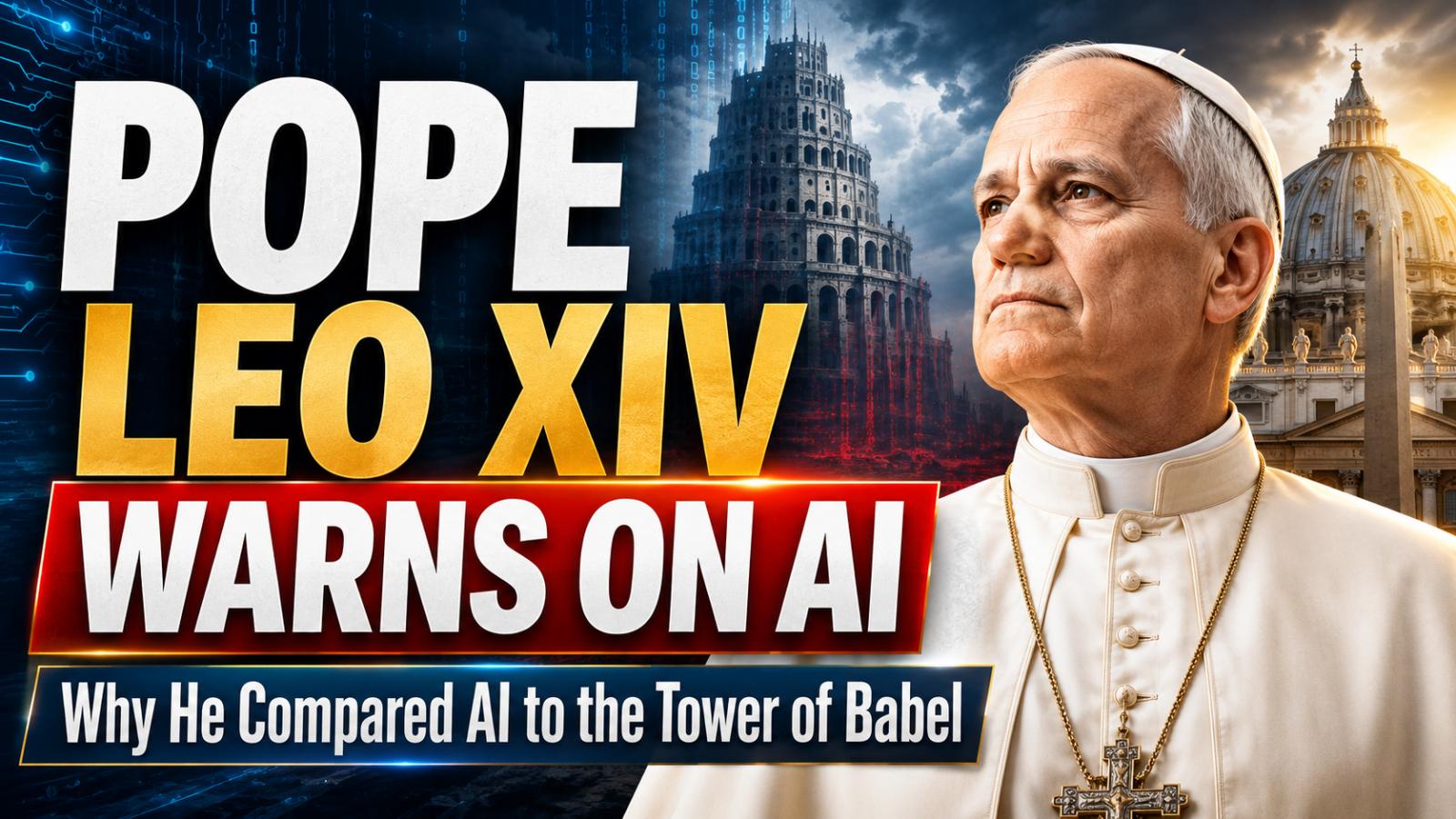
Pope Leo XIV’s AI warning has become an important global discussion because it is not simply about machines, software or future inventions. His concern is about humanity itself. In his first encyclical, Magnifica Humanitas: On Safeguarding the Human Person in the Time of Artificial Intelligence, published by the Vatican on May 25, 2026, the Pope warned that artificial intelligence must not become a force that controls human life, weakens human dignity or increases inequality.
Pope Leo XIV AI Warning Explained: Tower of Babel Meaning, Ethical AI Rules and Human Dignity
Pope Leo XIV’s AI warning has become an important global discussion because it is not simply about machines, software or future inventions. His concern is about humanity itself. In his first encyclical, Magnifica Humanitas: On Safeguarding the Human Person in the Time of Artificial Intelligence, published by the Vatican on May 25, 2026, the Pope warned that artificial intelligence must not become a force that controls human life, weakens human dignity or increases inequality.
Tech-backed PACs shape Texas primaries amid AI regulation debate
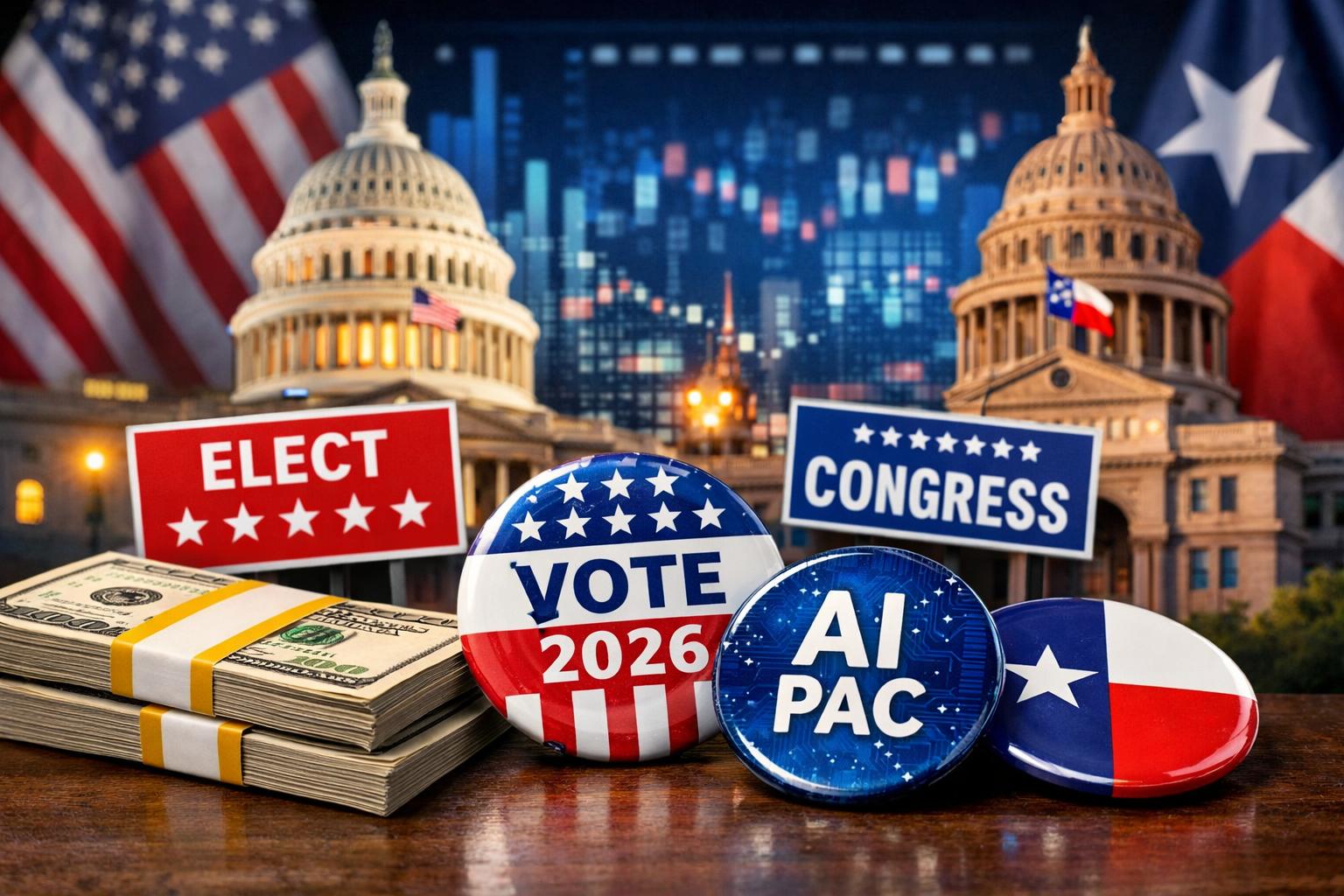
WASHINGTON — A surge in political spending tied to artificial intelligence interests is reshaping congressional races in Texas, highlighting the growing influence of the tech industry on U.S. elections and policy debates. In the lead-up to the March 2026 primary elections, Republican candidate Chris Gober was promoted in a television ad as a “Trump conservative” and “MAGA warrior,” though the messaging avoided direct references to artificial intelligence despite backing from AI-link
Tech-backed PACs shape Texas primaries amid AI regulation debate
WASHINGTON — A surge in political spending tied to artificial intelligence interests is reshaping congressional races in Texas, highlighting the growing influence of the tech industry on U.S. elections and policy debates. In the lead-up to the March 2026 primary elections, Republican candidate Chris Gober was promoted in a television ad as a “Trump conservative” and “MAGA warrior,” though the messaging avoided direct references to artificial intelligence despite backing from AI-link
Trump plans executive order to set single national rule for artificial intelligence
U.S. President Donald Trump said on Monday that he expects to sign an executive order this week establishing a single nationwide standard for artificial intelligence, a move he argued is necessary to replace the growing web of state-level AI laws. The announcement marks a significant step in the administration’s effort to shape the national regulatory structure around rapidly advancing AI systems, and it comes amid intensifying debate over who should hold authority to set protections for co
Trump plans executive order to set single national rule for artificial intelligence
U.S. President Donald Trump said on Monday that he expects to sign an executive order this week establishing a single nationwide standard for artificial intelligence, a move he argued is necessary to replace the growing web of state-level AI laws. The announcement marks a significant step in the administration’s effort to shape the national regulatory structure around rapidly advancing AI systems, and it comes amid intensifying debate over who should hold authority to set protections for co
Ohio Lawmaker Seeks Ban on Human-AI Marriages Amid Rising Trend
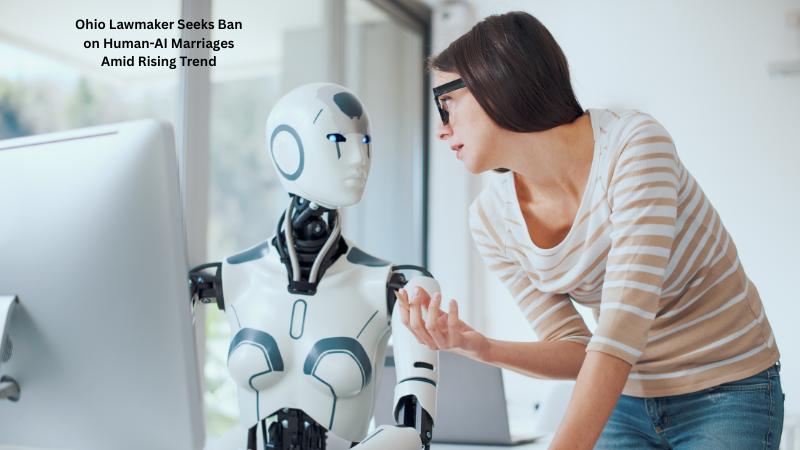
As AI chatbots grow more advanced, a small but growing number of people around the world are forming deep emotional bonds — and even proposing marriage — to their digital companions. From virtual partners offering emotional support to AI “spouses” providing companionship, these relationships are challenging traditional definitions of love and partnership. But one U.S. lawmaker wants to stop it before it goes too far. In Ohio, Representative Thaddeus Claggett has introd
Ohio Lawmaker Seeks Ban on Human-AI Marriages Amid Rising Trend
As AI chatbots grow more advanced, a small but growing number of people around the world are forming deep emotional bonds — and even proposing marriage — to their digital companions. From virtual partners offering emotional support to AI “spouses” providing companionship, these relationships are challenging traditional definitions of love and partnership. But one U.S. lawmaker wants to stop it before it goes too far. In Ohio, Representative Thaddeus Claggett has introd
Top AI Trends NRIs Should Watch in 2025 and Beyond
As we step into 2025, Artificial Intelligence (AI) is becoming a cornerstone of modern life and business, especially for Non-Resident Indians (NRIs) who are spread across the globe. From healthcare to financial management, AI is transforming how we live and work, offering innovative solutions that can significantly enhance the quality of life. For NRIs, staying updated on these advancements is essential to leverage AI for personal, professional, and financial growth. Let’s dive into the to
Top AI Trends NRIs Should Watch in 2025 and Beyond
As we step into 2025, Artificial Intelligence (AI) is becoming a cornerstone of modern life and business, especially for Non-Resident Indians (NRIs) who are spread across the globe. From healthcare to financial management, AI is transforming how we live and work, offering innovative solutions that can significantly enhance the quality of life. For NRIs, staying updated on these advancements is essential to leverage AI for personal, professional, and financial growth. Let’s dive into the to