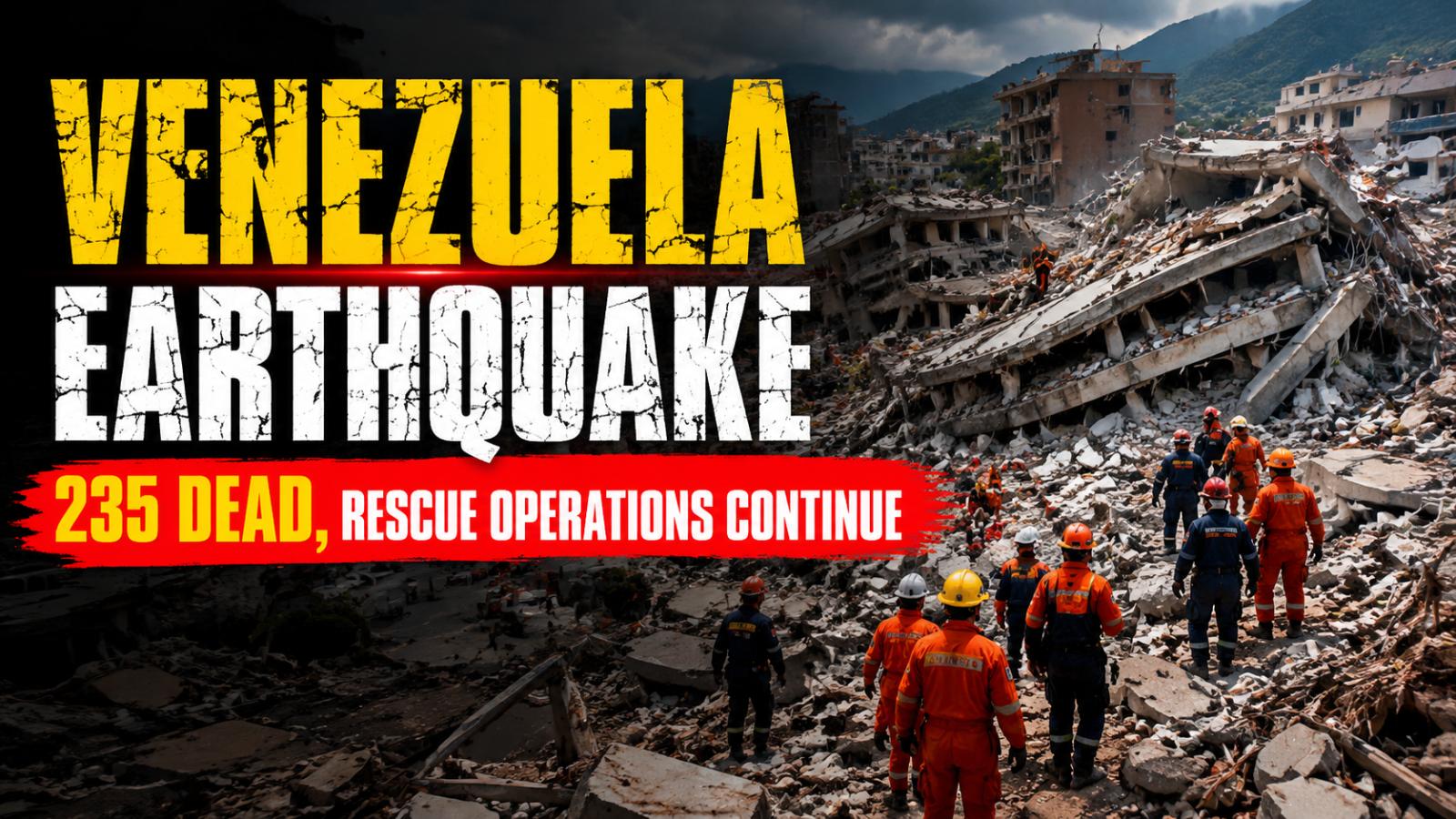
A major earthquake struck the northern coastline of Venezuela, causing severe destruction across coastal cities and leaving at least 235 people dead. The tremor, measured at magnitudes 7.2 to 7.5, hit suddenly and was felt across a wide stretch of the Caribbean region. Thousands of residents were forced out of their homes within minutes as buildings swayed and collapsed under the force of the shaking.
Coastal cities face heavy structural damage
Urban areas closest to the epicentre have reported the worst impact, with residential blocks, public buildings, and transport hubs suffering major structural failures. Parts of La Guaira, a key coastal city and logistics hub, saw extensive disruption, including temporary shutdowns of airport operations after damage to critical infrastructure. Hospitals in affected zones are operating beyond capacity, with medical teams treating a continuous flow of injured residents.
Search teams work through unstable debris zones
Emergency crews are continuing round-the-clock search operations in collapsed structures, although aftershocks are making conditions dangerous for responders. Many survivors are believed to be trapped under rubble, and rescue officials say time is critical due to unstable debris and limited access to heavily damaged zones. Temporary shelters have been set up to accommodate displaced families who are unable to return to their homes.
Geological forces behind the disaster
The earthquake originated in a known seismic corridor where the Caribbean and South American tectonic plates interact. The shallow depth of the quake significantly amplified its surface impact, leading to stronger shaking in populated areas. Experts note that aftershock activity is still ongoing, raising concerns about additional structural collapses in already weakened buildings.
International support and relief mobilization
As the scale of destruction becomes clearer, international aid agencies and several countries have begun sending emergency supplies, rescue teams, and medical assistance. Coordination efforts are underway to support local authorities in stabilizing the situation, restoring essential services, and expanding humanitarian relief across affected regions. The disaster has now escalated into a large-scale emergency response effort across the Caribbean basin.