India has officially confirmed the success of a high-precision military operation codenamed Operation Sindoor against terror-linked targets in Pakistan, revealing that the Indian Air Force (IAF) managed to jam Chinese-manufactured air defense systems deployed across the Line of Control and the international border. The mission, carried out in direct response to a recent terror attack in Jammu and Kashmir's Pahalgam that killed 26 Indian tourists, was completed in just 23 minutes and resulted in no damage to Indian assets.
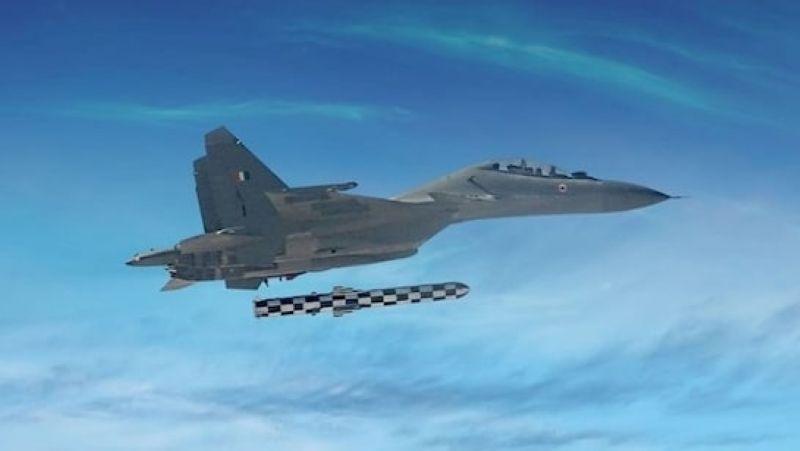
According to the statement issued by the Indian government, the air strikes targeted key military installations in Pakistan, including airbases in Noor Khan and Rahimyar Khan. The strikes used advanced loitering munitions commonly known as suicide drones which hovered over the target areas and executed precise attacks on radar stations and missile launch facilities. These loitering drones were part of a broader set of tactics involving drones, guided missiles, and electronic warfare capabilities.
The centerpiece of this mission's success, officials stated, was the ability of Indian forces to jam the Chinese-made air defense systems that Pakistan had heavily relied on. Once these systems were disabled, India's strike teams completed their mission without detection or interception, demonstrating a significant technological advantage. Indigenous Indian air defense systems, including the Akash missile platform and other domestically produced technologies, were used to repel any countermeasures, destroying foreign-made threats including PL-15 Chinese missiles, Turkish UAVs, and other long-range projectiles launched from Pakistan.
The mission did not involve crossing the Line of Control or the international border, the statement emphasized, making the operation a showcase of India's growing prowess in stand-off warfare. Indian-made air defense systems played a central role, such as the battle-proven Pechora, OSA-AK, LLAD (low-level air defense) guns, and Akash surface-to-air missiles. These systems not only protected Indian skies but also offered active support during the offensive maneuver.
ISRO, India's space research agency, also contributed to the mission. According to ISRO Chairman V Narayanan, at least 10 satellites operated continuously to provide intelligence, surveillance, and mission coordination. This strategic satellite coverage enabled Indian forces to locate and lock in on targets with pin-point accuracy and to monitor the success of their weaponry in real time.
The statement also underlined that the recovered fragments from intercepted Pakistani projectiles have been forensically analyzed. The analysis confirmed the use of Chinese PL-15 missiles, Turkish-made UAVs nicknamed 'Yiha' or 'Yeehaw', and various other foreign-origin equipment. All were successfully intercepted and neutralized by Indian systems, reinforcing the claim that India’s defense industry is now capable of countering modern imported threats.
The government described the operation as a validation of India's defense indigenization strategy. Beyond neutralizing high-value targets, it demonstrated how India's investment in home-grown technologies has paid off in terms of battlefield readiness, strategic precision, and national security. With zero casualties and complete mission success, Operation Sindoor marks a turning point in the Indian military doctrine focused on high-efficiency, low-risk strategic operations using indigenous tech and electronic warfare.