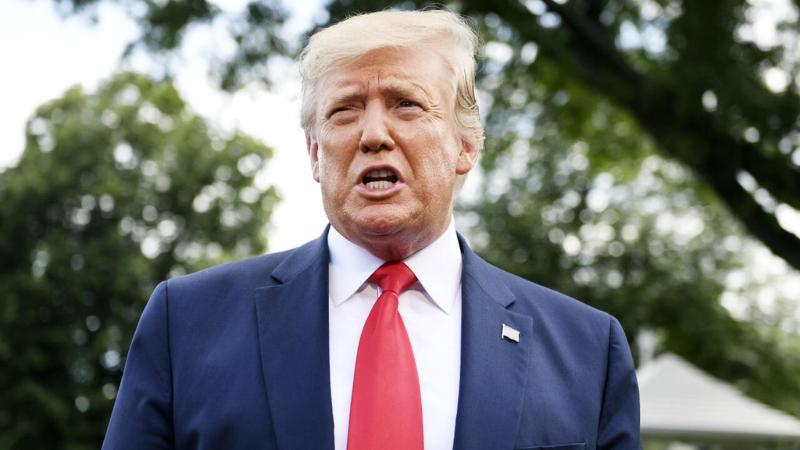
US President Donald Trump has issued a stern warning to Iran, cautioning the nation against any attempts to revive its nuclear enrichment program. Speaking to reporters aboard Air Force One, Trump asserted that Iran “will not enrich,” adding that “the last thing they want to do is enrich.” In his statement, he emphasized that Iran would not be able to produce nuclear weapons any time soon and dismissed claims that Iran had successfully removed uranium from key nuclear sites before recent US military strikes. Trump labeled such reports as “fake news,” asserting that the United States acted swiftly and effectively to neutralize the threat.
He elaborated on the impact of the strikes, stating that the Iranian nuclear program had been “put back by decades,” and described the operation as a significant success that had, in his words, “ended the war.” The President claimed that the offensive had “completely and totally obliterated” Iran’s major nuclear enrichment facilities and insisted that the mission had achieved its goal of removing the immediate threat posed by Iran to regional stability and to global peace.
US envoy to the United Nations, Dorothy Shea, supported Trump’s remarks during a session at the UN Security Council, emphasizing that the strikes were carried out under the inherent right to collective self-defense, in accordance with the United Nations Charter. According to Shea, the operation was intended to mitigate the threat Iran posed to Israel and other nations in the region and to preserve international peace and security. She asserted that the targeted attacks had fulfilled the United States' narrow objective of degrading Iran’s capacity to produce a nuclear weapon.
The strikes over the weekend have led to the announcement of a ceasefire between Iran and Israel, which President Trump confirmed during his briefing. While the broader consequences of the operation are still unfolding, initial reactions from US and Israeli officials suggest that the immediate military objectives were achieved. Israel’s UN Ambassador Danny Danon echoed the US President’s sentiments, noting that while it is still early to assess all the impacts of the strikes, they had successfully eliminated an imminent nuclear threat and pushed back Iran’s nuclear ambitions.
However, not all voices at the United Nations were in agreement. Iran’s UN Ambassador Amir Saeid Iravani criticized the US actions, describing them as criminal aggression. He emphasized that Iran remained proud and resilient in the face of what he called unjustified military attacks. Iravani used the Security Council platform to reinforce the message that diplomacy and dialogue are the only viable paths to resolving what he described as an unnecessary crisis over Iran’s peaceful nuclear program.
Despite the strong claims from US leadership regarding the extent of damage inflicted on Iran’s nuclear infrastructure, a preliminary US intelligence assessment has reportedly found that the strikes may have only delayed Iran’s nuclear program by a few months, rather than the years or decades asserted by Trump. The discrepancy highlights the ongoing uncertainty surrounding the effectiveness of military action in halting Iran’s long-term nuclear ambitions.
The global community remains watchful as the situation unfolds, with attention focused on how Iran responds in the wake of the strikes and ceasefire announcement. Analysts are also closely examining whether the aggressive US stance will trigger further regional destabilization or compel Iran to re-engage in diplomatic talks. For now, US officials are presenting the operation as a preventive measure taken in the face of an urgent threat, while Iranian representatives are calling for accountability and renewed diplomatic engagement.
The recent US strikes on Iranian nuclear sites have opened a new chapter in the tense relationship between Washington and Tehran. While US officials claim that the strikes have set back Iran’s nuclear ambitions and secured a temporary halt to hostilities with Israel, Iranian leaders remain defiant, insisting their program is peaceful and demanding a return to diplomatic negotiations. The weeks ahead will likely reveal whether the international community can steer the crisis away from further conflict and toward a more stable and negotiated resolution.