India Maritime Advisory Warns Seafarers Near Hormuz
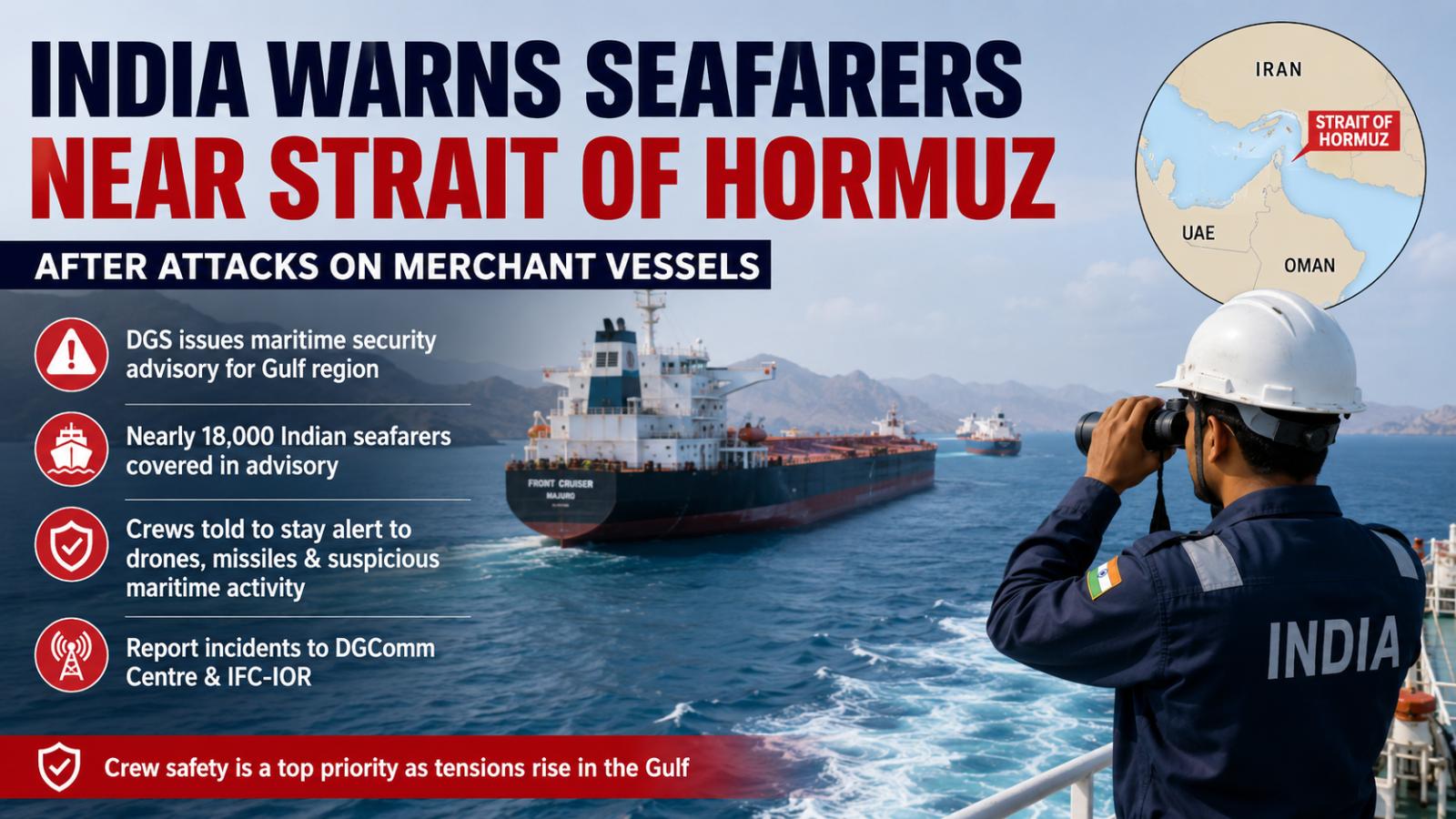
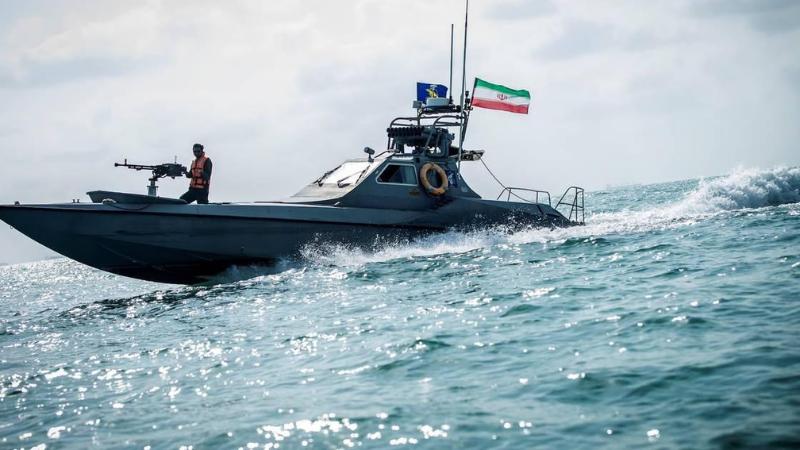
India maritime advisory warnings have been issued for seafarers operating near the Strait of Hormuz and Gulf of Oman after attacks on merchant vessels raised new crew safety concerns. The Directorate General of Shipping has advised ships and crews in Iranian waters, the Strait of Hormuz and the Persian Gulf to remain on high alert as tensions affect one of the world’s most sensitive shipping corridors. India Maritime Advisory Covers Crews Near Hormuz
India Maritime Advisory Warns Seafarers Near Hormuz
India maritime advisory warnings have been issued for seafarers operating near the Strait of Hormuz and Gulf of Oman after attacks on merchant vessels raised new crew safety concerns. The Directorate General of Shipping has advised ships and crews in Iranian waters, the Strait of Hormuz and the Persian Gulf to remain on high alert as tensions affect one of the world’s most sensitive shipping corridors. India Maritime Advisory Covers Crews Near Hormuz
Iran Warns US and Israel Over Destabilization Efforts Amid Tensions
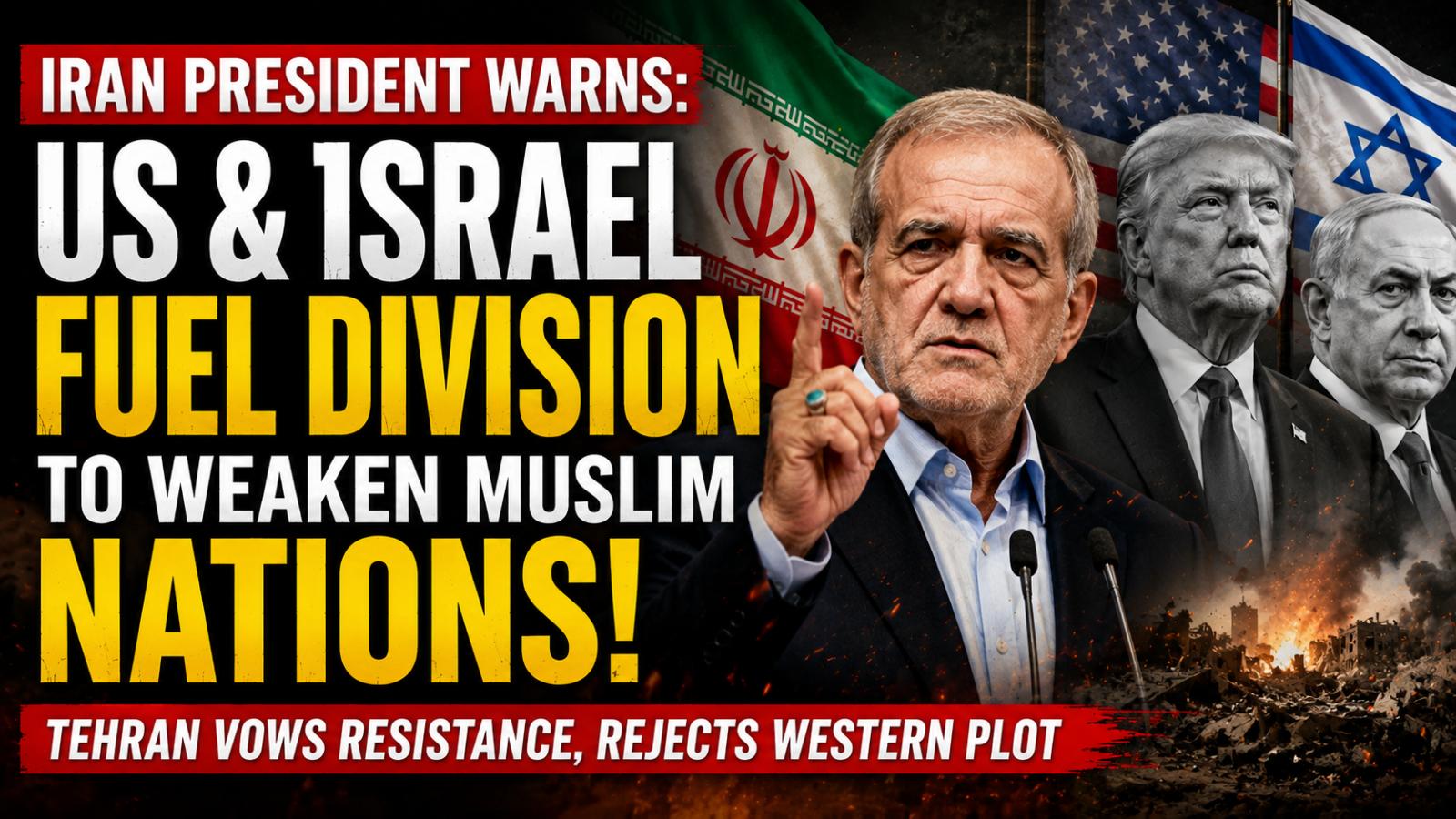
Iran Accuses US and Israel of Destabilization Iranian President Masoud Pezeshkian on May 17,2026 accused the United States and Israel of pursuing divisive politics aimed at creating distrust among Muslim nations. Pezeshkian stated that military actions against Iran were intended to disrupt domestic order and weaken the governing establishment. According to reports, these measures directly threaten Iran’s leadership and the
Iran Warns US and Israel Over Destabilization Efforts Amid Tensions
Iran Accuses US and Israel of Destabilization Iranian President Masoud Pezeshkian on May 17,2026 accused the United States and Israel of pursuing divisive politics aimed at creating distrust among Muslim nations. Pezeshkian stated that military actions against Iran were intended to disrupt domestic order and weaken the governing establishment. According to reports, these measures directly threaten Iran’s leadership and the
US-Iran Tensions Rise as Trump Signals Time is Running Out
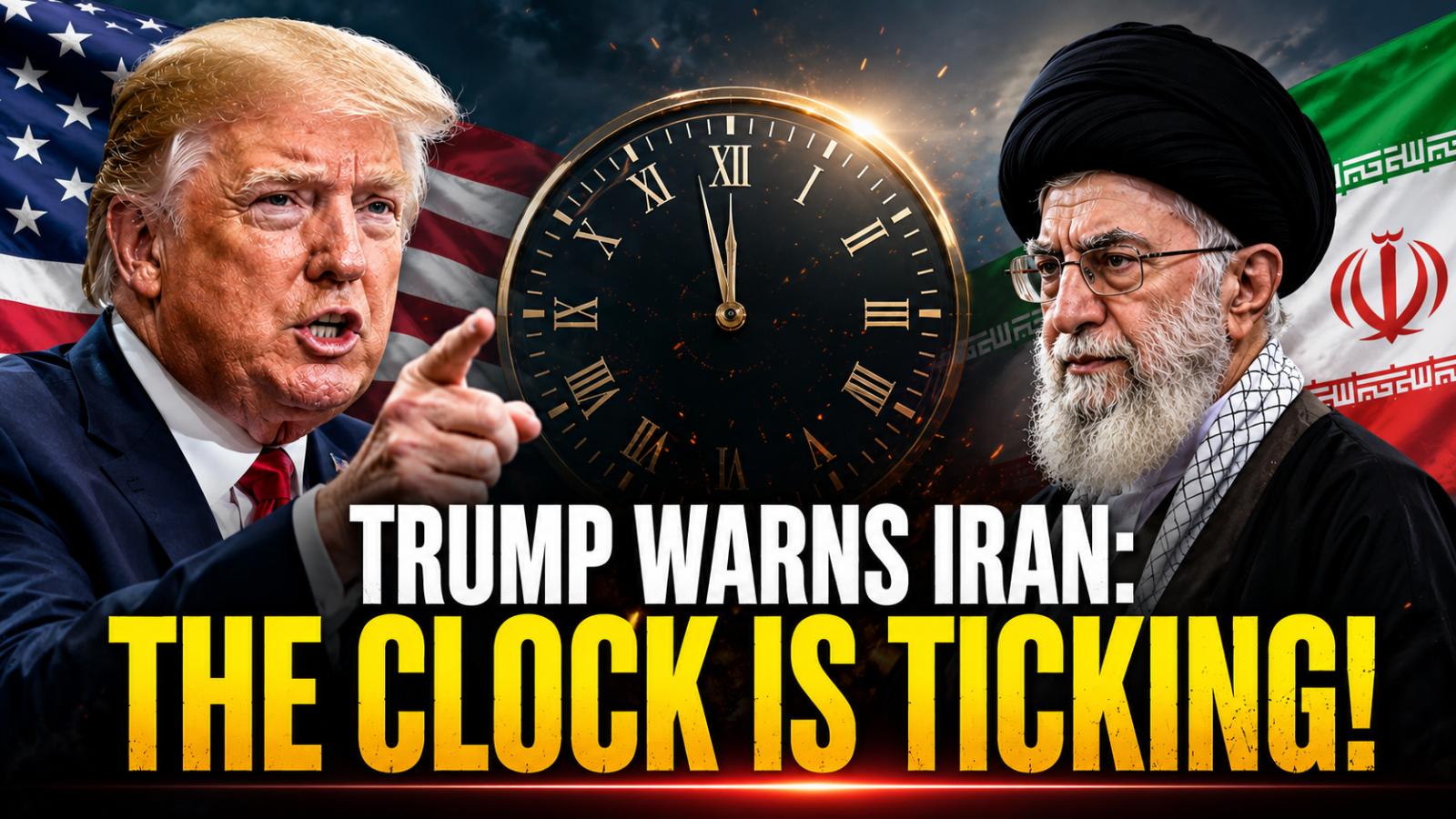
Trump Issues Urgent Warning to Iran US President Donald Trump on May 17,2026 posted a stern warning to Iran, emphasizing that “the clock is ticking” as negotiations over nuclear stockpiles, sanctions relief, and war compensation remain deadlocked. Trump’s message, shared via Truth Social, stressed that Iran must act quickly on the peace proposal or face dire consequences.
US-Iran Tensions Rise as Trump Signals Time is Running Out
Trump Issues Urgent Warning to Iran US President Donald Trump on May 17,2026 posted a stern warning to Iran, emphasizing that “the clock is ticking” as negotiations over nuclear stockpiles, sanctions relief, and war compensation remain deadlocked. Trump’s message, shared via Truth Social, stressed that Iran must act quickly on the peace proposal or face dire consequences.
Iran says US demands hinder progress on 14-point peace plan
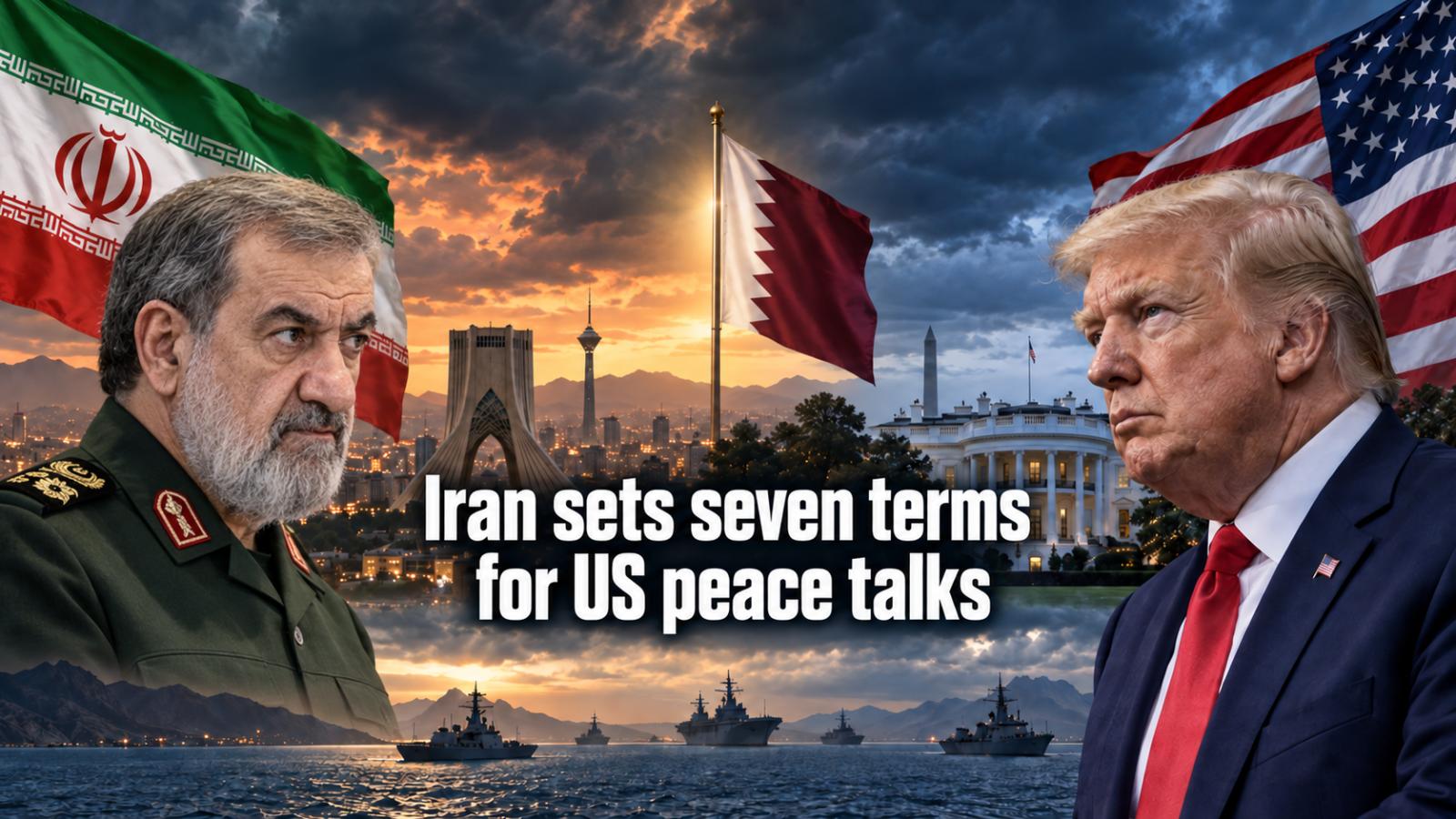
Iran reviews US response to peace proposal as tensions with Washington continue to shape the future of diplomacy and conflict in the region. In a recent press briefing, Iran’s Foreign Ministry confirmed that it has received Washington’s reply to a 14-point peace proposal, but officials say the response includes demands that could complicate progress. The development highlights key areas such as peace negotiations, diplomatic efforts, and the ongoing conflict resolution process.
Iran says US demands hinder progress on 14-point peace plan
Iran reviews US response to peace proposal as tensions with Washington continue to shape the future of diplomacy and conflict in the region. In a recent press briefing, Iran’s Foreign Ministry confirmed that it has received Washington’s reply to a 14-point peace proposal, but officials say the response includes demands that could complicate progress. The development highlights key areas such as peace negotiations, diplomatic efforts, and the ongoing conflict resolution process.
Trump Renames Strait of Hormuz Amid Rising US-Iran Tensions
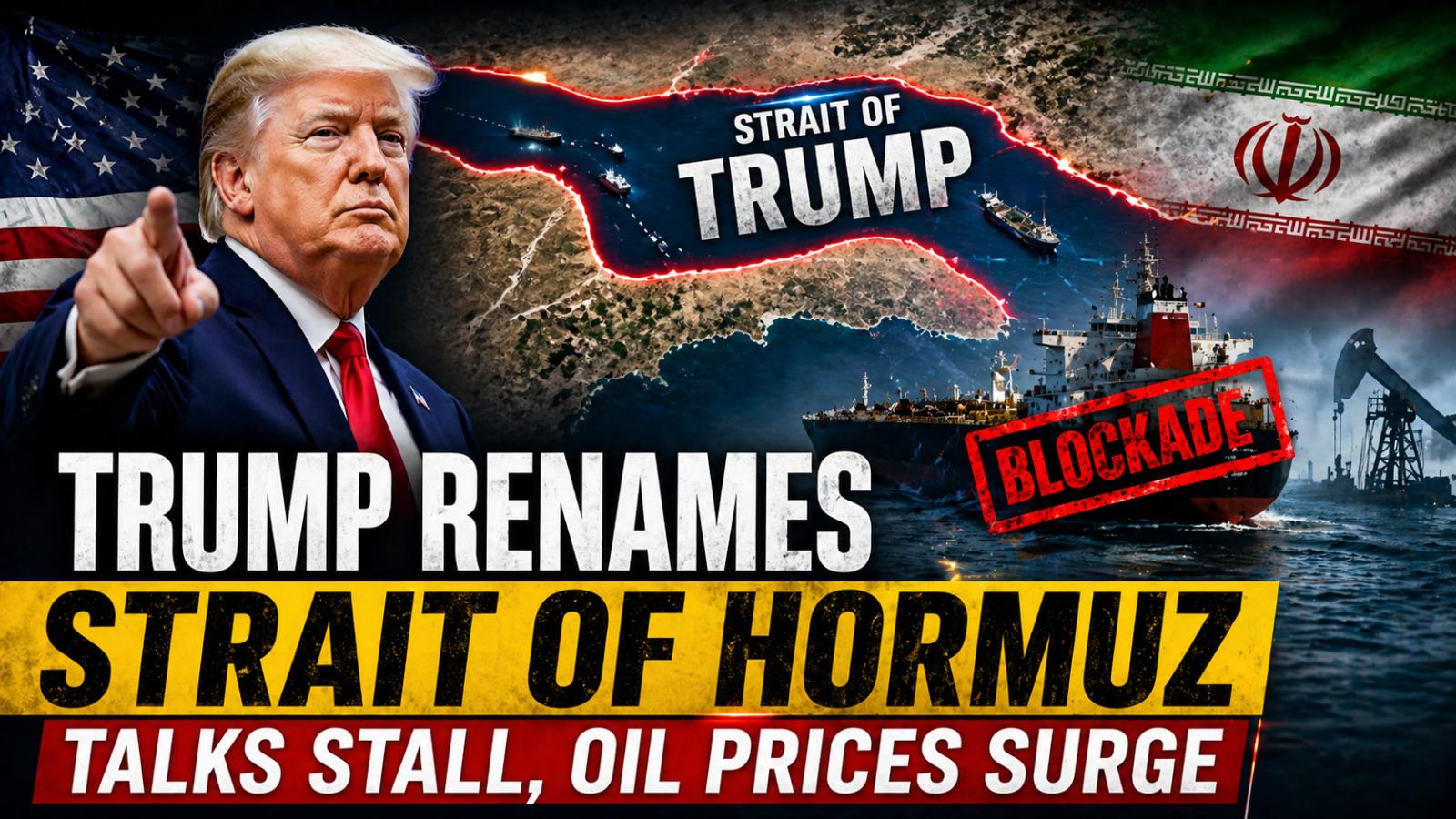
US President Donald Trump has drawn attention after sharing a modified map referring to the Strait of Hormuz as the “Strait of Trump,” a move that comes amid escalating tensions and stalled negotiations with Iran. The strategic waterway remains a focal point in the ongoing standoff, with both sides maintaining a blockade despite a previously agreed ceasefire. Trump indicated that discussions to end the conflict are continuing remotely, describing them as telephonic due to logistical challenges. At the same time, Iran has attempted to revive dialogue by sending a proposal through Pakistan, facilitated by Foreign Minister Abbas Araghchi. However, indications suggest that the US administration is dissatisfied with the terms and is unlikely to accept the framework presented. The proposal reportedly outlined a three-stage approach, beginning with a complete cessation of hostilities, followed by lifting the naval blockade and restoring maritime traffic through the Strait of Hormuz. The final stage involved renewed negotiations over Iran’s nuclear program. Despite these efforts, talks remain at an impasse, with both sides maintaining firm positions. Trump defended the blockade, describing it as effective and emphasizing its economic impact on Iran. He stated that the pressure strategy would continue until Iran concedes. Meanwhile, energy markets reacted sharply, with Brent crude prices rising significantly, reflecting concerns over supply disruptions linked to the strategic route. The Strait of Hormuz remains critical to global oil flows, and its continued closure by both US and Iranian forces underscores the fragile state of the ceasefire. Diplomatic efforts have yet to regain momentum, leaving the situation uncertain as geopolitical and economic pressures continue to build.
Trump Renames Strait of Hormuz Amid Rising US-Iran Tensions
US President Donald Trump has drawn attention after sharing a modified map referring to the Strait of Hormuz as the “Strait of Trump,” a move that comes amid escalating tensions and stalled negotiations with Iran. The strategic waterway remains a focal point in the ongoing standoff, with both sides maintaining a blockade despite a previously agreed ceasefire. Trump indicated that discussions to end the conflict are continuing remotely, describing them as telephonic due to logistical challenges. At the same time, Iran has attempted to revive dialogue by sending a proposal through Pakistan, facilitated by Foreign Minister Abbas Araghchi. However, indications suggest that the US administration is dissatisfied with the terms and is unlikely to accept the framework presented. The proposal reportedly outlined a three-stage approach, beginning with a complete cessation of hostilities, followed by lifting the naval blockade and restoring maritime traffic through the Strait of Hormuz. The final stage involved renewed negotiations over Iran’s nuclear program. Despite these efforts, talks remain at an impasse, with both sides maintaining firm positions. Trump defended the blockade, describing it as effective and emphasizing its economic impact on Iran. He stated that the pressure strategy would continue until Iran concedes. Meanwhile, energy markets reacted sharply, with Brent crude prices rising significantly, reflecting concerns over supply disruptions linked to the strategic route. The Strait of Hormuz remains critical to global oil flows, and its continued closure by both US and Iranian forces underscores the fragile state of the ceasefire. Diplomatic efforts have yet to regain momentum, leaving the situation uncertain as geopolitical and economic pressures continue to build.
What did Trump say about Iran at the state dinner? He claimed King Charles agrees Iran must not have nuclear weapons
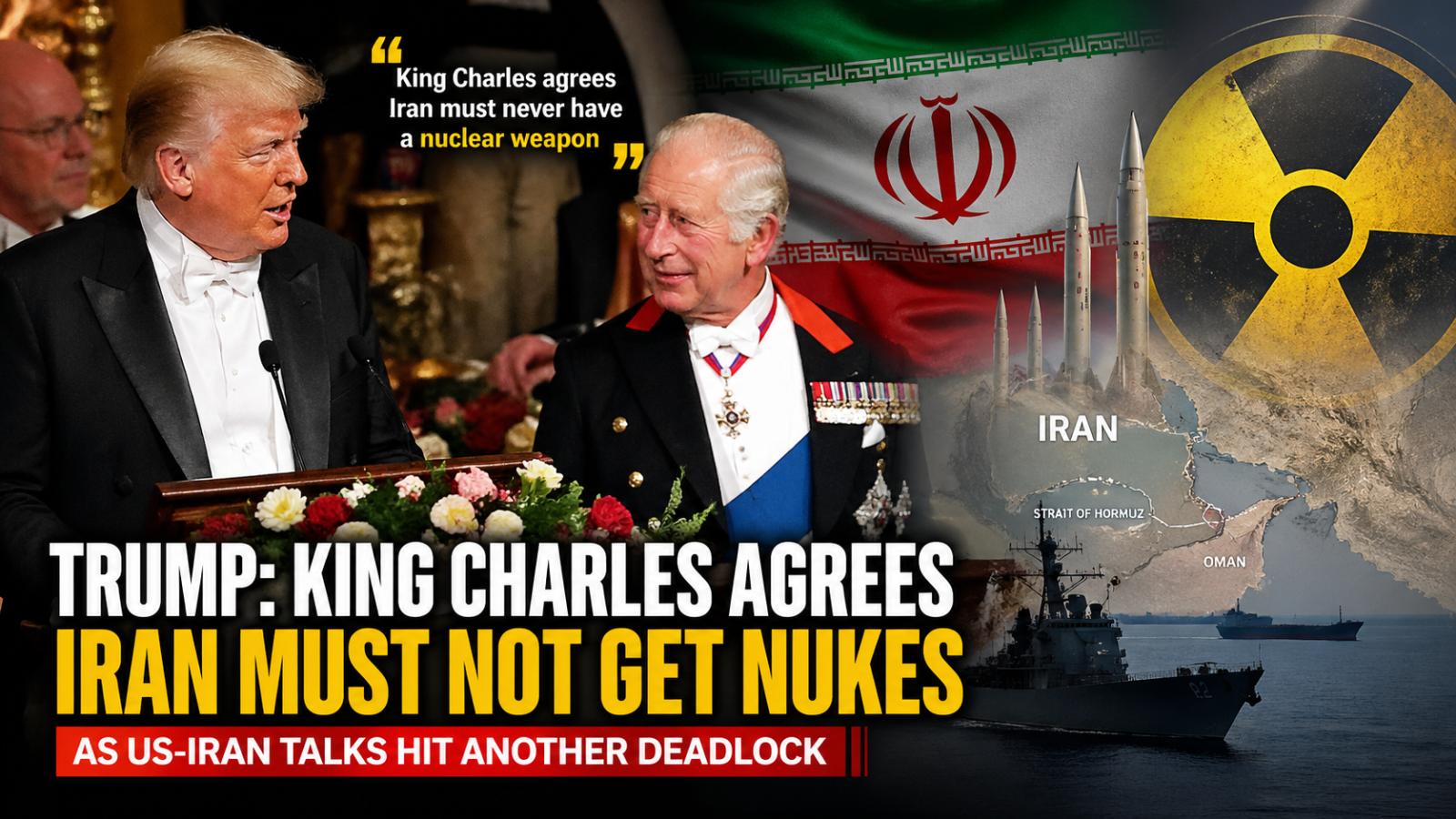
During a state dinner honoring the United Kingdom’s monarch, former U.S. President Donald Trump said King Charles III shares his view that Iran must never obtain nuclear weapons, while emphasizing the strength of U.S.-UK defense ties. Speaking at the formal event, Trump described the alliance between the two nations as rooted in “unconquerable courage,” referencing shared military history across multiple global conflicts. Trump used the occasion to highlight ongoing U.S. mili
What did Trump say about Iran at the state dinner? He claimed King Charles agrees Iran must not have nuclear weapons
During a state dinner honoring the United Kingdom’s monarch, former U.S. President Donald Trump said King Charles III shares his view that Iran must never obtain nuclear weapons, while emphasizing the strength of U.S.-UK defense ties. Speaking at the formal event, Trump described the alliance between the two nations as rooted in “unconquerable courage,” referencing shared military history across multiple global conflicts. Trump used the occasion to highlight ongoing U.S. mili
Iran-Israel war live updates: Iran FM to meet Putin amid rising tensions
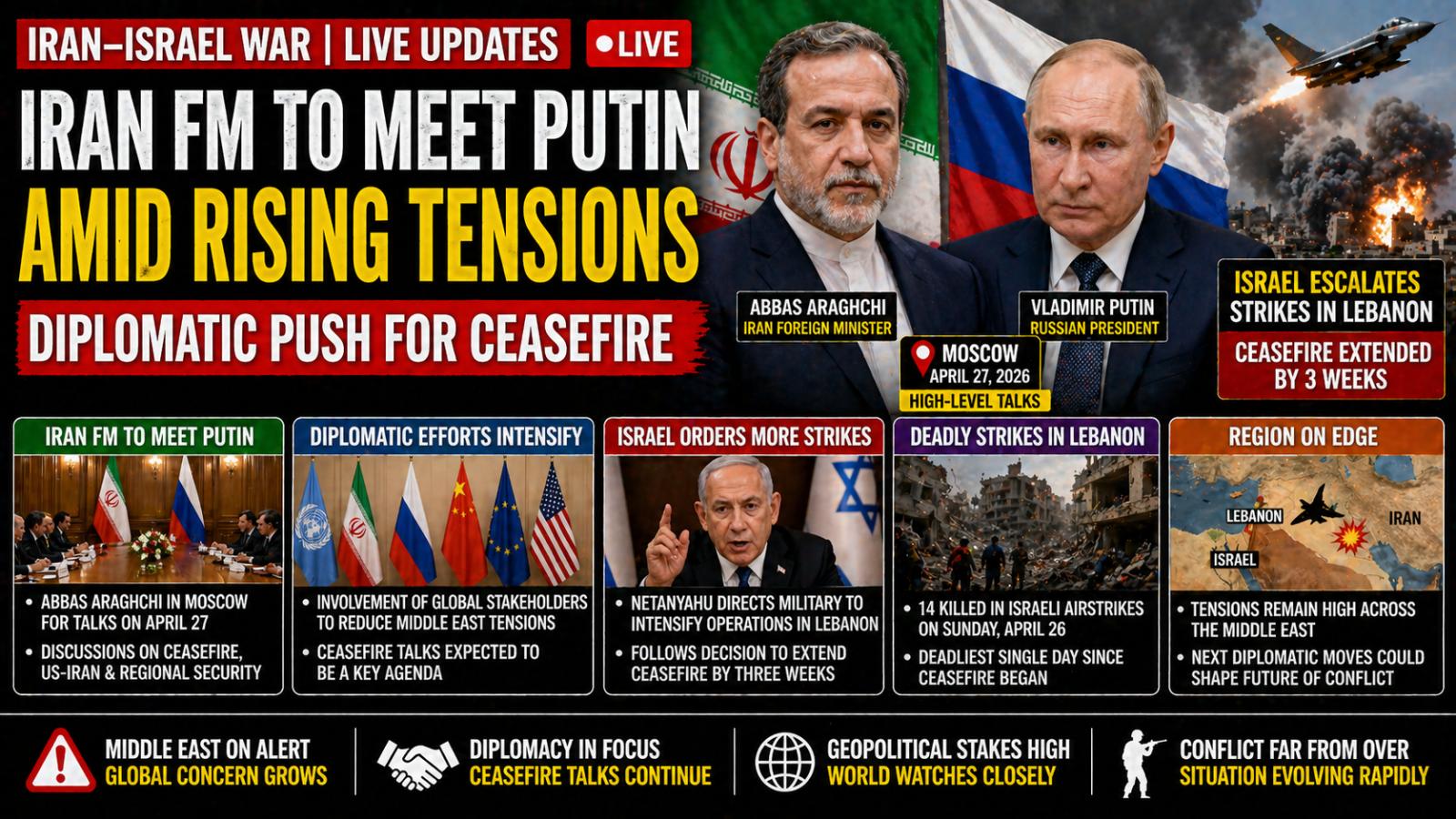
Iran’s foreign minister Abbas Araghchi meets Vladimir Putin in Moscow on Monday, April 27, for ceasefire talks as Israel intensifies strikes on Hezbollah in Lebanon, where 14 were killed Sunday, April 26, marking the deadliest day since the truce began. Iran-Israel war live updates: Iran FM to meet Putin amid rising tensions as Abbas Araghchi prepares for high-level tal
Iran-Israel war live updates: Iran FM to meet Putin amid rising tensions
Iran’s foreign minister Abbas Araghchi meets Vladimir Putin in Moscow on Monday, April 27, for ceasefire talks as Israel intensifies strikes on Hezbollah in Lebanon, where 14 were killed Sunday, April 26, marking the deadliest day since the truce began. Iran-Israel war live updates: Iran FM to meet Putin amid rising tensions as Abbas Araghchi prepares for high-level tal
Iran Mural Raises Speculation Over Mojtaba Khamenei Health Condition
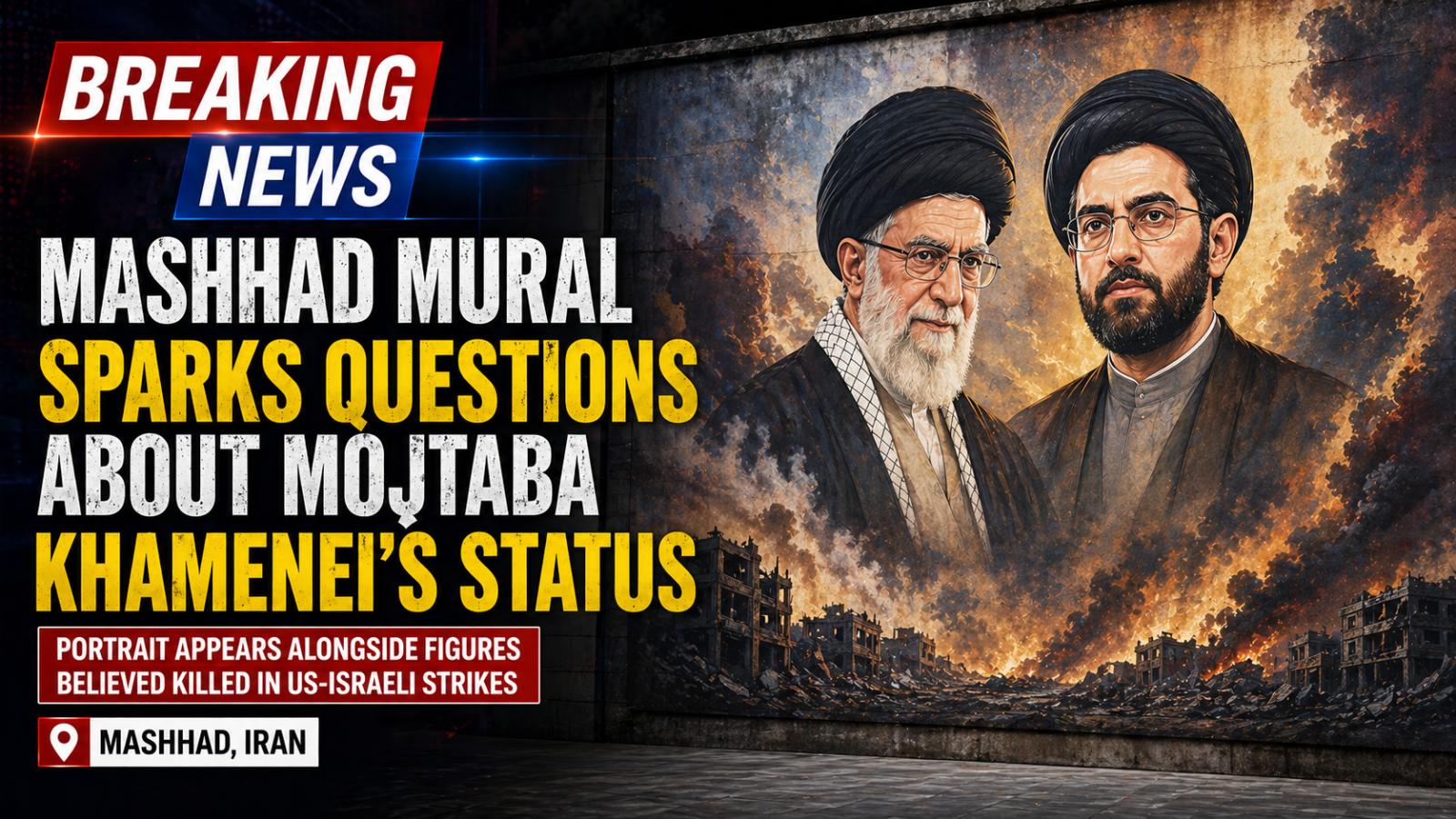
A newly unveiled mural in Mashhad, Iran, has drawn attention and sparked renewed speculation about the status of Mojtaba Khamenei, a key figure in Iran’s leadership. The artwork, revealed during a public ceremony attended by officials, features his portrait alongside several military and political figures believed to have died in recent US-Israeli airstrikes. The inclusion has prompted questions, as such murals in Iran are typically used to honor individuals associated with significan
Iran Mural Raises Speculation Over Mojtaba Khamenei Health Condition
A newly unveiled mural in Mashhad, Iran, has drawn attention and sparked renewed speculation about the status of Mojtaba Khamenei, a key figure in Iran’s leadership. The artwork, revealed during a public ceremony attended by officials, features his portrait alongside several military and political figures believed to have died in recent US-Israeli airstrikes. The inclusion has prompted questions, as such murals in Iran are typically used to honor individuals associated with significan
Why did Ali Shirazi demand an apology from Donald Trump? Iran seeks accountability after Khamenei killing
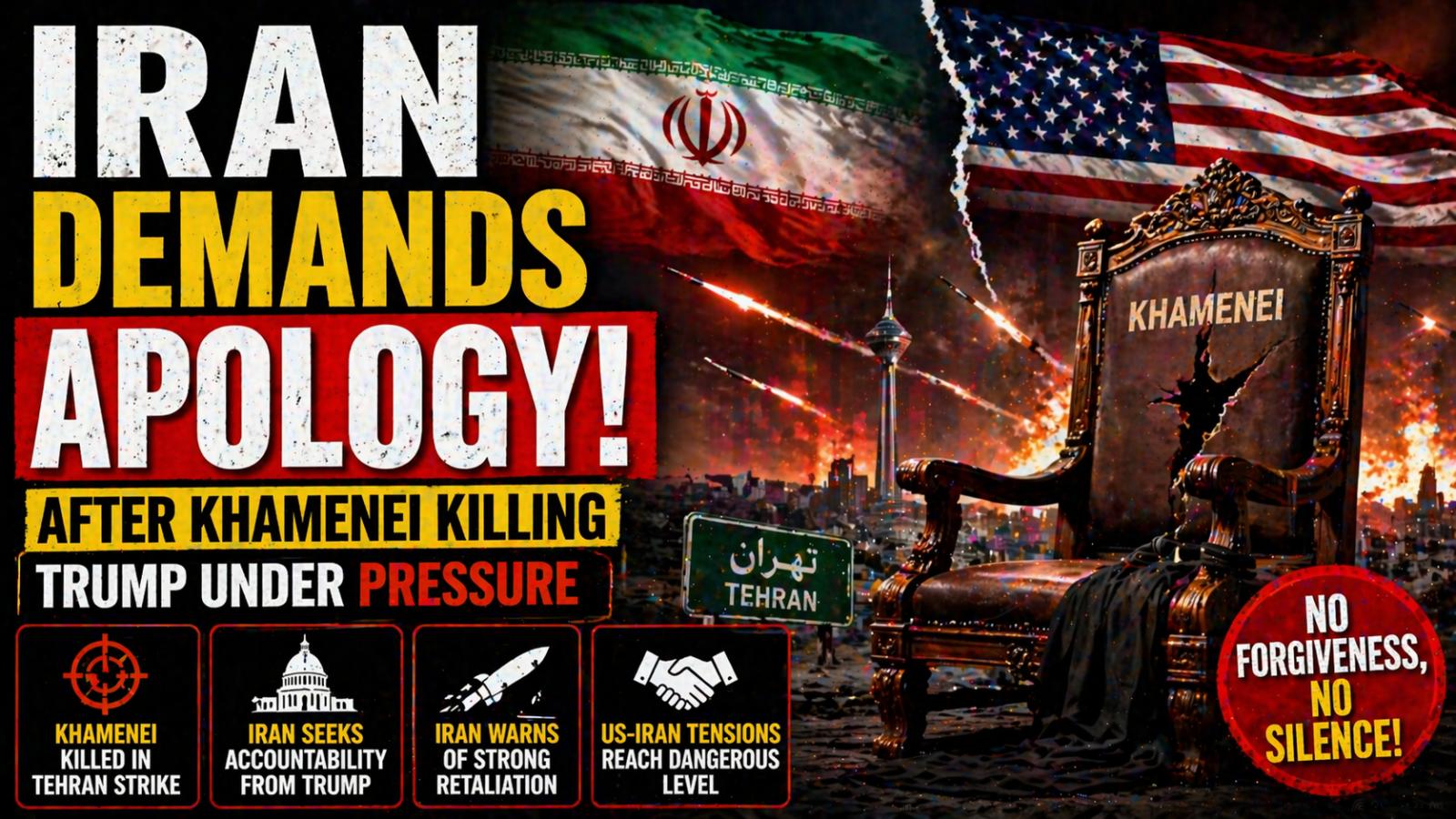
Escalating diplomatic tensions after Tehran strike Why did Ali Shirazi demand an apology from Donald Trump? Iran seeks accountability after Khamenei killing, as senior Iranian cleric Ali Shirazi called on U.S. President Donald Trump to publicly acknowledge wrongdoing following t
Why did Ali Shirazi demand an apology from Donald Trump? Iran seeks accountability after Khamenei killing
Escalating diplomatic tensions after Tehran strike Why did Ali Shirazi demand an apology from Donald Trump? Iran seeks accountability after Khamenei killing, as senior Iranian cleric Ali Shirazi called on U.S. President Donald Trump to publicly acknowledge wrongdoing following t
Multiple refinery fires worldwide spark investigations and security concerns
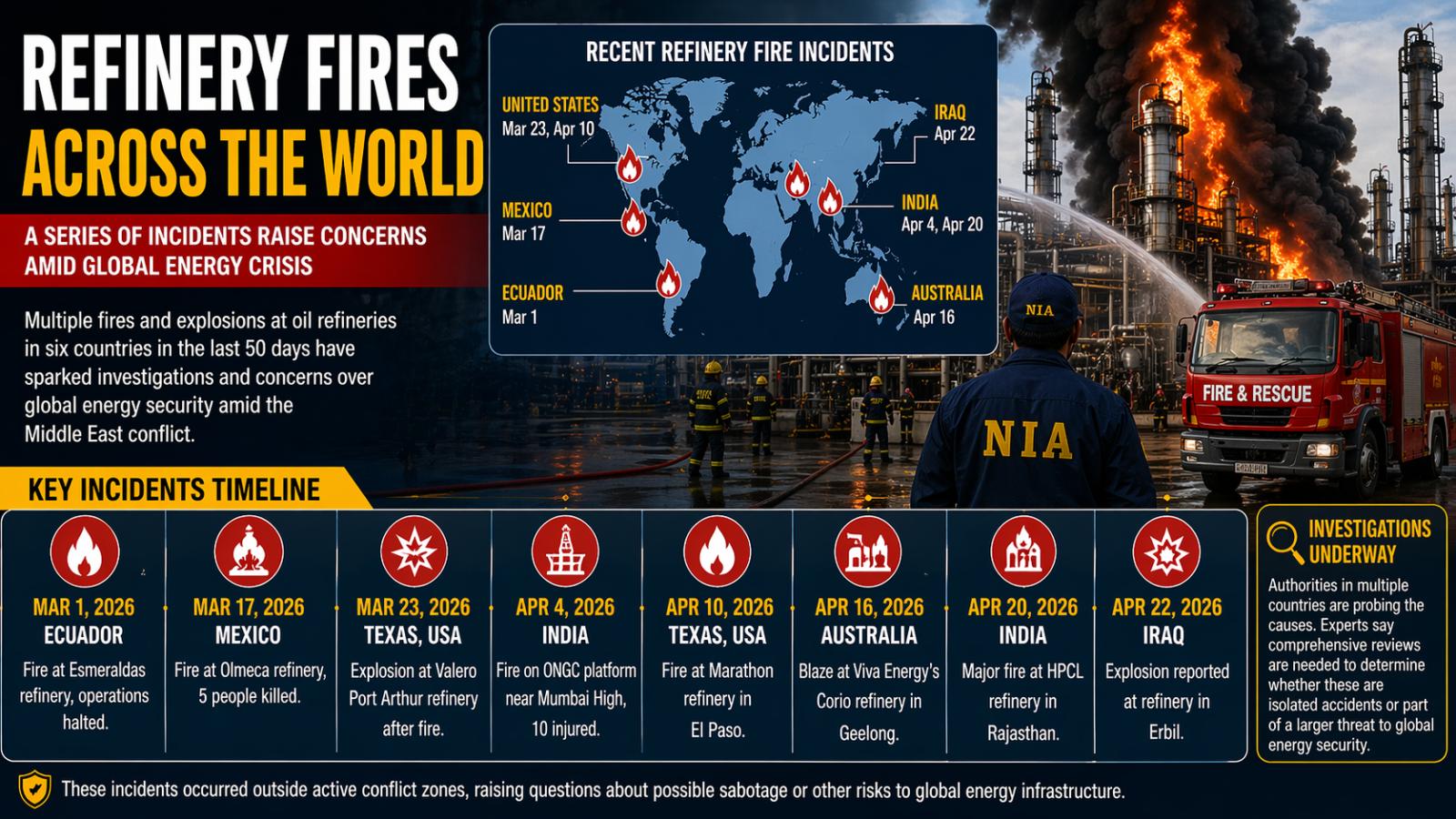
A series of fires and explosions at oil refineries across multiple countries has raised global concerns about energy security as geopolitical tensions escalate following the Middle East conflict that began on Friday, February 28, 2026. Incidents have been reported in India, Iraq, the United States, Mexico, Ecuador, and Australia over a span of approximately 50 days, prompting investigations and speculation about possible underlying causes. In India, a major fire broke out at the Hindu
Multiple refinery fires worldwide spark investigations and security concerns
A series of fires and explosions at oil refineries across multiple countries has raised global concerns about energy security as geopolitical tensions escalate following the Middle East conflict that began on Friday, February 28, 2026. Incidents have been reported in India, Iraq, the United States, Mexico, Ecuador, and Australia over a span of approximately 50 days, prompting investigations and speculation about possible underlying causes. In India, a major fire broke out at the Hindu
India moves over 1.1 million people from Gulf region during ceasefire window
India has evacuated more than 1.1 million people from West Asia as regional tensions and airspace restrictions continue to disrupt commercial travel, officials said during a government briefing in New Delhi. The large-scale movement has been carried out through sustained flight operations from multiple countries, with authorities relying on alternate routes where airspace remains accessible. Officials said that since February 28, approximately 1,130,000 passengers have traveled fro
India moves over 1.1 million people from Gulf region during ceasefire window
India has evacuated more than 1.1 million people from West Asia as regional tensions and airspace restrictions continue to disrupt commercial travel, officials said during a government briefing in New Delhi. The large-scale movement has been carried out through sustained flight operations from multiple countries, with authorities relying on alternate routes where airspace remains accessible. Officials said that since February 28, approximately 1,130,000 passengers have traveled fro
Israel military investigates soldier over vandalism of religious symbol in Lebanon
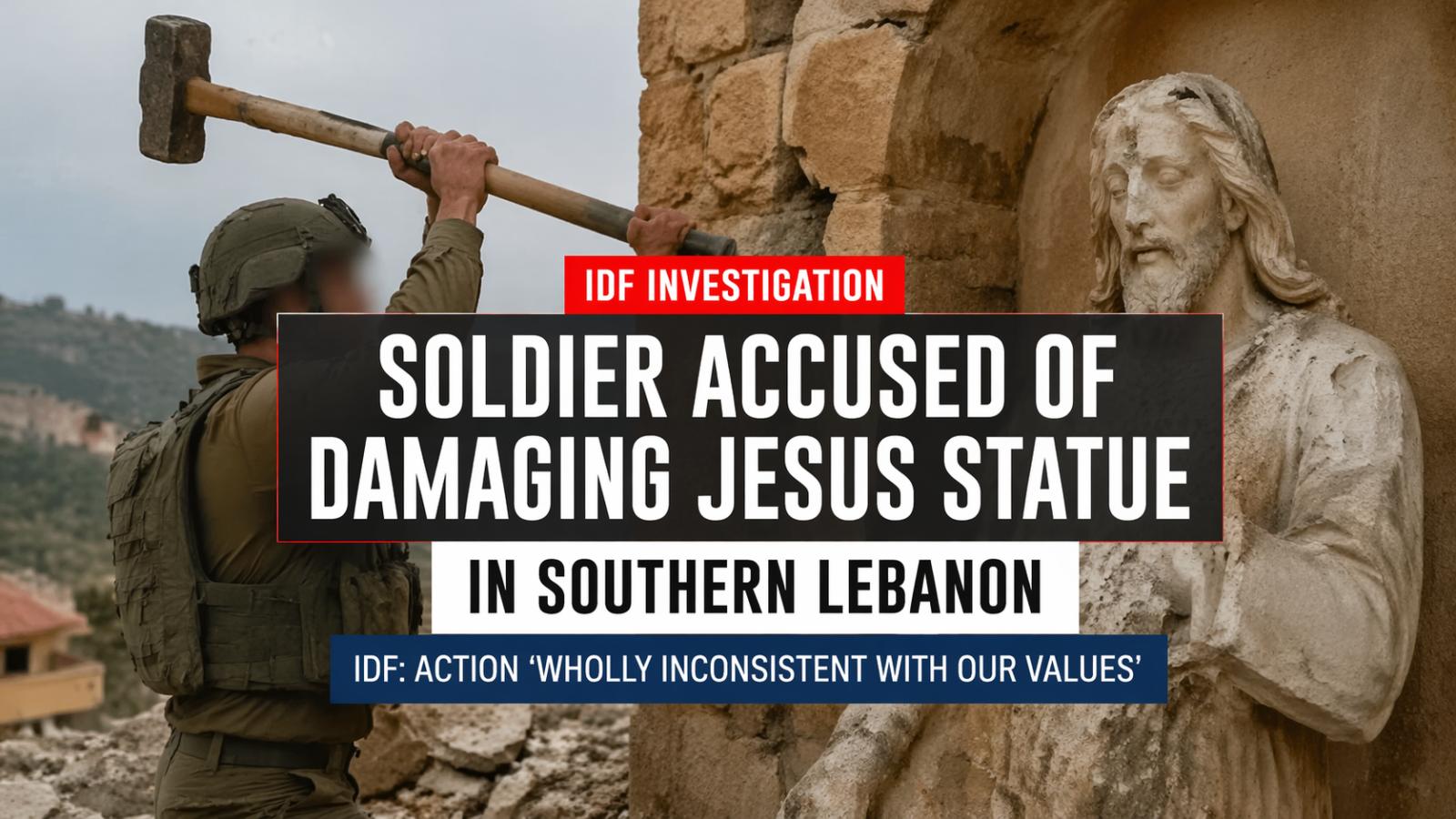
The Israel Defense Forces has confirmed the authenticity of widely circulated images showing one of its soldiers damaging a statue of Jesus in Southern Lebanon, triggering criticism and prompting an internal investigation. The incident, which quickly gained traction online, has drawn attention amid ongoing
Israel military investigates soldier over vandalism of religious symbol in Lebanon
The Israel Defense Forces has confirmed the authenticity of widely circulated images showing one of its soldiers damaging a statue of Jesus in Southern Lebanon, triggering criticism and prompting an internal investigation. The incident, which quickly gained traction online, has drawn attention amid ongoing
How did conflict affect Sri Lanka tourism? March arrivals fall sharply
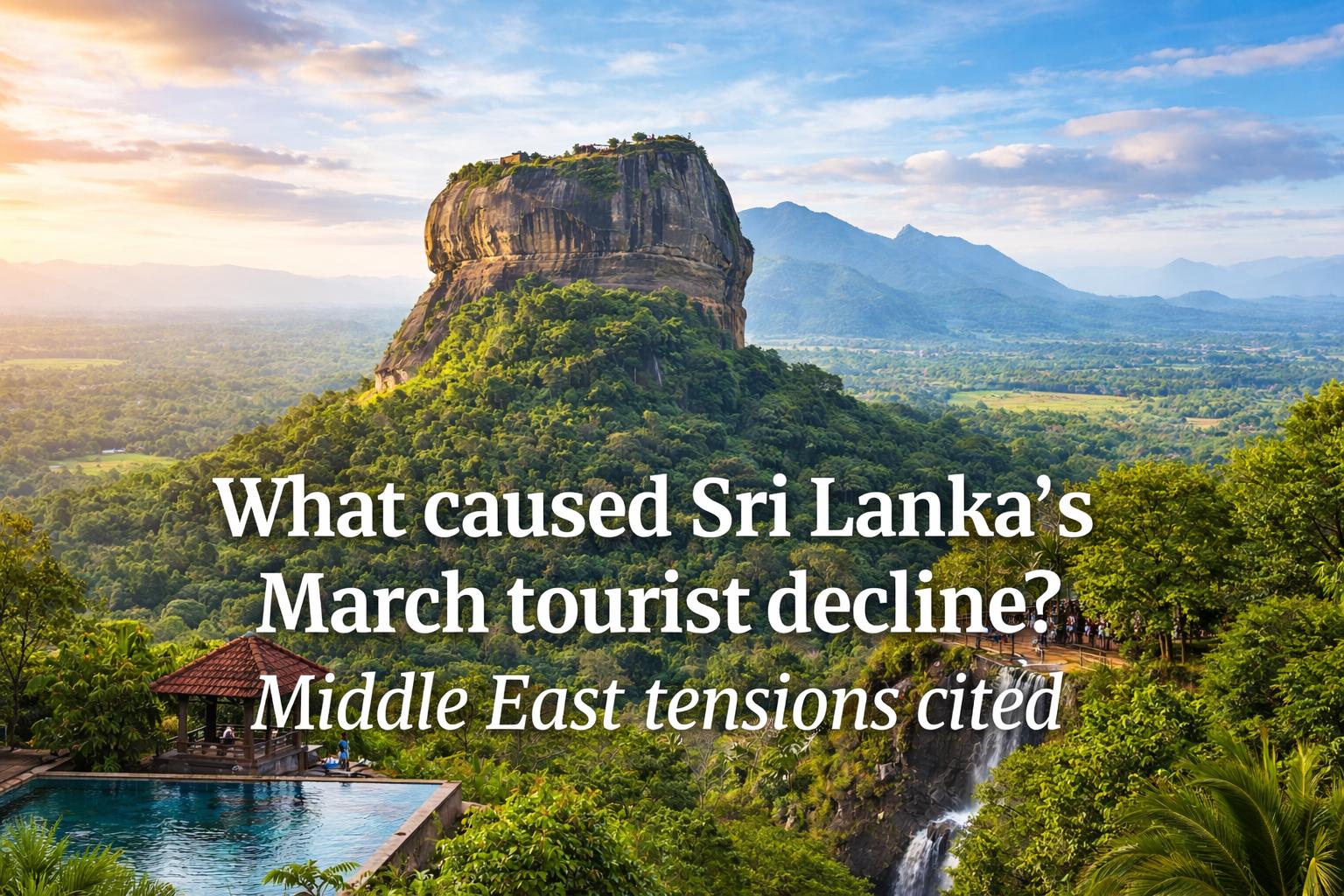
Colombo — Tourist arrivals to Sri Lanka fell sig
How did conflict affect Sri Lanka tourism? March arrivals fall sharply
Colombo — Tourist arrivals to Sri Lanka fell sig
How Iran’s affordable drones are challenging America’s expensive interceptors
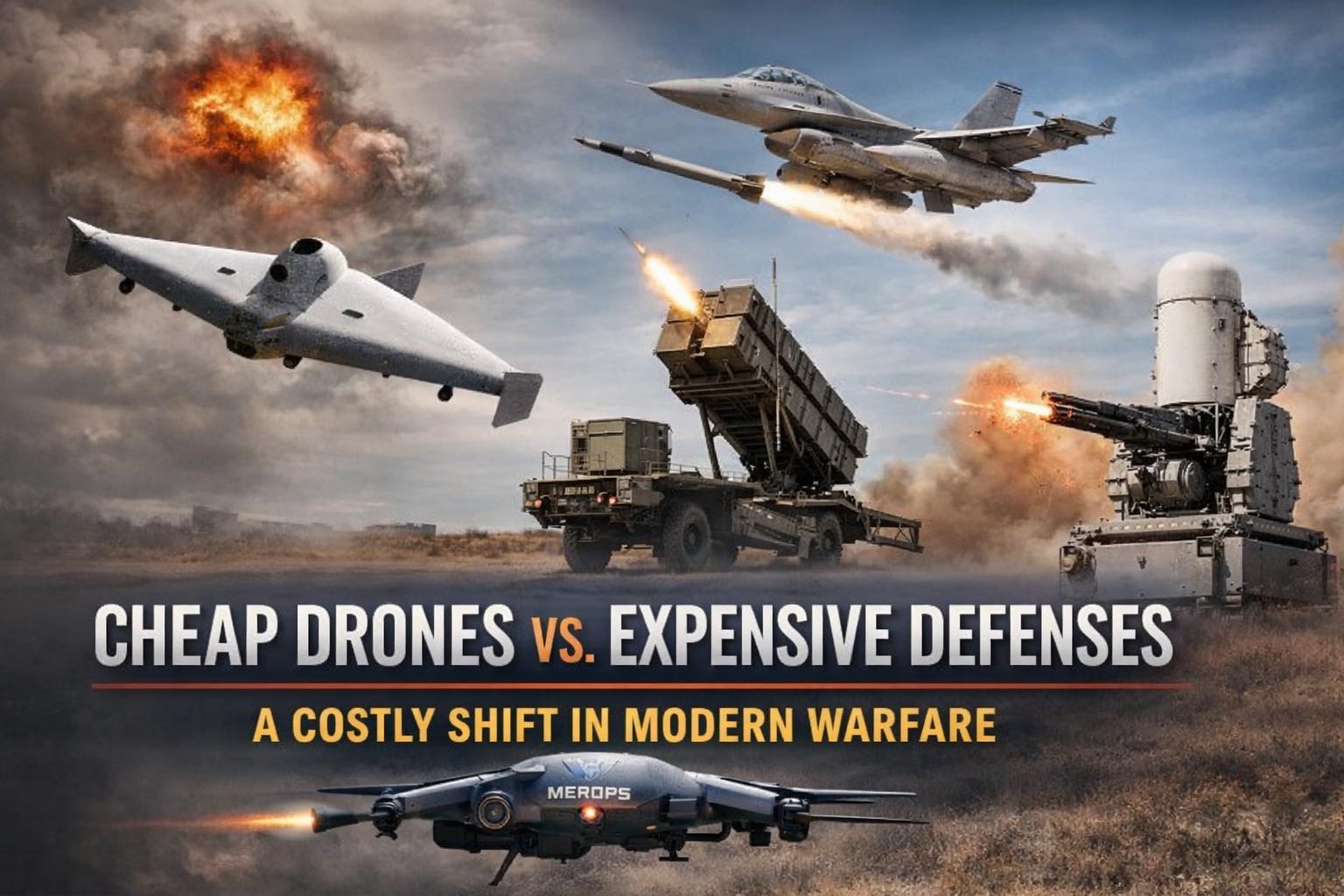
One of the most striking lessons from the war with Iran is how a relatively low-cost adversary has exposed vulnerabilities in U.S. defense strategy. Iran has demonstrated both a willingness to go on the offensive and an ability to leverage inexpensive drone technology at scale. These drones, often built with commercial-grade components, cost roughly $35,000 each—far less than the high-end interceptors used to destroy them. This imbalance has forced the United States and its allies to confront a new reality: modern warfare is no longer dominated solely by precision and sophistication, but also by affordability and volume. Cheap drones had already reshaped the battlefield in Ukraine, and Iran has now applied similar tactics in the Middle East, exploiting a long-standing gap in U.S. defense investments that favored fewer, more expensive systems over scalable solutions. Why are U.S. defenses struggling with cost efficiency? Because interceptors far exceed drone prices The financial mismatch is stark. In just the first six days of the conflict, the U.S. spent $11.3 billion, with estimates later rising to between $25 billion and $35 billion. A significant portion of that cost comes from interceptor missiles used to shoot down relatively inexpensive drones. Despite years of Pentagon focus on counter-drone capabilities, experts like Michael C. Horowitz note that there has been little urgency to scale affordable solutions. The result is a defense strategy where each engagement can cost far more than the threat itself—an unsustainable model in prolonged conflicts. How do air-based defenses work against drones? By using early detection and precision strikes—when available In an ideal scenario, airborne early warning systems detect drones hundreds of miles away. Fighter jets such as the F-16 Fighting Falcon are then deployed to intercept them using relatively cheaper rocket systems like APKWS II. This method is among the most cost-efficient, but it depends heavily on maintaining constant air patrols and intact detection systems. Iran has targeted these early warning assets, limiting their effectiveness and reducing the availability of this optimal defense approach. What role do ground and naval systems play? They offer range and reliability but at a steep price When air defenses are unavailable, the U.S. relies on ground- and sea-based systems. These include: Short-range systems like the Coyote, designed specifically for drones and relatively cost-effective—but in short supply. Naval destroyers using radar and SM-2 interceptors, which are powerful but expensive and designed for larger threats. The Patriot missile system, capable of intercepting drones from long distances using costly PAC-3 missiles. These systems were originally built to counter high-end threats like ballistic missiles, not swarms of cheap drones. As a result, they are often overkill—both technologically and financially—for the task at hand. Still, their use can be justified when defending high-value assets, such as billion-dollar radar installations or critical military infrastructure. What are the emerging solutions to counter drones? AI interceptors and lasers show promise but remain unproven New approaches aim to fix the cost imbalance. AI-powered interceptor drones, such as the Merops system developed by a company founded by Eric Schmidt, represent a potential shift toward cheaper, scalable defenses. These systems have been tested in collaboration with Ukrainian forces experienced in countering Iranian drones. The U.S. has already sent thousands of these units to the Middle East and begun training troops, though it remains unclear whether they have been deployed in combat. Meanwhile, the Pentagon has invested heavily in directed energy weapons—lasers that could cost as little as $3 per shot and reach targets up to 12 miles away. However, these systems have yet to be fielded in real-world combat. Why is ammunition depletion a growing concern? Because stockpiles may run out faster than they can be replaced Beyond cost, a more immediate concern is supply. Experts warn that interceptor stockpiles are being depleted at an alarming rate. As Tom Karako explains, the issue is not just affordability but availability: the U.S. risks running out of munitions before it can replenish them. This highlights a deeper strategic challenge. Modern conflicts—defined by mass-produced, low-cost threats—require not just advanced technology, but also sustainable production and scalable defense systems.
How Iran’s affordable drones are challenging America’s expensive interceptors
One of the most striking lessons from the war with Iran is how a relatively low-cost adversary has exposed vulnerabilities in U.S. defense strategy. Iran has demonstrated both a willingness to go on the offensive and an ability to leverage inexpensive drone technology at scale. These drones, often built with commercial-grade components, cost roughly $35,000 each—far less than the high-end interceptors used to destroy them. This imbalance has forced the United States and its allies to confront a new reality: modern warfare is no longer dominated solely by precision and sophistication, but also by affordability and volume. Cheap drones had already reshaped the battlefield in Ukraine, and Iran has now applied similar tactics in the Middle East, exploiting a long-standing gap in U.S. defense investments that favored fewer, more expensive systems over scalable solutions. Why are U.S. defenses struggling with cost efficiency? Because interceptors far exceed drone prices The financial mismatch is stark. In just the first six days of the conflict, the U.S. spent $11.3 billion, with estimates later rising to between $25 billion and $35 billion. A significant portion of that cost comes from interceptor missiles used to shoot down relatively inexpensive drones. Despite years of Pentagon focus on counter-drone capabilities, experts like Michael C. Horowitz note that there has been little urgency to scale affordable solutions. The result is a defense strategy where each engagement can cost far more than the threat itself—an unsustainable model in prolonged conflicts. How do air-based defenses work against drones? By using early detection and precision strikes—when available In an ideal scenario, airborne early warning systems detect drones hundreds of miles away. Fighter jets such as the F-16 Fighting Falcon are then deployed to intercept them using relatively cheaper rocket systems like APKWS II. This method is among the most cost-efficient, but it depends heavily on maintaining constant air patrols and intact detection systems. Iran has targeted these early warning assets, limiting their effectiveness and reducing the availability of this optimal defense approach. What role do ground and naval systems play? They offer range and reliability but at a steep price When air defenses are unavailable, the U.S. relies on ground- and sea-based systems. These include: Short-range systems like the Coyote, designed specifically for drones and relatively cost-effective—but in short supply. Naval destroyers using radar and SM-2 interceptors, which are powerful but expensive and designed for larger threats. The Patriot missile system, capable of intercepting drones from long distances using costly PAC-3 missiles. These systems were originally built to counter high-end threats like ballistic missiles, not swarms of cheap drones. As a result, they are often overkill—both technologically and financially—for the task at hand. Still, their use can be justified when defending high-value assets, such as billion-dollar radar installations or critical military infrastructure. What are the emerging solutions to counter drones? AI interceptors and lasers show promise but remain unproven New approaches aim to fix the cost imbalance. AI-powered interceptor drones, such as the Merops system developed by a company founded by Eric Schmidt, represent a potential shift toward cheaper, scalable defenses. These systems have been tested in collaboration with Ukrainian forces experienced in countering Iranian drones. The U.S. has already sent thousands of these units to the Middle East and begun training troops, though it remains unclear whether they have been deployed in combat. Meanwhile, the Pentagon has invested heavily in directed energy weapons—lasers that could cost as little as $3 per shot and reach targets up to 12 miles away. However, these systems have yet to be fielded in real-world combat. Why is ammunition depletion a growing concern? Because stockpiles may run out faster than they can be replaced Beyond cost, a more immediate concern is supply. Experts warn that interceptor stockpiles are being depleted at an alarming rate. As Tom Karako explains, the issue is not just affordability but availability: the U.S. risks running out of munitions before it can replenish them. This highlights a deeper strategic challenge. Modern conflicts—defined by mass-produced, low-cost threats—require not just advanced technology, but also sustainable production and scalable defense systems.
Iran rift exposed after firing on Indian ships in Strait of Hormuz
Tensions within Iran’s leadership structure came
Iran rift exposed after firing on Indian ships in Strait of Hormuz
Tensions within Iran’s leadership structure came
India-US leaders review strategic ties amid Strait of Hormuz concerns
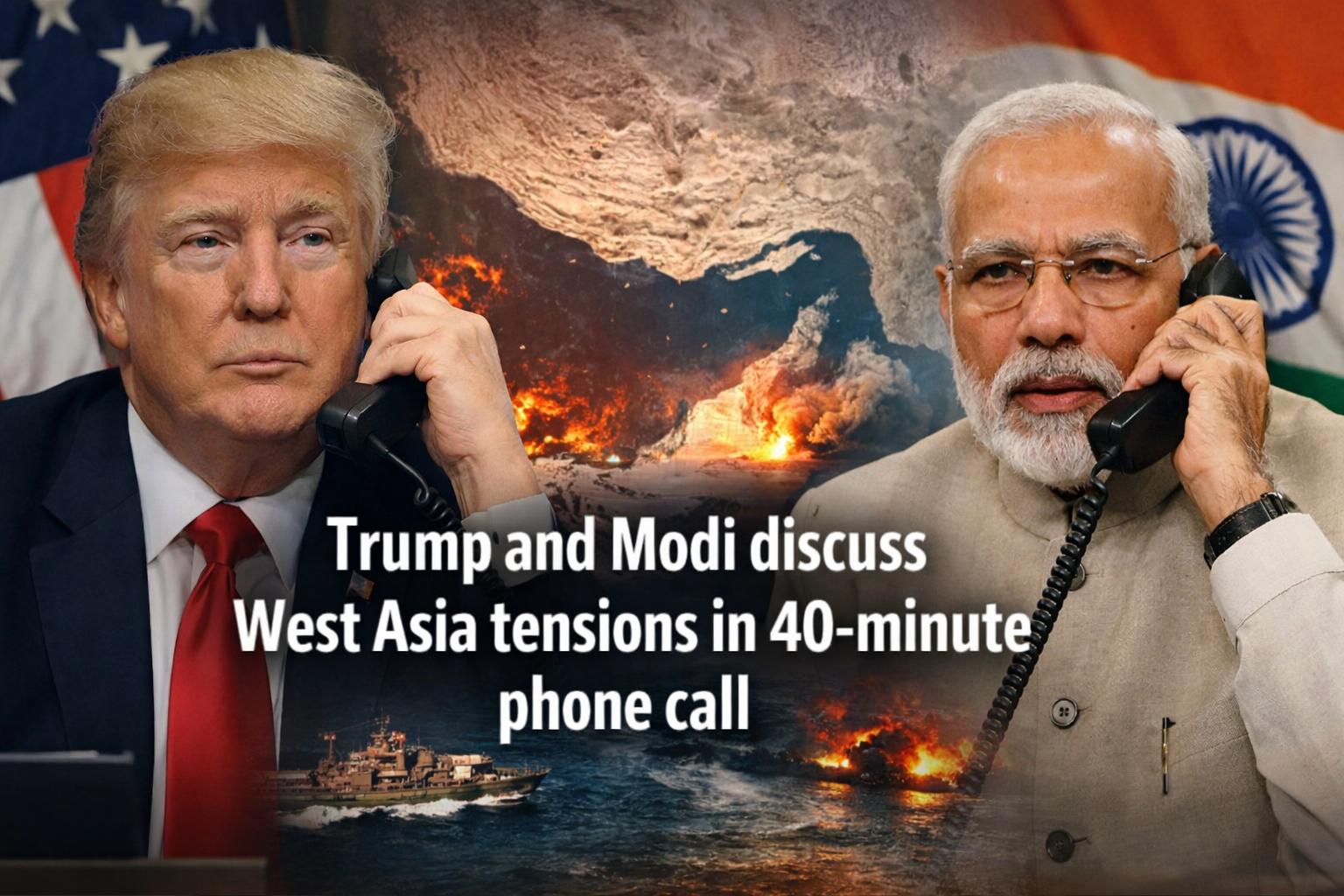
United States President Donald Trump on Thursday said he had a “very good conversation” with Indian Prime Minister Narendra Modi, describing the discussion as constructive and reaffirming strong ties between the two nations. The leaders spoke for approximately 40 minutes, focusing on regional security

India-US leaders review strategic ties amid Strait of Hormuz concerns
United States President Donald Trump on Thursday said he had a “very good conversation” with Indian Prime Minister Narendra Modi, describing the discussion as constructive and reaffirming strong ties between the two nations. The leaders spoke for approximately 40 minutes, focusing on regional security

Chinese social media mocks US blockade of Iran as “second toll booth”
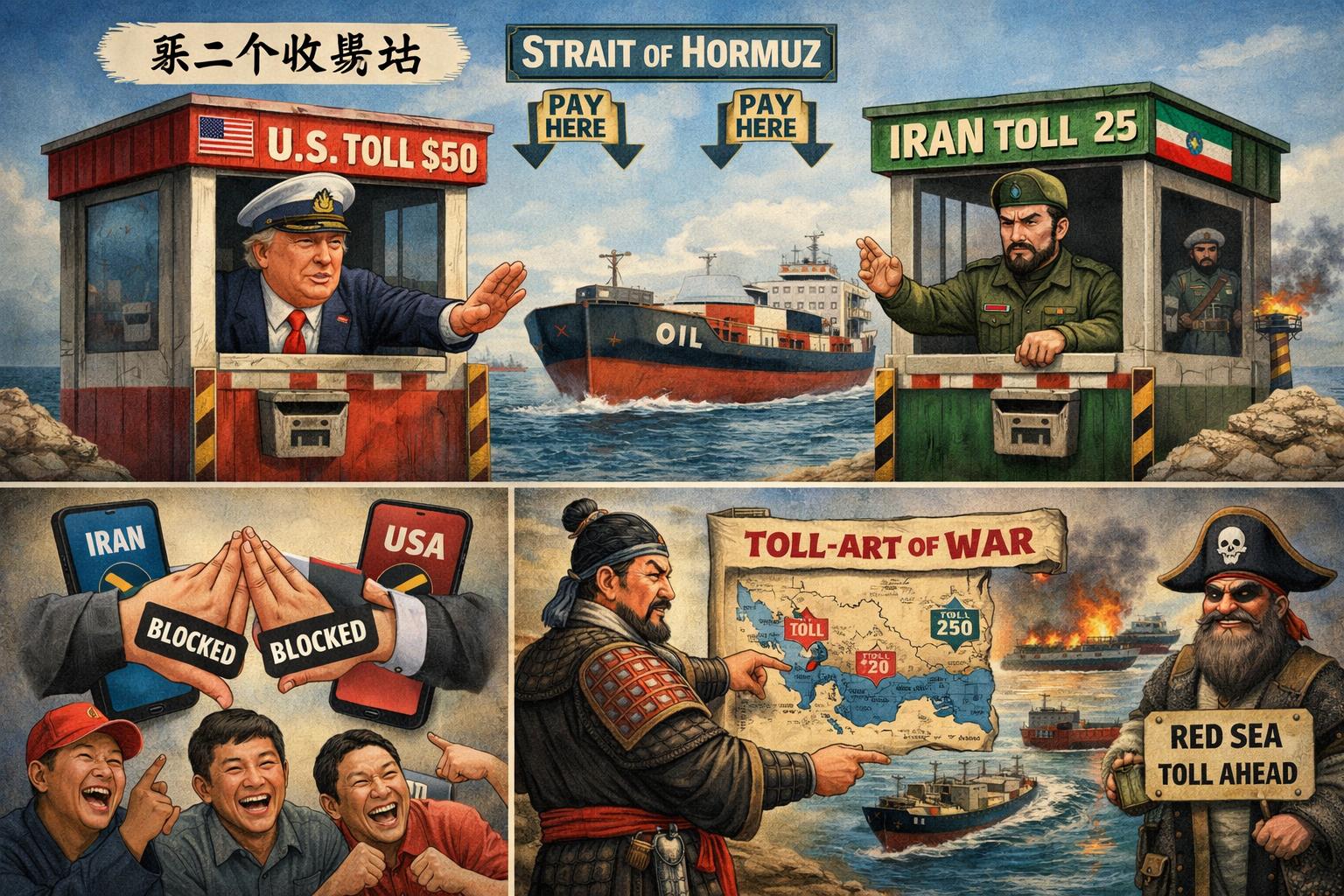
Chinese social media platforms have erupted with criticism and satire following the United States’ decision to impose a blockade on Iran, with many users describing the move as a “second toll booth” controlled by Washington. The reactions come amid escalating geopolitical tensions after the United States and Israel launched strikes on Iran on Friday, February 28, 2026, prompting Tehran to leverage its geographic position to restrict access through the strategically vital Strait of Hormuz.
Chinese social media mocks US blockade of Iran as “second toll booth”
Chinese social media platforms have erupted with criticism and satire following the United States’ decision to impose a blockade on Iran, with many users describing the move as a “second toll booth” controlled by Washington. The reactions come amid escalating geopolitical tensions after the United States and Israel launched strikes on Iran on Friday, February 28, 2026, prompting Tehran to leverage its geographic position to restrict access through the strategically vital Strait of Hormuz.
UK finance chief criticizes US over Iran war economic fallout
U.K. Finance Minister Rachel Reeves on Wednesday, April 15, 2026, called for immediate de-escalation of the Iran war, warning that the conflict is posing significant risks to global economic stability and expressing concern over the approach taken by the United States. Speaking at a forum in Washington, D.C., Reeves highlighted the economic consequences of disruptions in the Strait of Hormuz, a key global energy shipping route. She warned that ongoing instability in the region is incr
UK finance chief criticizes US over Iran war economic fallout
U.K. Finance Minister Rachel Reeves on Wednesday, April 15, 2026, called for immediate de-escalation of the Iran war, warning that the conflict is posing significant risks to global economic stability and expressing concern over the approach taken by the United States. Speaking at a forum in Washington, D.C., Reeves highlighted the economic consequences of disruptions in the Strait of Hormuz, a key global energy shipping route. She warned that ongoing instability in the region is incr
Donald Trump’s Strait of Hormuz Blockade Raises Fears of Iran War
Following unsuccessful diplomatic talks, Donald Trump announced a U.S. naval blockade in the Strait of Hormuz, a critical route for global energy trade. The move is aimed at increasing pressure on
Donald Trump’s Strait of Hormuz Blockade Raises Fears of Iran War
Following unsuccessful diplomatic talks, Donald Trump announced a U.S. naval blockade in the Strait of Hormuz, a critical route for global energy trade. The move is aimed at increasing pressure on
US announces Iran port blockade as Tehran asserts control over maritime borders
Washington, April 13 — Tensions between the United States and Iran intensified Monday as Washington moved forward with plans to impose a naval blockade targeting Iranian ports, prompting a swift response from Tehran asserting firm control over its maritime borders. Iran’s deputy interior minister said the country faces no significant security threats along its frontiers, emphasizing what he described as comprehensive oversight of both land and sea boundaries. He stated that Irania
US announces Iran port blockade as Tehran asserts control over maritime borders
Washington, April 13 — Tensions between the United States and Iran intensified Monday as Washington moved forward with plans to impose a naval blockade targeting Iranian ports, prompting a swift response from Tehran asserting firm control over its maritime borders. Iran’s deputy interior minister said the country faces no significant security threats along its frontiers, emphasizing what he described as comprehensive oversight of both land and sea boundaries. He stated that Irania