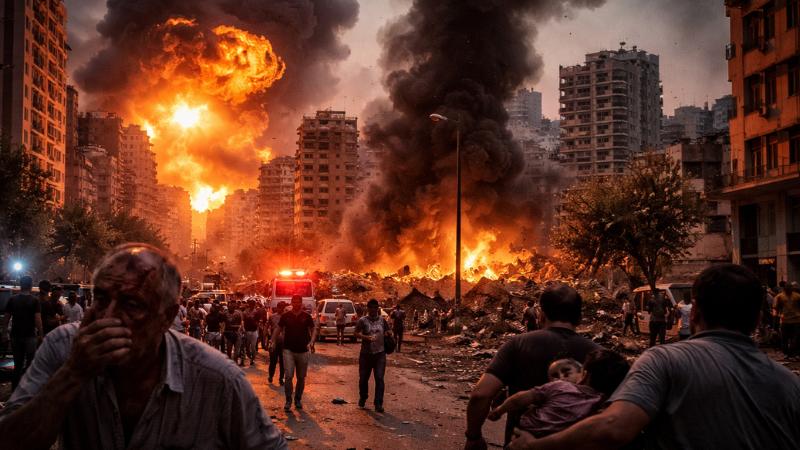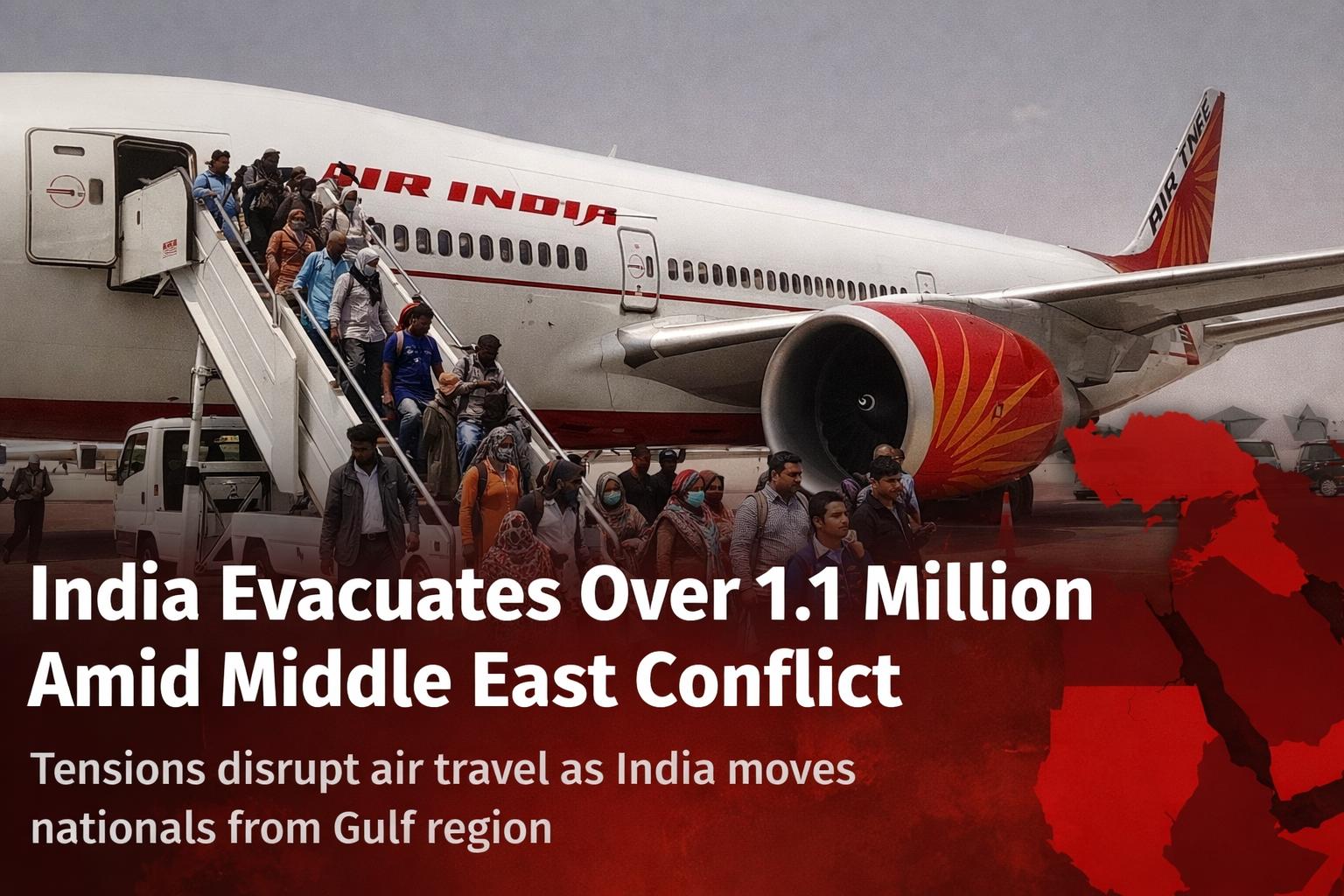
India has evacuated more than 1.1 million people from West Asia as regional tensions and airspace restrictions continue to disrupt commercial travel, officials said during a government briefing in New Delhi. The large-scale movement has been carried out through sustained flight operations from multiple countries, with authorities relying on alternate routes where airspace remains accessible.
Officials said that since February 28, approximately 1,130,000 passengers have traveled from the region to India. Commercial flights continue to operate under limited conditions, depending on safety and operational considerations. Around 110 flights were expected to operate between the United Arab Emirates and India on the day of the briefing, reflecting ongoing efforts to maintain connectivity despite regional instability.
Flights are also operating from Saudi Arabia and Oman to various Indian destinations. Qatar’s partially open airspace has allowed limited operations, with Qatar Airways expected to run between 10 and 11 flights to India. Meanwhile, Bahrain’s airspace remains open, and its national carrier is planning to initiate limited services. Additional non-scheduled flights are being operated from Dammam in Saudi Arabia to support travel demand.
Authorities noted that Iran’s airspace remains partially open for cargo and chartered flights. India has facilitated the movement of its nationals from Iran through Armenia and Azerbaijan, with 2,423 individuals relocated so far, including students and workers. Iraqi airspace is also open with limited operations, providing another option for onward travel.
Kuwait’s airspace closure has required further adjustments, with airlines operating non-scheduled flights from Saudi Arabia instead. Israeli airspace has reopened with restrictions, enabling some travel via neighboring countries such as Jordan and Egypt.
Officials emphasized that India continues to coordinate closely with regional governments and aviation authorities while extending consular assistance. With millions of Indian expatriates living in the Gulf and strong economic ties to the region, maintaining mobility and ensuring citizen safety remain key priorities amid evolving geopolitical conditions.