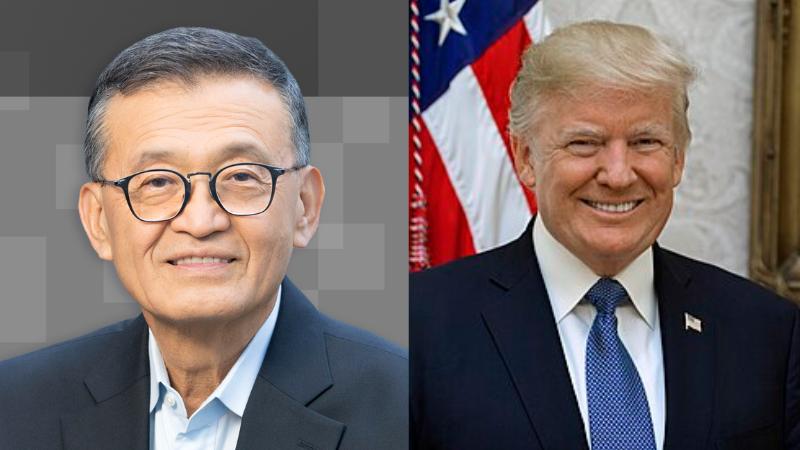
In a social media post, President Trump declared that “The CEO of Intel is highly conflicted and must resign, immediately.” He offered no additional specifics but insisted that “there is no other solution to this problem.” The President's remarks came shortly after a senior U.S. senator sent a formal letter to Intel’s board chairman raising questions about Tan’s past and current business relationships with Chinese semiconductor companies and state-linked enterprises.
The letter called into question whether CEO Lip-Bu Tan had divested from companies associated with foreign governments or military-linked entities. It cited concerns that his past investments and leadership roles in Chinese tech firms may present a conflict of interest, potentially undermining Intel’s position in the U.S. strategic tech sector. The senator pressed Intel’s board to confirm whether Tan had fully separated from these associations.
Lip-Bu Tan, who assumed the role of CEO at Intel in March 2025, is recognized for his extensive background in venture capital, having launched a tech-focused investment firm decades ago. His track record includes financial backing of multiple semiconductor and manufacturing startups in Asia. Reports referenced in the letter claim that Tan holds stakes in numerous advanced Chinese chip firms and maintains influence across a broad portfolio of tech enterprises. A number of these are reportedly linked to initiatives meant to enhance China's domestic semiconductor independence.
This controversy unfolds as the U.S. government deepens its scrutiny of foreign involvement in American tech infrastructure. Semiconductors have become a focal point of economic and strategic rivalry between the U.S. and China. Chips are central to everything from smartphones and vehicles to artificial intelligence and national defense systems. As such, any suggestion that a U.S. tech executive has divided interests or active connections with foreign-controlled firms has come under heightened examination.
Adding to this pressure, the senator behind the inquiry chairs a key committee overseeing national intelligence. He has expressed repeated concerns that foreign nationals or foreign-linked executives could use positions in U.S. tech firms to facilitate espionage or cyber infiltration. According to his letter, such influence could enable the insertion of vulnerabilities into critical systems or the unintentional transfer of sensitive intellectual property.
Despite these serious allegations, Intel has not issued any public statement responding to either President Trump’s demand or the contents of the senator’s letter. There is also no confirmation regarding whether Tan has severed ties with the Chinese entities in question. The lack of transparency has prompted unease among investors and contributed to a significant dip in the company’s stock.
Intel, which has been working to reclaim its dominance in the semiconductor industry, has committed to expanding its domestic manufacturing footprint and reducing reliance on foreign supply chains. These efforts align with government initiatives aimed at building U.S. technological resilience and countering external threats. However, the recent political storm surrounding Tan’s leadership could complicate Intel’s momentum and damage its public and institutional trust if not resolved swiftly.
The case reflects the broader challenge facing U.S. tech companies in an era where global business networks intersect with national security concerns. Executives with multinational investment histories are increasingly being held to account for any ties—direct or indirect—that may pose potential risks. In sectors as critical as semiconductors, even perceived conflicts of interest are now treated as matters of public and governmental concern.
As President Trump’s remarks reverberate through political and financial circles, Intel’s board may find itself forced to act sooner rather than later. Whether this results in Tan’s resignation or a comprehensive public explanation remains to be seen. For now, the situation has thrown one of America’s most important technology firms into a complex intersection of corporate leadership, foreign policy, and national defense.