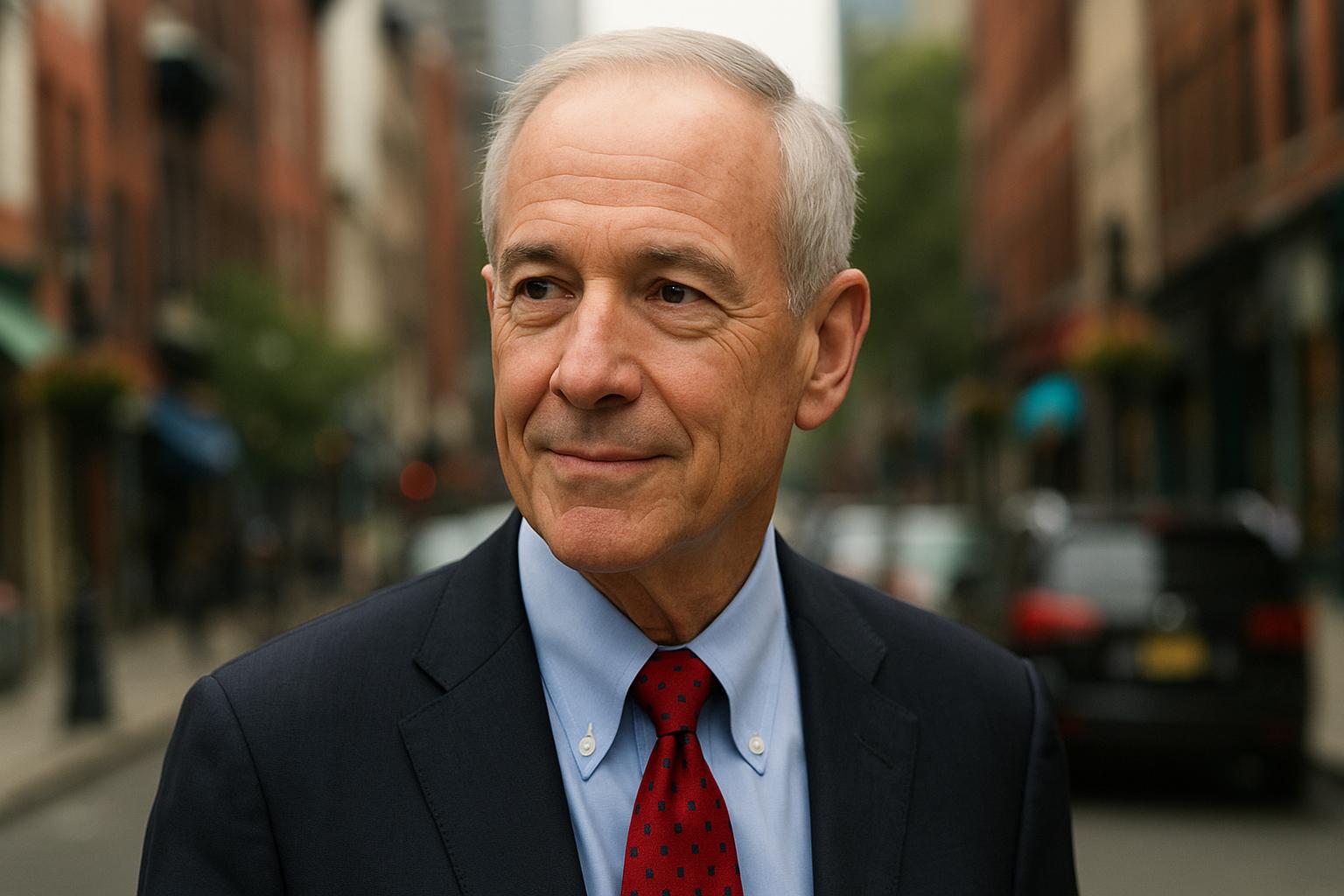
JERSEY CITY, New Jersey — The race to become Jersey City’s next mayor is shaping up to be one of the most competitive in recent history, featuring a diverse lineup of seven candidates, including former New Jersey Governor Jim McGreevey. Each contender is offering distinct visions for the city’s future, with housing affordability, development, and integrity in governance emerging as central themes in the campaign.
McGreevey, once a prominent figure in state politics, is attempting a notable comeback after years outside of elected office. Since leaving the governorship, he has led the New Jersey Reentry Corporation, a nonprofit organization that assists formerly incarcerated individuals with job placement and rehabilitation. He says that experience has deepened his understanding of community needs, particularly those facing economic and social hardship. McGreevey emphasized that Jersey City’s skyrocketing housing costs have pushed long-time residents out of the neighborhoods they once called home. “We have to make sure this city remains a place where working families can thrive,” he said. “Affordability and opportunity must go hand in hand.”
City Councilmember James Solomon, who has served two terms, is positioning himself as a candidate independent of developers and political power brokers. Solomon, who has built a reputation for transparency and reform, argues that addressing affordability is both a moral and economic priority. “For me, affordability is the core issue,” he said. “It’s what I hear at every door I knock on. People love Jersey City, but they’re struggling to stay here.” Solomon advocates for stronger tenant protections and more equitable housing development.
City Council President Joyce Watterman is also in the running, bringing over a decade of municipal experience and three decades as a local pastor. She highlights her leadership and community service as key qualifications. “Integrity and experience define who I am,” Watterman said. “I’ve been in local government for 12 years, and I’ve served this community as a pastor for more than 30. I understand the struggles families face, and I’m committed to solutions that help them succeed.” Watterman’s campaign focuses on strengthening social services, expanding community programs, and improving access to affordable housing.
Meanwhile, the youngest candidate in the race, 28-year-old Mussab Ali, is presenting himself as the voice of a new generation. A former Jersey City Board of Education president, Ali argues that his perspective combines innovation with inclusivity. “People want to live in Jersey City — it’s one of the most desirable places in New Jersey,” Ali said. “But we must ensure housing supply meets demand across all income levels. My vision is a city where people of all backgrounds and incomes can call Jersey City home.” Ali’s campaign has drawn attention for emphasizing youth engagement, economic diversity, and sustainable urban growth.
Veteran public servant and Hudson County Commissioner Bill O’Dea is another prominent contender, citing four decades of experience in public life. O’Dea says his record of results distinguishes him from his rivals. “I know how to put projects together, and I know how to make sure developers follow through,” he said. “For 40 years, I’ve worked in public service — the last 30 within the nonprofit sector — developing affordable housing, supporting small businesses, and creating job training programs. That’s exactly what Jersey City needs right now.” O’Dea’s campaign emphasizes pragmatic leadership and deep institutional knowledge of how to turn policies into tangible results.
Other candidates in the race bring varied backgrounds and priorities, adding to the crowded and competitive nature of the field. Political analysts say that with seven contenders, it is unlikely that any single candidate will secure more than 50 percent of the vote on Election Day, which could trigger a runoff between the top two finishers.
As the campaign intensifies, issues like housing affordability, neighborhood development, and economic equity continue to dominate discussions. Jersey City’s rapid growth has created both opportunity and challenge, transforming it into one of New Jersey’s most dynamic urban centers but also leaving many long-time residents concerned about displacement. Each candidate is working to frame themselves as the leader best equipped to balance progress with inclusivity.
For now, the race remains open-ended, with McGreevey’s comeback bid drawing statewide attention and local candidates sharpening their grassroots messages. As voters weigh their choices, Jersey City stands at a political crossroads — one that will shape not just the city’s future leadership, but its identity as one of New Jersey’s most diverse and rapidly evolving communities.