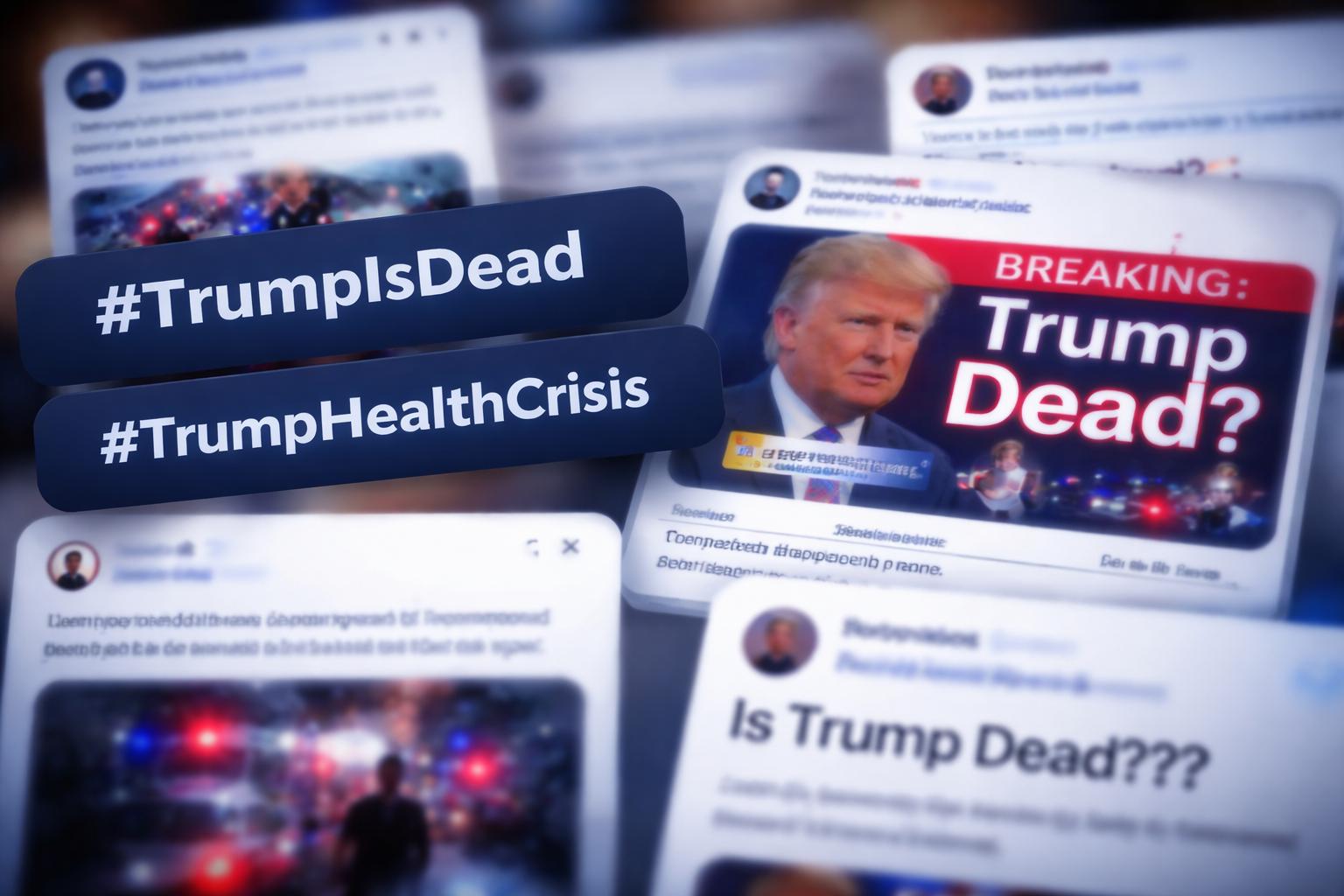
Social media users inundated X, formerly known as Twitter, with unverified claims about President Donald Trump’s death over the weekend of Saturday, April 5, 2026. The rumors began gaining traction around 10 AM IST on Sunday, April 6, 2026, alleging that the 79-year-old leader had been rushed to Walter Reed National Military Medical Center due to a serious health emergency, possibly a heart attack or stroke. These speculations mirrored earlier hoaxes from 2025 but intensified following a White House “press lid”—an official notice issued around 8 PM ET on Saturday, April 5, 2026 (early morning Sunday, April 6, 2026, IST), signaling no further public appearances or statements that evening.
The frenzy was sparked by anonymous posts circulating recycled footage from Trump’s July 2024 visit to Walter Reed after the Butler, Pennsylvania rally shooting. Mistakenly presented as recent, the motorcade videos appeared to show the president with noticeable ankle swelling and bruising on his hands—symptoms previously linked to his diagnosed chronic venous insufficiency. Liberal-leaning accounts amplified the narrative, pushing hashtags such as #TrumpIsDead and #TrumpHealthCrisis to over 500,000 mentions by midday Sunday, April 6, 2026. Influencers also questioned his absence during a high-stakes search-and-rescue mission for a missing U.S. airman in Iran, mixing valid concerns about transparency with outright misinformation.
White House officials quickly rejected the claims, labeling them “insane conspiracy theories peddled by deranged liberals” in a statement released around 2 PM ET on Sunday, April 6, 2026 (12:30 AM IST on Monday, April 7, 2026). Spokespersons confirmed that Trump was in good health, working from the residence, and criticized those spreading the rumors for overlooking his active Truth Social posts earlier that day. Fact-checkers emphasized that vague scheduling—particularly Trump’s usual absence from public events on Sundays—created a gap that allowed misinformation to flourish. On platforms like TikTok, speculation was more subdued, with creators discussing age-related health risks without endorsing death claims and later adding disclaimers affirming his well-being.
This incident is not unprecedented. Similar waves of false reports surfaced in August and September 2025, often triggered by harmless health-related visuals or periods of limited public visibility during times of global tension. Analysts point to deep political polarization as a driving factor: critics demand greater transparency regarding Trump’s health due to his age, while limited official updates—compared to more frequent disclosures by past administrations—fuel suspicion. Meanwhile, algorithms on X tend to promote sensational content, accelerating the spread of such narratives before fact-checking can intervene. Trump’s team has often responded by leveraging the situation to rally supporters against what they describe as “fake news.” Although the trend had subsided by 10 AM IST on Tuesday, April 7, 2026, experts caution that repeated incidents of this nature could undermine public trust in health reporting. The episode highlights the growing difficulty of curbing viral political misinformation in an increasingly polarized digital landscape.