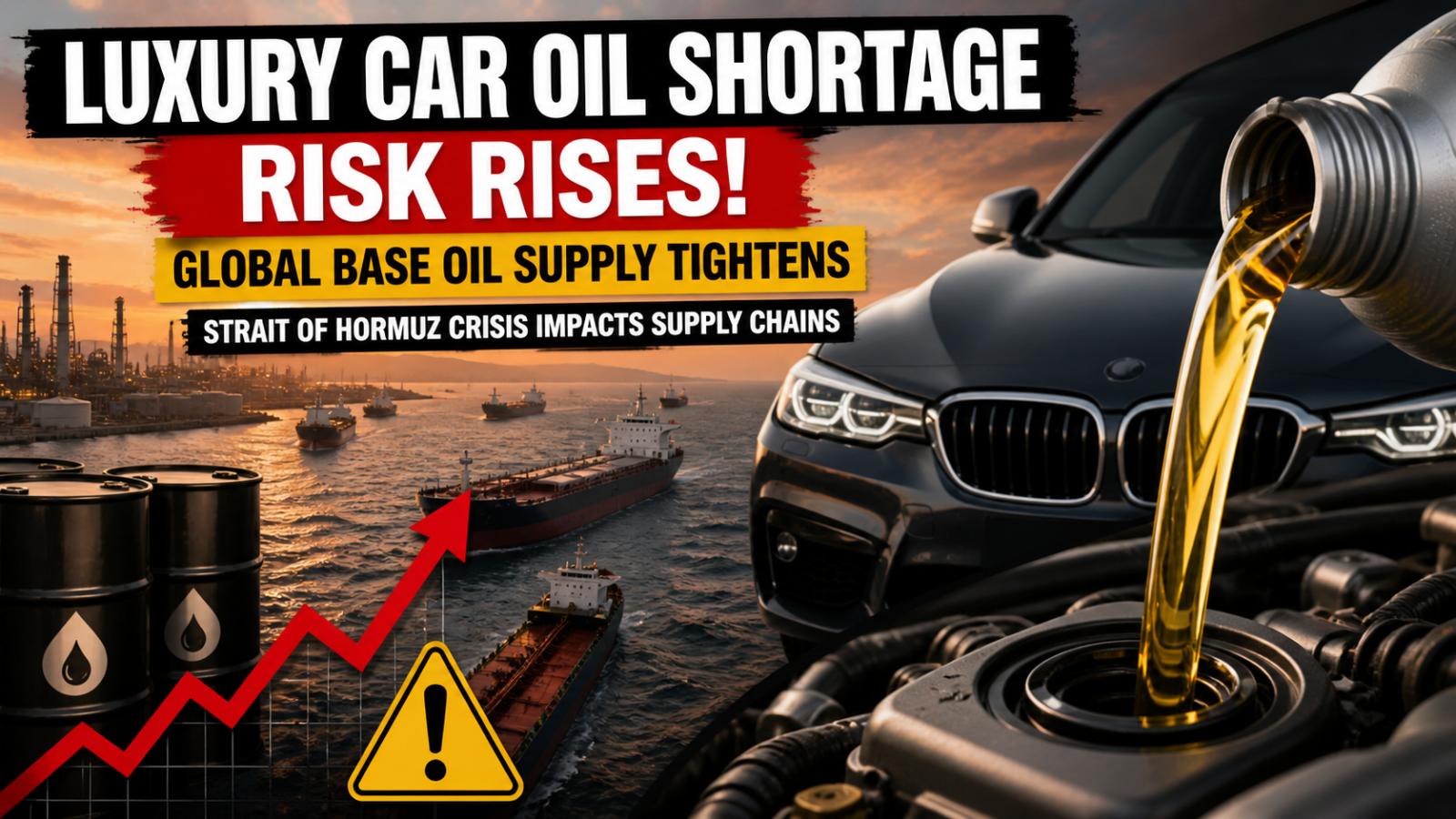
The global base oil shortage is no longer just an industry headline—it’s becoming a real concern for luxury car owners worldwide. As supply chains tighten due to geopolitical tensions around the Strait of Hormuz, the availability of high-performance engine oils used in premium vehicles is under pressure.
For owners of brands like BMW, Mercedes-Benz, and Audi, this could soon translate into higher maintenance costs, limited oil availability, and delayed servicing.
What’s Causing the Global Base Oil Shortage?
At the heart of the issue is the ongoing instability linked to tensions involving Iran and critical oil transit routes. The Strait of Hormuz handles a significant portion of the world’s petroleum shipments—not just crude oil, but also refined products like base oils, which are essential for lubricant production.
Base oils form the foundation of:
- Synthetic engine oils
- Industrial lubricants
- High-performance automotive fluids
With shipping disruptions, delayed tankers, and rising insurance risks, the supply of these materials has tightened globally.
Why Luxury Cars Are Hit Harder
Not all vehicles are affected equally. Luxury and high-performance cars rely heavily on Group III and Group IV base oils, including advanced formulations like polyalphaolefins (PAO). These oils are designed to:
- Handle extreme temperatures
- Protect high-speed engines
- Maintain performance under pressure
Unlike regular vehicles, luxury cars cannot easily switch to cheaper alternatives without risking engine damage or reduced efficiency. That’s why this shortage hits premium segments first—and hardest.
Rising Prices and Supply Pressure
The numbers already show stress in the system:
- The Gulf region contributes around 20% of global Group III base oil production
- It accounted for nearly half of U.S. imports in recent periods
- Prices in some markets have nearly doubled since the crisis began
With inventories shrinking and delivery times increasing, lubricant manufacturers are struggling to keep up.
If disruptions continue, experts warn that:
- Oil prices could rise further
- Service costs for luxury vehicles may spike
- Availability could become inconsistent in certain regions
What This Means for Luxury Car Owners
If you own a premium vehicle, here’s what you might notice in the coming weeks or months:
Higher Maintenance Costs
Synthetic oil changes could become significantly more expensive.
Service Delays
Workshops may face shortages or longer wait times for specific oil grades.
Risk of Substitutes
Some service centers might use alternative oils—potentially affecting performance if not approved.
Should You Be Worried Right Now?
Not immediately—but it’s something to watch closely.
There’s no need to panic or stockpile engine oil. However:
- Stick to authorized service centers
- Ensure correct oil specifications are used
- Avoid delaying essential maintenance
Being proactive now can help you avoid bigger issues later.
A Bigger Energy and Supply Chain Problem
This isn’t just about cars—it reflects a deeper issue in the global energy ecosystem.
Heavy reliance on specific regions like the Persian Gulf makes supply chains vulnerable. Alongside geopolitical tensions, factors like:
- Refinery disruptions
- Export restrictions
- Seasonal risks (like hurricanes in U.S. Gulf Coast)
are amplifying the pressure.
Industry experts see this as a warning sign of long-term structural risks in the oil and automotive sectors.
What Happens Next?
If shipping routes stabilize and production resumes, the situation could ease within months. But if disruptions persist:
- Prices may remain elevated
- Supply chains could tighten further
- Luxury vehicle ownership costs may rise globally
For now, both manufacturers and consumers are bracing for continued uncertainty.
Final Takeaway
The global base oil shortage is quietly building into a significant challenge—especially for luxury car owners. While it may not yet be visible at every service center, the signs are clear: tightening supply, rising costs, and growing dependence on fragile global networks.
Staying informed—and maintaining your vehicle responsibly—will be key in navigating what could become one of the most overlooked automotive disruptions of the year.


 Joyful
0%
Joyful
0%
 Cool
0%
Cool
0%
 Thrilled
0%
Thrilled
0%
 Upset
0%
Upset
0%
 Unhappy
0%
Unhappy
0%