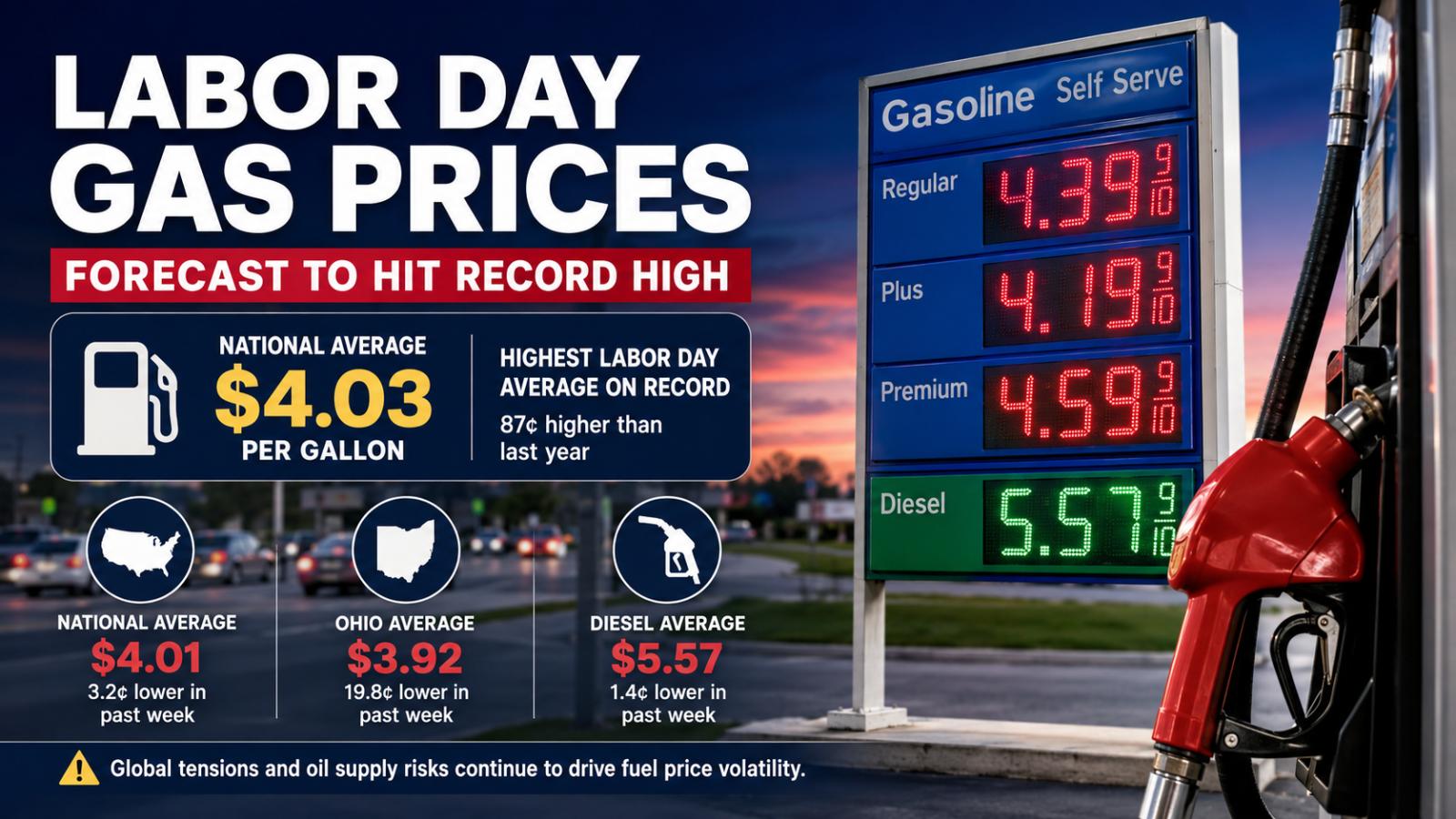
Labor Day gas prices are forecast to average a record $4.03 per gallon nationwide in 2026. GasBuddy says geopolitical uncertainty continues to affect fuel markets, while Columbus and central Ohio prices remain well above year-ago levels.
Labor Day gas prices are forecast to reach their highest level on record for the holiday, with GasBuddy projecting a national average of about $4.03 per gallon during the 2026 Labor Day weekend.
GasBuddy said on Tuesday, S
Labor Day gas prices are forecast to average a record $4.03 per gallon nationwide in 2026. GasBuddy says geopolitical uncertainty continues to affect fuel markets, while Columbus and central Ohio prices remain well above year-ago levels.
Labor Day gas prices are forecast to reach their highest level on record for the holiday, with GasBuddy projecting a national average of about $4.03 per gallon during the 2026 Labor Day weekend.
GasBuddy said on Tuesday, S
Iran says eight troops killed
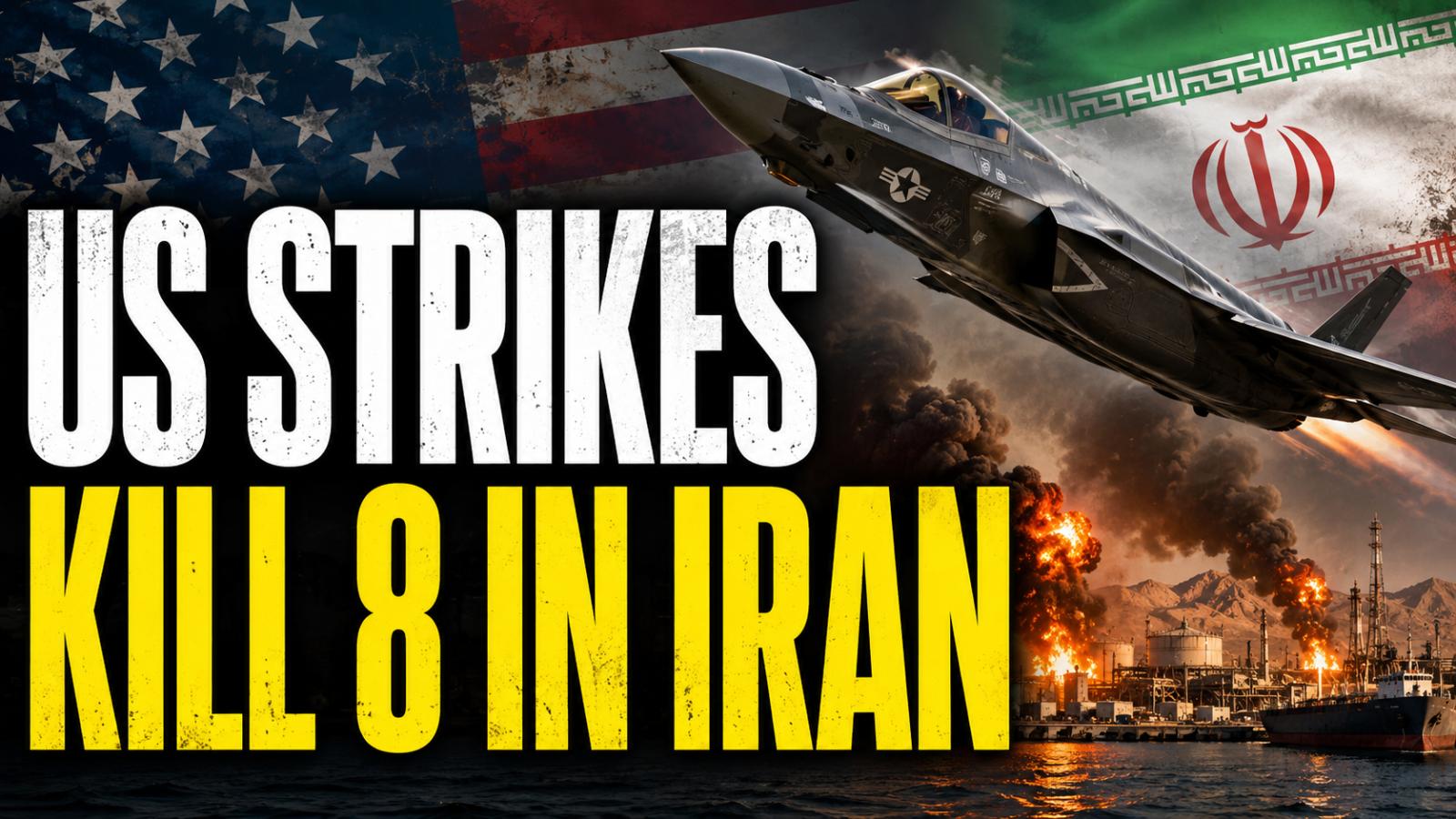
Iranian state television reported that eight military personnel were killed in the latest US strikes on southern Iran, as tensions between Washington and Tehran escalated around the Strait of Hormuz. The report said the dead were members of Iran’s air and naval forces and that the strikes affected areas including Bandar Abbas and Bushehr
Iran says eight troops killed
Iranian state television reported that eight military personnel were killed in the latest US strikes on southern Iran, as tensions between Washington and Tehran escalated around the Strait of Hormuz. The report said the dead were members of Iran’s air and naval forces and that the strikes affected areas including Bandar Abbas and Bushehr
Oil Markets Fall After US-Iran Interim Agreement
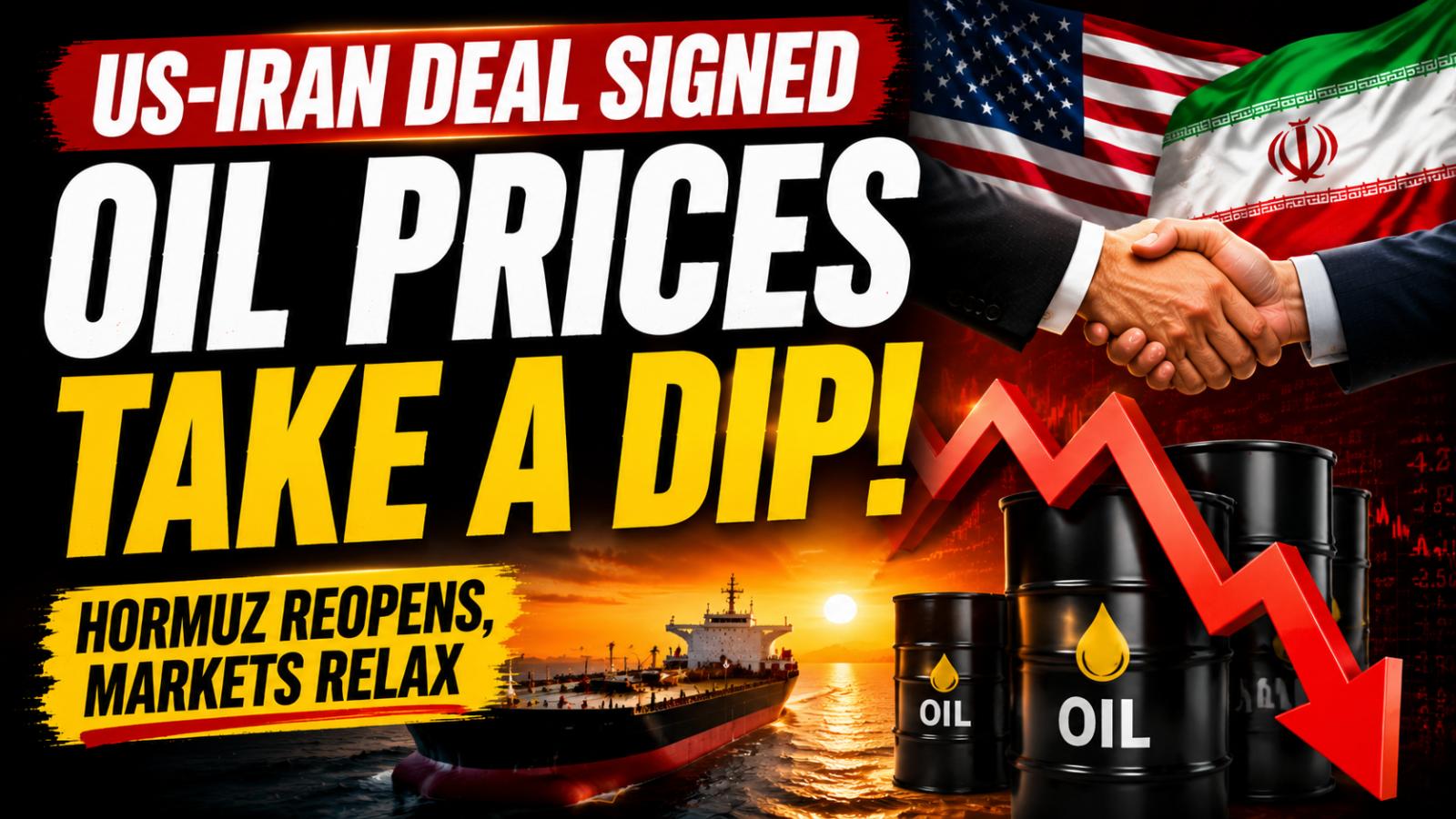
Global oil prices slipped in early trading on Thursday,June 18,2026 following the announcement of an interim agreement between the United States and Iran aimed at ending the conflict in the Middle East. The development has eased immediate concerns over supply disruptions through one of the world’s most critical energy corridors, the Strait of Hormuz.
Oil Markets Fall After US-Iran Interim Agreement
Global oil prices slipped in early trading on Thursday,June 18,2026 following the announcement of an interim agreement between the United States and Iran aimed at ending the conflict in the Middle East. The development has eased immediate concerns over supply disruptions through one of the world’s most critical energy corridors, the Strait of Hormuz.
Oil Falls On Peace Deal Hopes
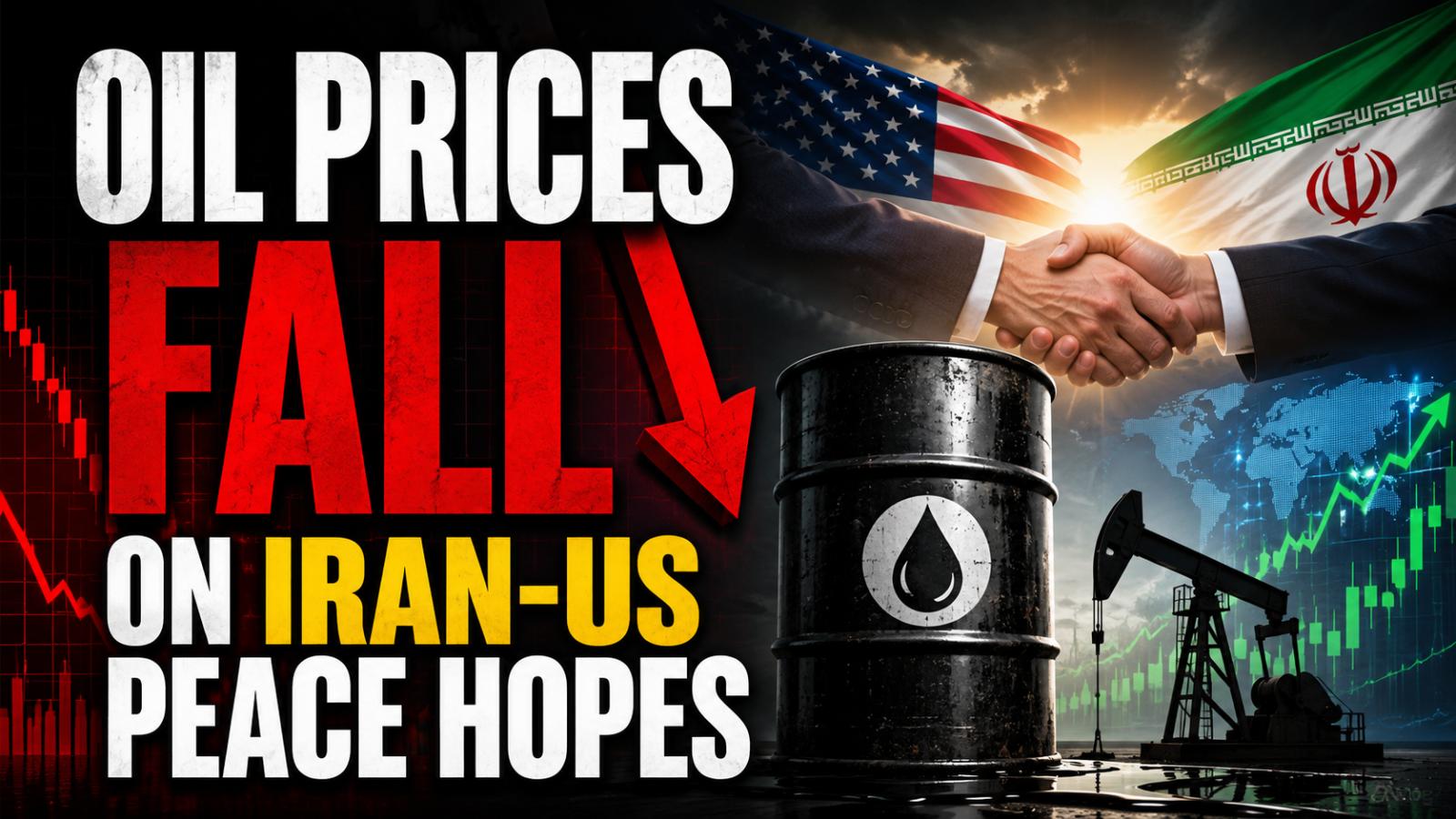
Oil prices fell sharply on Friday, June 12, 2026 as renewed hopes for a peace agreement between Iran and the United States eased fears of prolonged disruption to global energy supplies. Brent crude dropped below $86 a barrel during trading before recovering part of its losses, while market attention remained focused on whether diplomatic progress could reduce risks around Middle
Oil Falls On Peace Deal Hopes
Oil prices fell sharply on Friday, June 12, 2026 as renewed hopes for a peace agreement between Iran and the United States eased fears of prolonged disruption to global energy supplies. Brent crude dropped below $86 a barrel during trading before recovering part of its losses, while market attention remained focused on whether diplomatic progress could reduce risks around Middle
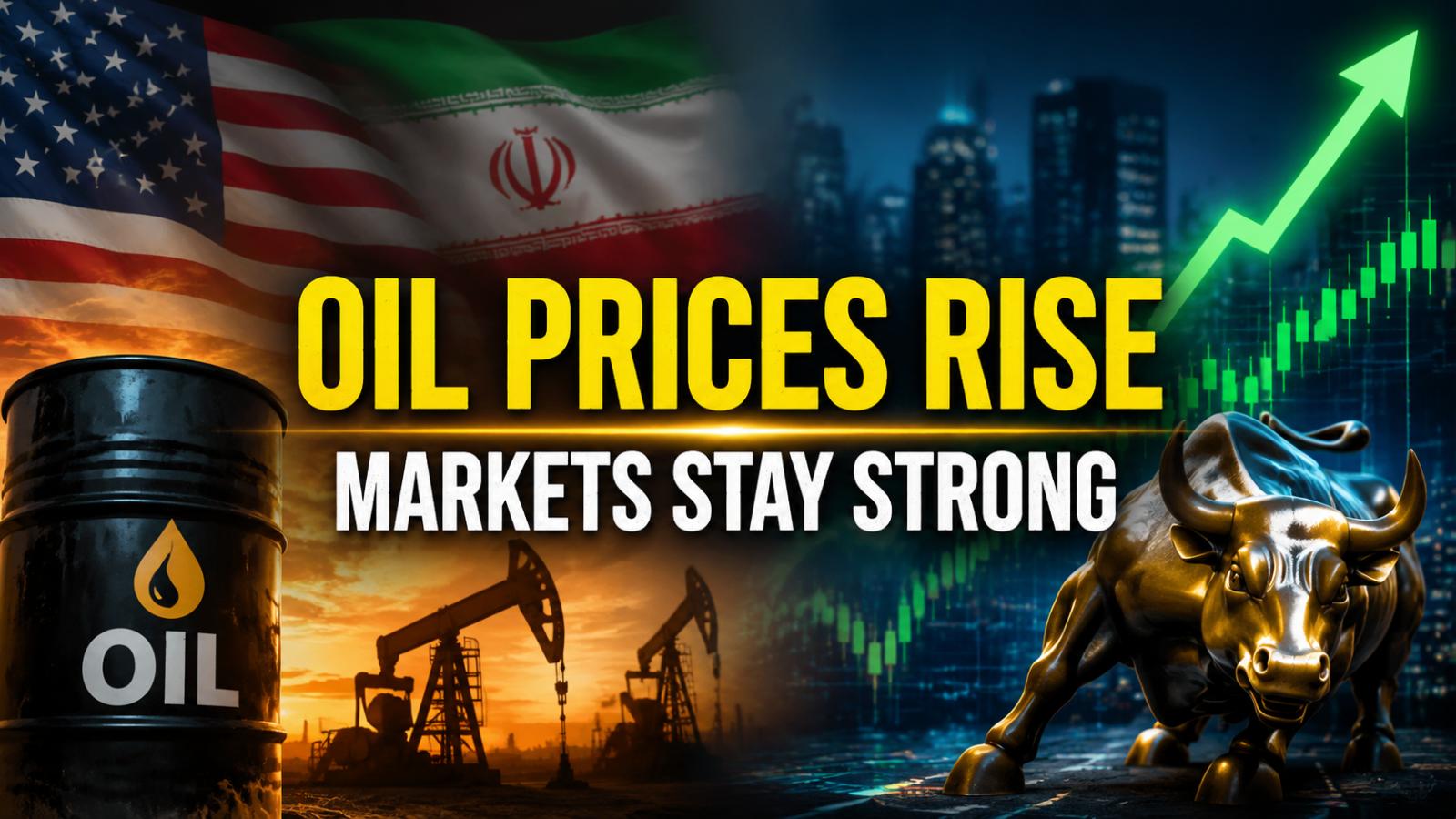
Oil prices rose sharply as Brent crude touched $98.20 per barrel on Wednesday, fueled by rising tensions between the United States and Iran. Recent missile activity in the Gulf region and disrupted shipping routes have intensified concerns about energy supply. Although strategic oil reserves remain untapped for now, the market is reacting to potential risks in the Strait of Hormuz. August contracts have jumped over 2% since early June and more than 5% in just the past week.
Oil prices rose sharply as Brent crude touched $98.20 per barrel on Wednesday, fueled by rising tensions between the United States and Iran. Recent missile activity in the Gulf region and disrupted shipping routes have intensified concerns about energy supply. Although strategic oil reserves remain untapped for now, the market is reacting to potential risks in the Strait of Hormuz. August contracts have jumped over 2% since early June and more than 5% in just the past week.
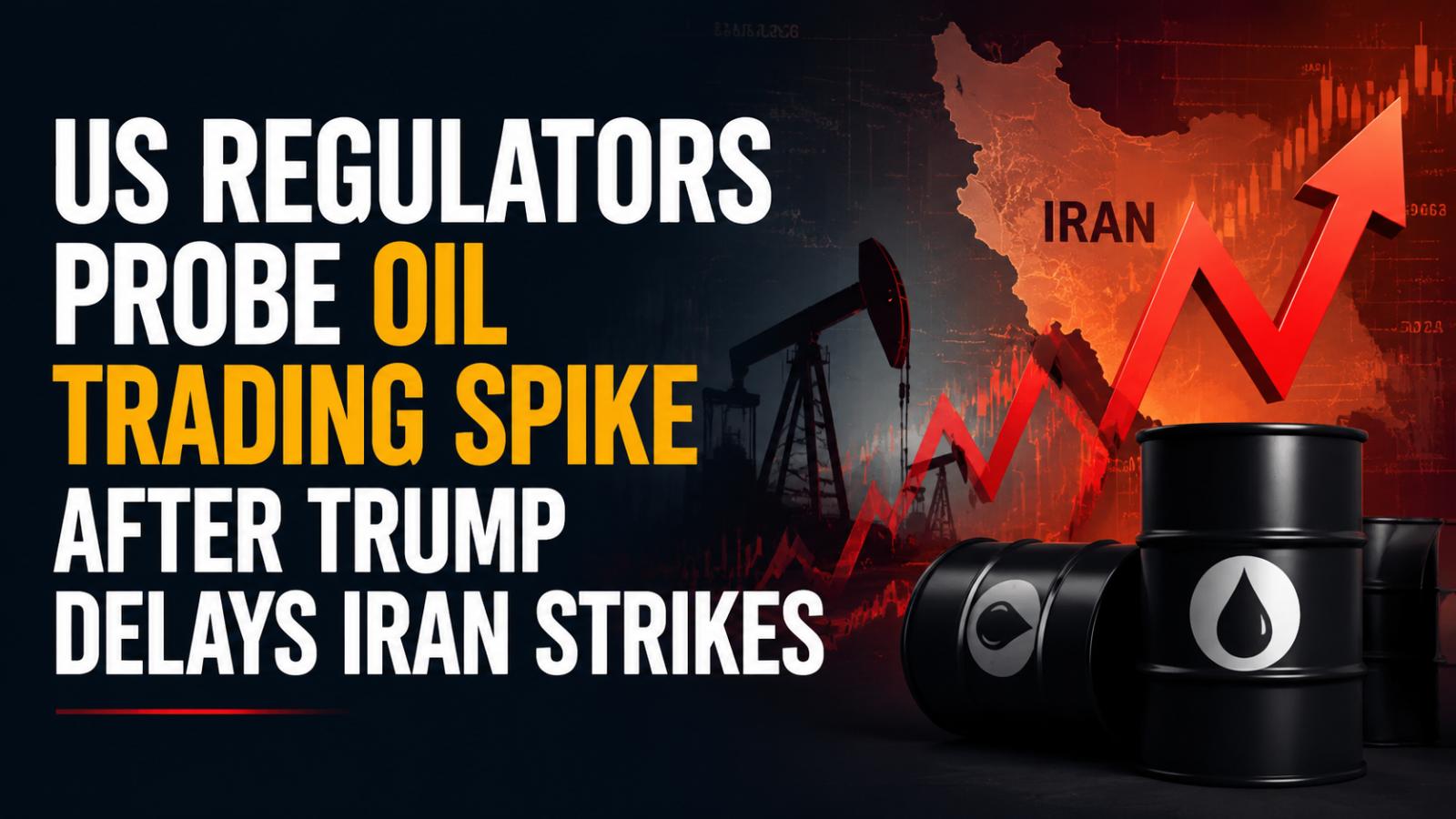
U.S. regulators are examining an unexpected spike in oil futures trading that occurred just before President Donald Trump announced a postponement of planned strikes on Iran’s energy sector. The Commodity Futures Trading Commission (CFTC) is reviewing unusual off-hours trading activity that reportedly generated millions in profits for several trading firms.
Trading Activity Details
U.S. regulators are examining an unexpected spike in oil futures trading that occurred just before President Donald Trump announced a postponement of planned strikes on Iran’s energy sector. The Commodity Futures Trading Commission (CFTC) is reviewing unusual off-hours trading activity that reportedly generated millions in profits for several trading firms.
Trading Activity Details
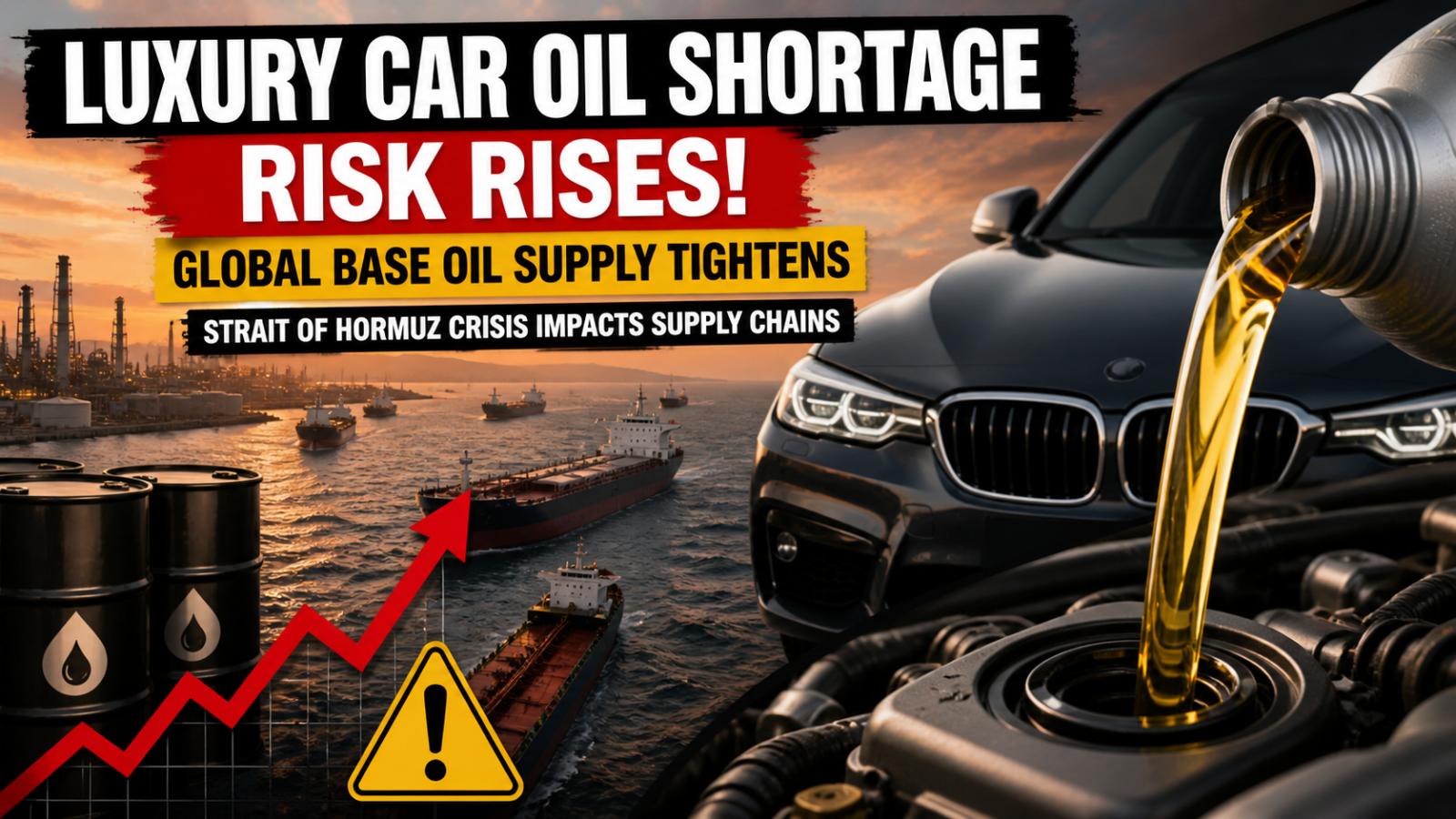
The global base oil shortage is no longer just an industry headline—it’s becoming a real concern for luxury car owners worldwide. As supply chains tighten due to geopolitical tensions around the Strait of Hormuz, the availability of high-performance engine oils used in premium vehicles is under pressure.
For owners of brands like BMW, Mercedes-Benz, and Audi, this could soon translate into higher maintenance costs, limited oil availability, and delayed servicing.
What’s Causing the Global Base Oil Shortage?
At the heart of the issue is the ongoing instability linked to tensions involving Iran and critical oil transit routes. The Strait of Hormuz handles a significant portion of the world’s petroleum shipments—not just crude oil, but also refined products like base oils, which are essential for lubricant production.
Base oils form the foundation of:
Synthetic engine oils
Industrial lubricants
High-performance automotive fluids
With shipping disruptions, delayed tankers, and rising insurance risks, the supply of these materials has tightened globally.
Why Luxury Cars Are Hit Harder
Not all vehicles are affected equally. Luxury and high-performance cars rely heavily on Group III and Group IV base oils, including advanced formulations like polyalphaolefins (PAO). These oils are designed to:
Handle extreme temperatures
Protect high-speed engines
Maintain performance under pressure
Unlike regular vehicles, luxury cars cannot easily switch to cheaper alternatives without risking engine damage or reduced efficiency. That’s why this shortage hits premium segments first—and hardest.
Rising Prices and Supply Pressure
The numbers already show stress in the system:
The Gulf region contributes around 20% of global Group III base oil production
It accounted for nearly half of U.S. imports in recent periods
Prices in some markets have nearly doubled since the crisis began
With inventories shrinking and delivery times increasing, lubricant manufacturers are struggling to keep up.
If disruptions continue, experts warn that:
Oil prices could rise further
Service costs for luxury vehicles may spike
Availability could become inconsistent in certain regions
What This Means for Luxury Car Owners
If you own a premium vehicle, here’s what you might notice in the coming weeks or months:
Higher Maintenance Costs
Synthetic oil changes could become significantly more expensive.
Service Delays
Workshops may face shortages or longer wait times for specific oil grades.
Risk of Substitutes
Some service centers might use alternative oils—potentially affecting performance if not approved.
Should You Be Worried Right Now?
Not immediately—but it’s something to watch closely.
There’s no need to panic or stockpile engine oil. However:
Stick to authorized service centers
Ensure correct oil specifications are used
Avoid delaying essential maintenance
Being proactive now can help you avoid bigger issues later.
A Bigger Energy and Supply Chain Problem
This isn’t just about cars—it reflects a deeper issue in the global energy ecosystem.
Heavy reliance on specific regions like the Persian Gulf makes supply chains vulnerable. Alongside geopolitical tensions, factors like:
Refinery disruptions
Export restrictions
Seasonal risks (like hurricanes in U.S. Gulf Coast)
are amplifying the pressure.
Industry experts see this as a warning sign of long-term structural risks in the oil and automotive sectors.
What Happens Next?
If shipping routes stabilize and production resumes, the situation could ease within months. But if disruptions persist:
Prices may remain elevated
Supply chains could tighten further
Luxury vehicle ownership costs may rise globally
For now, both manufacturers and consumers are bracing for continued uncertainty.
Final Takeaway
The global base oil shortage is quietly building into a significant challenge—especially for luxury car owners. While it may not yet be visible at every service center, the signs are clear: tightening supply, rising costs, and growing dependence on fragile global networks.
Staying informed—and maintaining your vehicle responsibly—will be key in navigating what could become one of the most overlooked automotive disruptions of the year.
The global base oil shortage is no longer just an industry headline—it’s becoming a real concern for luxury car owners worldwide. As supply chains tighten due to geopolitical tensions around the Strait of Hormuz, the availability of high-performance engine oils used in premium vehicles is under pressure.
For owners of brands like BMW, Mercedes-Benz, and Audi, this could soon translate into higher maintenance costs, limited oil availability, and delayed servicing.
What’s Causing the Global Base Oil Shortage?
At the heart of the issue is the ongoing instability linked to tensions involving Iran and critical oil transit routes. The Strait of Hormuz handles a significant portion of the world’s petroleum shipments—not just crude oil, but also refined products like base oils, which are essential for lubricant production.
Base oils form the foundation of:
Synthetic engine oils
Industrial lubricants
High-performance automotive fluids
With shipping disruptions, delayed tankers, and rising insurance risks, the supply of these materials has tightened globally.
Why Luxury Cars Are Hit Harder
Not all vehicles are affected equally. Luxury and high-performance cars rely heavily on Group III and Group IV base oils, including advanced formulations like polyalphaolefins (PAO). These oils are designed to:
Handle extreme temperatures
Protect high-speed engines
Maintain performance under pressure
Unlike regular vehicles, luxury cars cannot easily switch to cheaper alternatives without risking engine damage or reduced efficiency. That’s why this shortage hits premium segments first—and hardest.
Rising Prices and Supply Pressure
The numbers already show stress in the system:
The Gulf region contributes around 20% of global Group III base oil production
It accounted for nearly half of U.S. imports in recent periods
Prices in some markets have nearly doubled since the crisis began
With inventories shrinking and delivery times increasing, lubricant manufacturers are struggling to keep up.
If disruptions continue, experts warn that:
Oil prices could rise further
Service costs for luxury vehicles may spike
Availability could become inconsistent in certain regions
What This Means for Luxury Car Owners
If you own a premium vehicle, here’s what you might notice in the coming weeks or months:
Higher Maintenance Costs
Synthetic oil changes could become significantly more expensive.
Service Delays
Workshops may face shortages or longer wait times for specific oil grades.
Risk of Substitutes
Some service centers might use alternative oils—potentially affecting performance if not approved.
Should You Be Worried Right Now?
Not immediately—but it’s something to watch closely.
There’s no need to panic or stockpile engine oil. However:
Stick to authorized service centers
Ensure correct oil specifications are used
Avoid delaying essential maintenance
Being proactive now can help you avoid bigger issues later.
A Bigger Energy and Supply Chain Problem
This isn’t just about cars—it reflects a deeper issue in the global energy ecosystem.
Heavy reliance on specific regions like the Persian Gulf makes supply chains vulnerable. Alongside geopolitical tensions, factors like:
Refinery disruptions
Export restrictions
Seasonal risks (like hurricanes in U.S. Gulf Coast)
are amplifying the pressure.
Industry experts see this as a warning sign of long-term structural risks in the oil and automotive sectors.
What Happens Next?
If shipping routes stabilize and production resumes, the situation could ease within months. But if disruptions persist:
Prices may remain elevated
Supply chains could tighten further
Luxury vehicle ownership costs may rise globally
For now, both manufacturers and consumers are bracing for continued uncertainty.
Final Takeaway
The global base oil shortage is quietly building into a significant challenge—especially for luxury car owners. While it may not yet be visible at every service center, the signs are clear: tightening supply, rising costs, and growing dependence on fragile global networks.
Staying informed—and maintaining your vehicle responsibly—will be key in navigating what could become one of the most overlooked automotive disruptions of the year.
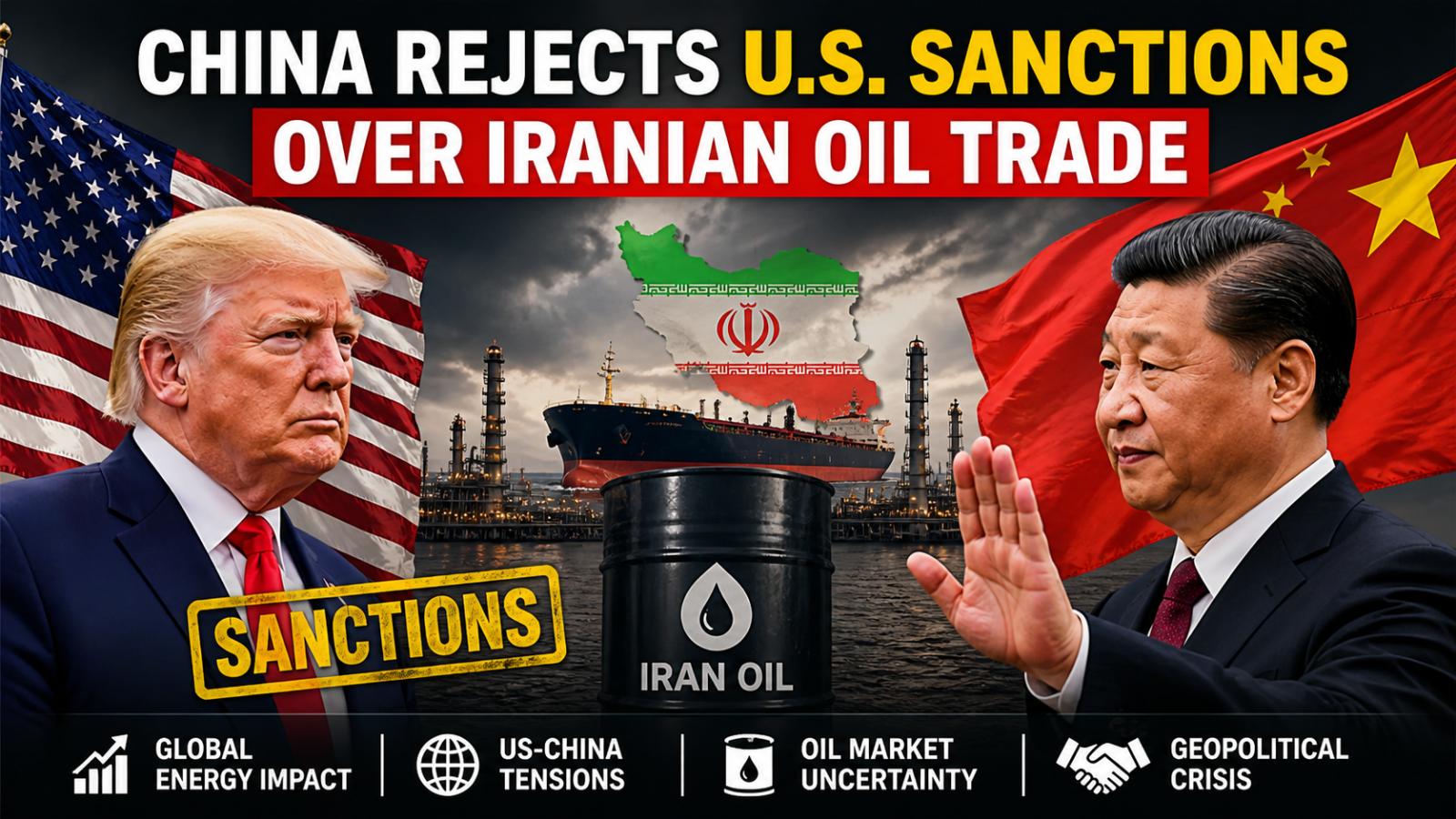
China has strongly rejected new sanctions imposed by the United States on Chinese firms accused of purchasing Iranian oil, calling the measures “unlawful” and a violation of international trade norms. The move marks a fresh escalation in tensions between China and Washington, with potential ripple effe
China has strongly rejected new sanctions imposed by the United States on Chinese firms accused of purchasing Iranian oil, calling the measures “unlawful” and a violation of international trade norms. The move marks a fresh escalation in tensions between China and Washington, with potential ripple effe
U.S. stock markets closed weaker as investors reacted to escalating geopolitical uncertainty. Major indices, including the Dow Jones Industrial Average, S&P 500, and Nasdaq, fell following comments from U.S. leadership that the conflict with Iran will continue in the coming weeks, which kept risk sentiment subdued.
The S&P 500, which tracks 500 of the largest U.S. companies, declined nearly 0.9% on the day. Broader equity benchmarks weakened as stock buyers remained cautious
U.S. stock markets closed weaker as investors reacted to escalating geopolitical uncertainty. Major indices, including the Dow Jones Industrial Average, S&P 500, and Nasdaq, fell following comments from U.S. leadership that the conflict with Iran will continue in the coming weeks, which kept risk sentiment subdued.
The S&P 500, which tracks 500 of the largest U.S. companies, declined nearly 0.9% on the day. Broader equity benchmarks weakened as stock buyers remained cautious
Gold and silver have witnessed significant price jumps recently, attracting attention from investors as global market conditions remain uncertain. After two consecutive days of price declines, both metals have made a strong rebound, with gold prices soaring by Rs 5,300 (3.82%) to reach Rs 1,44,212 on the Multi Commodity Exchange (MCX). Silver saw an even larger increase, rising by Rs 13,060 (5.82%), reaching Rs 2,36,980. This sharp uptick in precious metal prices is largely driven by weakenin
Gold and silver have witnessed significant price jumps recently, attracting attention from investors as global market conditions remain uncertain. After two consecutive days of price declines, both metals have made a strong rebound, with gold prices soaring by Rs 5,300 (3.82%) to reach Rs 1,44,212 on the Multi Commodity Exchange (MCX). Silver saw an even larger increase, rising by Rs 13,060 (5.82%), reaching Rs 2,36,980. This sharp uptick in precious metal prices is largely driven by weakenin
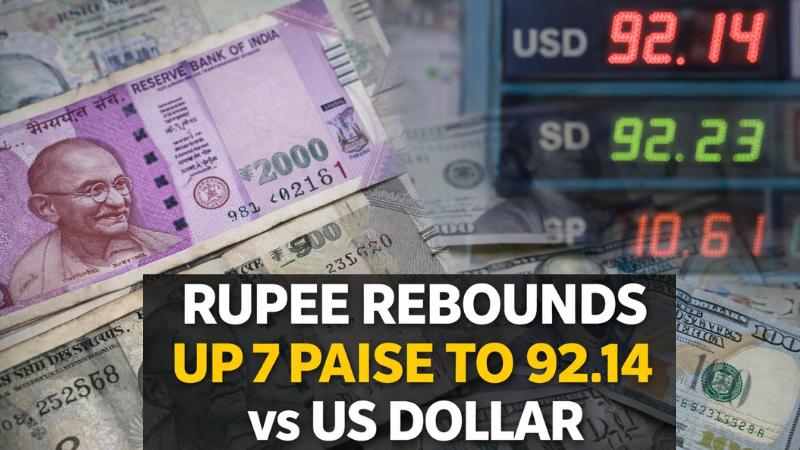
The Indian Rupee rebounded from its all-time low on Tuesday morning, rising by 7 paise to 92.14 against the US Dollar in early trade. This recovery follows a sharp fall in global oil prices, spurred by comments from US President Donald Trump regarding the potential end of the ongoing conflict with Iran. Additionally, a weaker US Dollar and a strong opening in the domestic equity markets further supported the local currency, although Foreign Institutional Investors (FII) outflows limited signi
The Indian Rupee rebounded from its all-time low on Tuesday morning, rising by 7 paise to 92.14 against the US Dollar in early trade. This recovery follows a sharp fall in global oil prices, spurred by comments from US President Donald Trump regarding the potential end of the ongoing conflict with Iran. Additionally, a weaker US Dollar and a strong opening in the domestic equity markets further supported the local currency, although Foreign Institutional Investors (FII) outflows limited signi
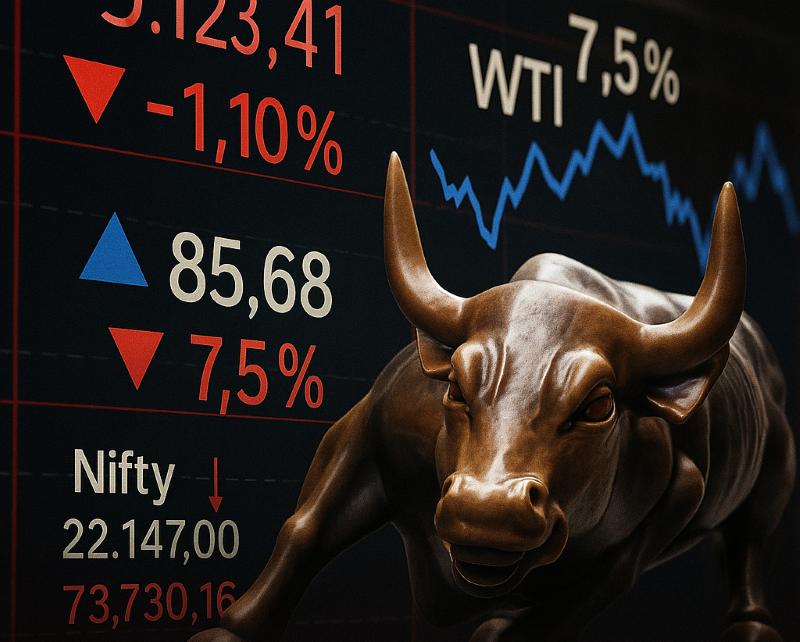
Global financial markets came under pressure on Friday as Iran launched hundreds of missiles toward Israel in retaliation for earlier airstrikes on its nuclear and military facilities. The geopolitical escalation sparked fears of a wider Middle East conflict, leading to a steep sell-off on Wall Street and sharp gains in oil and gold. The S&P 500 fell 1.1%, while crude oil futures jumped 7.5%, their largest single-day gain in over two years. The VIX fear g
Global financial markets came under pressure on Friday as Iran launched hundreds of missiles toward Israel in retaliation for earlier airstrikes on its nuclear and military facilities. The geopolitical escalation sparked fears of a wider Middle East conflict, leading to a steep sell-off on Wall Street and sharp gains in oil and gold. The S&P 500 fell 1.1%, while crude oil futures jumped 7.5%, their largest single-day gain in over two years. The VIX fear g