Your Body Changes Underwater
A Different World Beneath The Waves
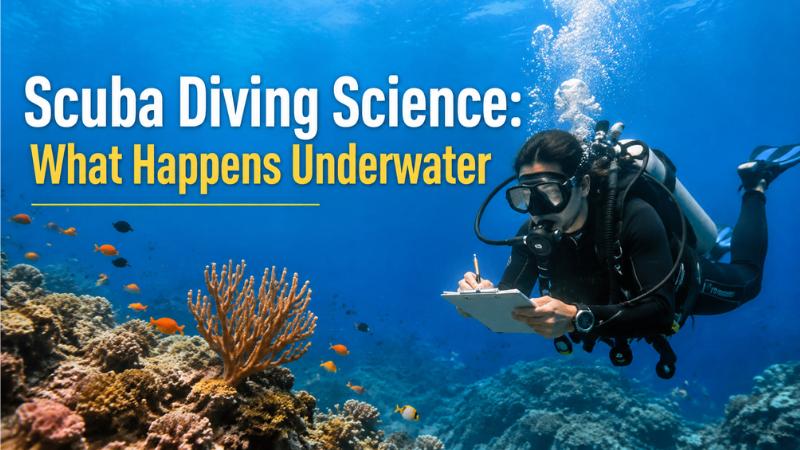
Scuba diving is more than an adventure; it is a science lesson happening inside the human body. The moment a diver enters the ocean, pressure, breathing, and movement begin to change. The sounds of the surface fade, the body slows down, and every breath becomes more controlled.
How Pressure Affects The Body
As a diver goes deeper, underwater pressure increases. This affects air spaces in the ears, sinuses, and lungs. That is why divers must equalise their ears while descending. One of the most important diving rules is to never hold your breath underwater. During ascent, air expands, and holding breath can put dangerous pressure on the lungs.
Compressed air also changes how gases behave in the body. Nitrogen can dissolve into tissues during a dive. If a diver comes up too quickly, nitrogen bubbles may form and cause decompression sickness, also known as “the bends”. Slow ascents and safety stops help the body adjust safely.
Ocean Beauty With A Warning
Scuba diving also reveals coral reefs, colourful marine life, and silent underwater ecosystems. But it shows another reality too: coral bleaching, plastic pollution, and climate change are damaging oceans. For many divers, the first dive becomes more than a thrill; it becomes a reminder that the ocean is fragile and needs protection.