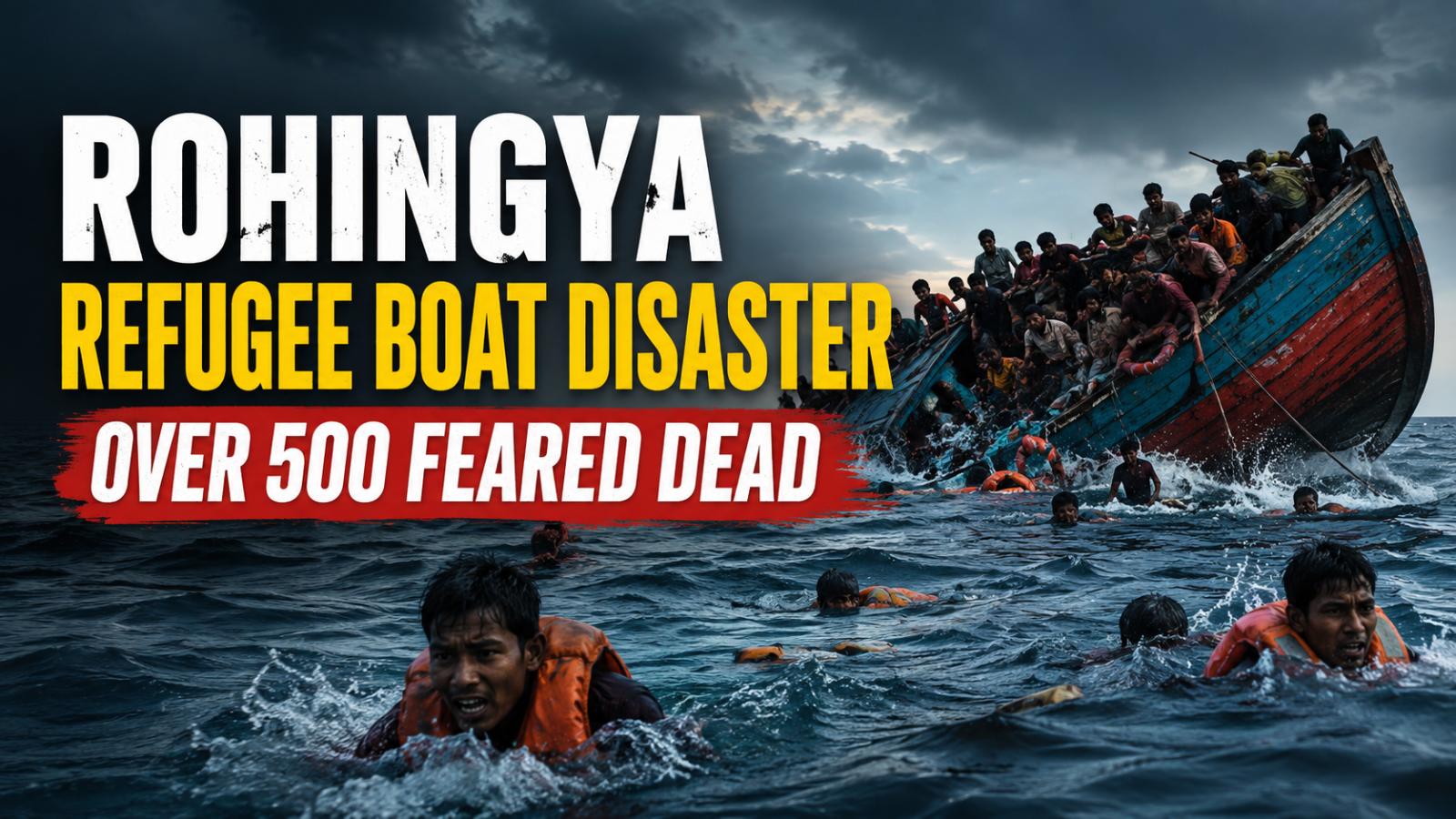
More than 500 Rohingya refugees are feared dead after two overcrowded boats reportedly capsized off Myanmar’s coast. UNHCR and IOM said the incident remains unconfirmed and called for urgent search operations, regional cooperation and safer refugee protection routes.
Myanmar Boat Tragedy Remains Unconfirmed
Initial information indicates that one vessel carrying approximately 250 people lost contact soon after leaving Rakhine State. A second boat, reportedly carrying about 280 passengers, is believed to have sunk near Myanmar’s Ayeyarwady coast on July 8.
Although more than 500 passengers may have been aboard the two boats, authorities have not confirmed that every passenger died. Describing all of them as confirmed fatalities would therefore be inaccurate. UN agencies currently refer to them as feared dead or missing while officials investigate the reports and search for further evidence.
Many passengers were reportedly Rohingya families fleeing violence, persecution and deteriorating living conditions. Some may also have travelled from refugee camps in Bangladesh, where limited opportunities, insecurity and declining humanitarian support continue to place pressure on displaced communities.
Bay of Bengal Sinking During Monsoon Conditions
The suspected Bay of Bengal sinking occurred during the monsoon season, when heavy rainfall, strong winds and rough seas make maritime travel particularly dangerous. Overcrowding, poor navigation equipment and the limited seaworthiness of vessels used by smuggling networks can make these journeys even deadlier.
The boats reportedly sailed outside the usual movement season. Humanitarian agencies said regional flooding and severe weather may have increased the danger faced by passengers attempting to reach safety elsewhere in Southeast Asia.
People travelling on such routes often spend days at sea with limited food, drinking water or medical support. Delayed rescue responses and uncertainty over which country will permit disembarkation can further endanger passengers.
Rohingya Sea Route Grows More Dangerous
The Rohingya sea route across the Bay of Bengal and Andaman Sea has become one of the world’s most dangerous migration corridors. Rohingya people continue to leave Myanmar because of conflict, discrimination and restrictions on basic rights.
About 1.2 million Rohingya refugees remain in Bangladesh, primarily in crowded camps around Cox’s Bazar. Others remain displaced inside Myanmar. With safe return, resettlement and legal travel options severely limited, some families turn to traffickers offering dangerous journeys toward Malaysia, Indonesia and other destinations.
According to figures cited by UN agencies, more than 6,500 Rohingya attempted sea journeys in 2025. Nearly 900 were reported dead or missing, illustrating how quickly unsafe migration routes can become mass-casualty scenes.
UN Rescue Appeal Seeks Regional Action
The UN rescue appeal called for stronger search and rescue capacity, access to asylum, legal protection and coordinated action against refugee trafficking networks. UNHCR and IOM also urged governments to address the conditions that force Rohingya families to risk their lives at sea.
Regional governments face an immediate test: searching for possible survivors while ensuring that rescued passengers are not pushed back into danger. Longer-term action must include sustained humanitarian funding, safer migration options and meaningful protection for stateless Rohingya communities.
Relevant internal links could include Global News, Global Conflicts, Humanitarian Crisis, Myanmar news, Bangladesh news and earlier coverage of refugee boat accidents.