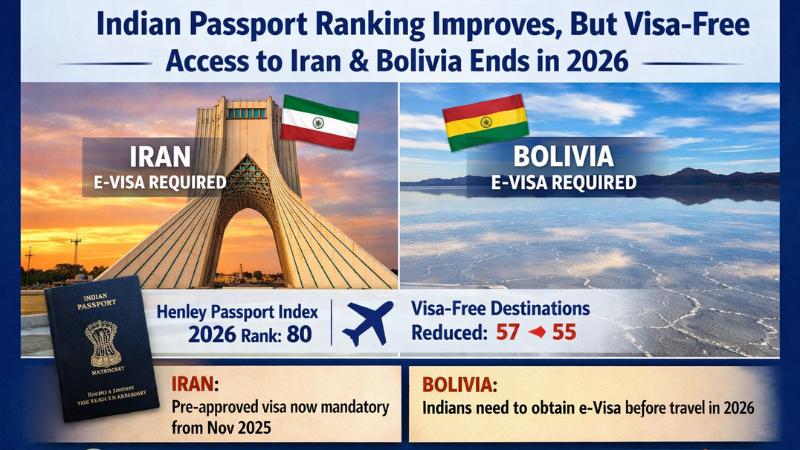
Travellers to Iran are now required to obtain a visa before arrival. Previously, Indian citizens could enter Iran without pre-approval for short stays under bilateral agreements. This policy changed after authorities reported cases in which some travellers were misled with false job offers or onward travel promises. Effective 22 November 2025, ordinary Indian passport holders must secure a visa before travelling to Iran. Transit passengers are also required to obtain prior approval, and authorities have warned against agents promoting visa-free transit schemes.
Bolivia has similarly updated its entry regulations for Indian citizens. Until recently, Indians could obtain a Visa On Arrival, allowing entry without prior approval. From 2026 onwards, Indian passport holders must apply for an e-Visa online. The process requires filling out an application form, uploading necessary documents, and paying the visa fee electronically. Once approved, the e-Visa must be presented during arrival checks. According to the Henley Passport Index, both standard visas and e-Visas are classified as “visa required” because travellers must receive official permission before departure.
Previously, visas on arrival provided convenience similar to visa-free travel, as travellers could complete formalities at the airport. The new requirements for Iran and Bolivia now make pre-approval mandatory, ensuring that Indian citizens complete official procedures before departure. These updates highlight the importance of checking entry requirements before planning international trips.
While India’s overall passport ranking has improved, changes to entry rules in key destinations show that global travel convenience can fluctuate. Indian travellers are advised to carefully review visa and e-Visa requirements for each destination to avoid delays or denied entry. Planning ahead and securing necessary permissions will ensure smoother international travel in 2026.