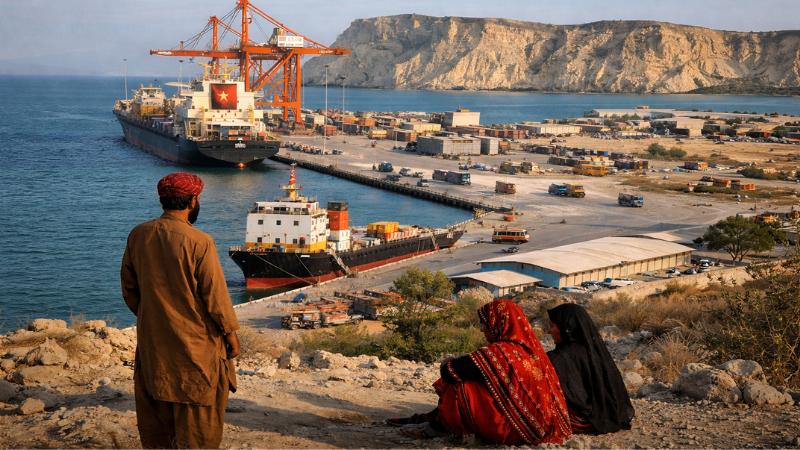
Gwadar, a port in Pakistan's Balochistan province, has become a focal point for geopolitical tensions, local unrest, and external influence, especially from China. Originally a fishing settlement on the Arabian Sea, it is now home to Pakistan's third-largest port, which plays a crucial role in the China–Pakistan Economic Corridor (CPEC). The strategic location of Gwadar, near the Strait of Hormuz, has made it a highly coveted asset for various powers.
What is most remarkable about Gwadar's history is that it was not always a part of Pakistan. It was under the control of Oman for nearly two centuries before being transferred to Pakistan in 1958. Even more surprising is that in 1956, the Sultan of Oman offered Gwadar to India, but India declined the offer. Just two years later, Gwadar became a part of Pakistan, setting the stage for its current geopolitical importance.
Today, Gwadar is controlled by the China Overseas Port Holding Company (COPHC), which Pakistan handed over in 2017 under a 40-year lease. The Chinese company operates the port and controls development and revenue management, with most of the profits flowing to China. This arrangement has fueled resentment among Baloch communities, who feel left out of the economic benefits and resent the environmental and social impact of the port's development.
Baloch resistance, which has been ongoing since Pakistan's formation, has only intensified since the port's handover to China. Local grievances include land acquisition, lack of employment opportunities, and environmental damage. These concerns have sparked violence, with insurgent groups like the Balochistan Liberation Army (BLA) targeting Chinese interests in the region. Gwadar has thus become a flashpoint in both local insurgency and global geopolitical struggles.
The future of Gwadar is uncertain, as it stands at the crossroads of local resistance, national sovereignty, and global power dynamics. For China, the port offers strategic access to the Arabian Sea, reducing dependence on longer maritime routes. For Pakistan, it represents both an economic opportunity and a political vulnerability. As tensions escalate, the situation in Gwadar remains a critical issue, influencing both regional and global politics.