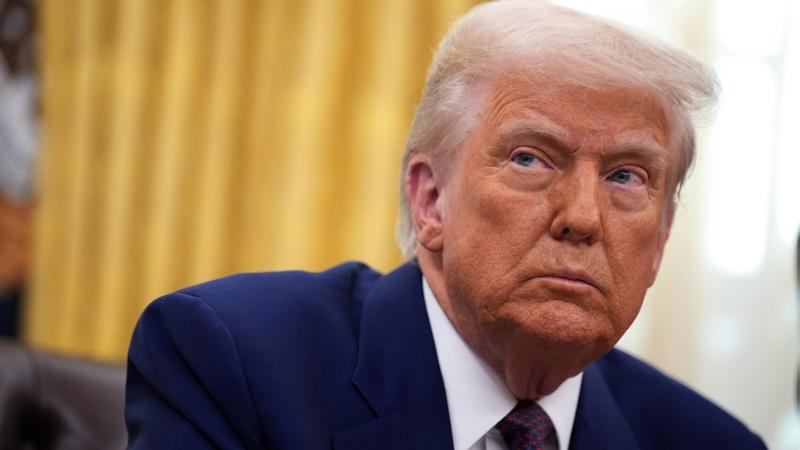
In a dramatic escalation of political tensions between the federal government and academic institutions, U.S. President Donald Trump has called on the Internal Revenue Service (IRS) to revoke Harvard University’s tax-exempt status. The move follows ongoing criticism from Trump regarding the Ivy League school’s handling of antisemitism and diversity-related issues, as reported by The Washington Post. Though no final decision has yet been announced, reports suggest that an official declaration could come soon. Trump’s administration has already taken bold steps, including the suspension of more than $2 billion in federal funding to the university—a financial penalty that significantly escalates the standoff. On his Truth Social platform, Trump was blunt in expressing his disapproval. “Perhaps Harvard should lose its Tax Exempt Status and be Taxed as a Political Entity if it keeps pushing political, ideological, and terrorist inspired/supporting ‘Sickness?’” he wrote. “Remember, Tax Exempt Status is totally contingent on acting in the PUBLIC INTEREST!”
Harvard Pushes Back While IRS Prepares for Potential Action
Harvard University has not issued an official response to the former president's recent comments, but the institution has maintained that it reserves the right to run its own academic programs, hiring policies, and campus culture independently. It has also stated that it acts in accordance with constitutional protections and in the interest of its student and faculty body. The legal tool that may be used to punish Harvard lies in the hands of Gary Shapley, a Trump-appointed acting IRS commissioner. Shapley does have the legal authority to strip tax-exempt status from an organization that fails to meet the criteria laid out for non-profits—including avoiding excessive political activity and operating in the public interest.
If the IRS moves forward with revoking Harvard’s tax-exempt status, it would mark one of the rarest and most consequential actions in recent history. The last widely known example of such an act dates back to the 1980s, when the IRS stripped a Christian college of its tax-exempt status due to racially discriminatory admission policies. Tax-exempt status is typically reserved for educational and charitable organizations that operate on a non-profit basis and maintain political neutrality. Institutions engaging in partisan politics or controversial activism risk losing that status, although enforcement has historically been infrequent. Legal scholars and educational leaders are closely watching this case, given the potential precedent it could set. If Harvard—a globally respected institution with centuries of educational leadership—is deemed politically excessive by the federal government, other universities and non-profits could be next in line for scrutiny.
This latest move against Harvard reflects a broader effort by Trump to reshape the relationship between higher education and federal oversight. In recent years, Trump has repeatedly criticized elite universities for what he calls “left-wing indoctrination,” and has pushed for institutions to align with what he considers to be more balanced political discourse. Harvard, for its part, has become a symbol of resistance in the eyes of Trump’s supporters. It is one of the first top-tier universities to publicly challenge policies and ideological pressure from the Trump administration. From campus diversity initiatives to student protests and faculty hiring, Harvard has remained defiant, drawing the ire of Trump and his allies. On Wednesday, Trump upped the ante by declaring, “Harvard is a joke,” and reaffirming his stance that the university should not receive any further federal support. His comments come amid rising political and legal tension surrounding academic freedom, institutional independence, and federal funding.
Though the final outcome remains to be seen, the political fallout has already begun. Legal experts warn that any attempt to revoke Harvard’s tax status will face stiff resistance in court. Critics argue that such actions could undermine academic freedom and amount to politically motivated retaliation. Meanwhile, Trump’s base has rallied behind the move, seeing it as a necessary crackdown on what they perceive to be biased educational institutions. Supporters argue that universities receiving taxpayer dollars must be held accountable for how they shape public discourse and whether they support national values.
As the IRS weighs its options and Harvard continues to defend its autonomy, the case could redefine the legal boundaries of what it means to be a non-profit university in America. If the federal government takes formal action, it could spark a new era of scrutiny for educational institutions—forcing them to walk a tighter line between independence and public accountability. Regardless of the final decision, Trump’s push to revoke Harvard’s tax-exempt status has already ignited a broader national conversation about education, politics, and the role of universities in society.