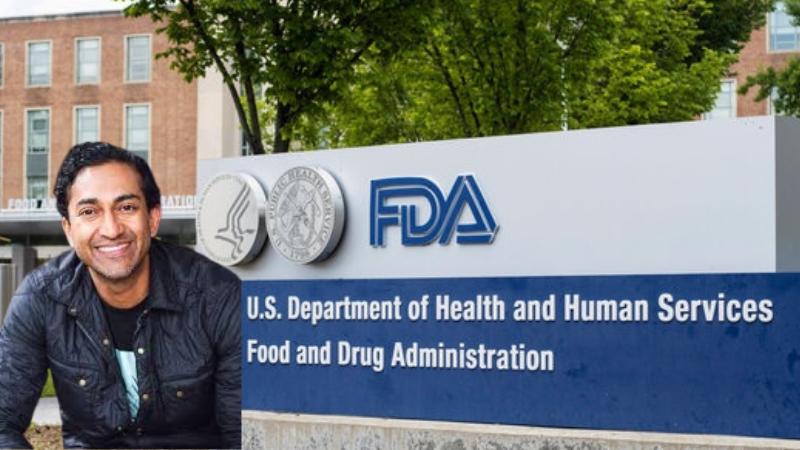
Vinay Prasad, a renowned oncologist-hematologist, has been appointed as the new director of the Center for Biologics Evaluation and Research (CBER) at the US Food and Drug Administration (FDA). This division of the FDA is charged with overseeing the evaluation and approval of critical biologic products, including vaccines, blood derivatives, and select gene-based therapies. Prasad’s appointment comes at a time when the FDA remains under public and political scrutiny for its handling of vaccine approvals and its broader role in shaping public health directives, particularly following the COVID-19 pandemic.
Dr. Prasad has been a significant and often provocative voice in public health discourse, known for his sharp, evidence-driven critiques of medical practices and health policies. His selection to lead CBER signals a possible shift in the agency’s approach to scientific evaluation and transparency. In an announcement on social media, Dr. Makary welcomed Prasad to the position, noting his dedication to scientific rigor and independence. Makary emphasized that Prasad’s appointment marks a significant step forward in ensuring that the FDA maintains credibility and transparency in its regulatory oversight.
Throughout the pandemic, Prasad became widely known for expressing skepticism regarding certain public health strategies. He questioned the effectiveness of prolonged social distancing measures, voiced concerns about the necessity of COVID-19 vaccines for young children, and openly criticized former President Donald Trump for promoting unproven treatments and resisting basic public health protocols such as mask-wearing. These views, while controversial to some, have drawn support from individuals who value a more critical and balanced perspective in health policy discussions.
In addition to his clinical and academic work, Prasad has cultivated a strong following through his public commentary and writing. He is the creator of the popular Substack newsletter Sensible Medicine, where he dissects current medical topics with a mix of data analysis and personal insight. His podcast, The Plenary Session, is another platform where he engages in long-form discussion on health policy, oncology, and medical ethics. Prasad has also authored two well-received books—“Malignant: How Bad Policy and Bad Evidence Harm People with Cancer” and “Ending Medical Reversal: Improving Outcomes, Saving Lives”—which delve into how flawed research and misguided policies can negatively affect patient care.
Prasad's background includes a strong academic foundation and a career built on a deep commitment to evidence-based medicine. Born in the United States to Indian immigrant parents, he was raised in Ohio and Chicago. He pursued his undergraduate studies at Michigan State University, focusing on healthcare ethics and physiology, followed by a medical degree from the University of Chicago in 2009. He completed his residency in internal medicine at Northwestern University in 2012 and later served in faculty positions at Oregon Health & Science University before joining San Francisco General Hospital. He currently holds the position of full professor of hematology-oncology at the University of California, San Francisco.
His appointment to CBER places him at the forefront of one of the most influential regulatory divisions within the FDA. The center’s responsibilities span from ensuring the safety and effectiveness of vaccines to overseeing the development of innovative biologics that could shape the future of medicine. In recent years, CBER has taken on heightened importance amid global efforts to streamline vaccine development and address public concerns over vaccine safety and efficacy.
With Prasad at the helm, many expect that the center will adopt a more data-centered and transparent framework, particularly as new vaccines and gene therapies continue to emerge. His reputation for challenging conventional wisdom and advocating for higher standards of evidence may influence how biologics are evaluated and approved moving forward.
The FDA’s decision to appoint a figure like Prasad suggests a willingness to engage with critical voices and reinforce public trust through more open and scientifically sound decision-making processes. Whether his leadership will lead to substantial changes in policy remains to be seen, but his presence is already sparking discussion across the medical and public health communities. As he steps into this pivotal role, Dr. Vinay Prasad represents a blend of scientific acumen, policy awareness, and public engagement—qualities that may shape the next era of biologics regulation in the United States.