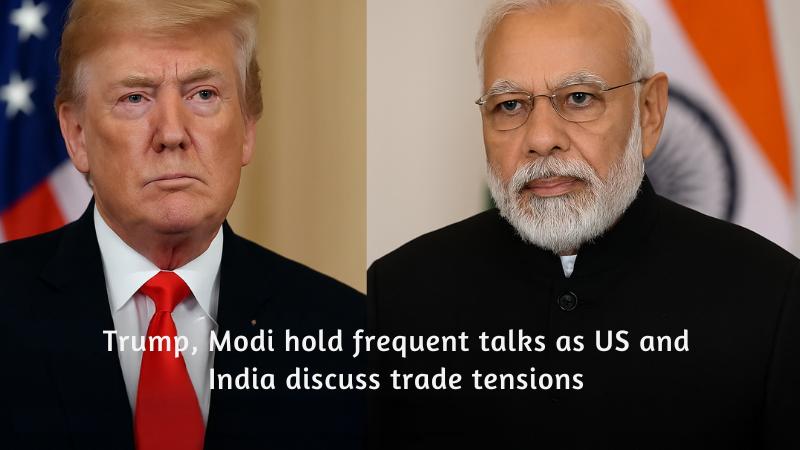
The White House has confirmed that United States President Donald Trump and Indian Prime Minister Narendra Modi continue to engage in regular communication, with trade officials from both countries involved in what have been described as “very serious discussions.” The statement comes amid rising diplomatic and economic tensions between the two nations following Washington’s recent decision to impose a 50 percent tariff on select Indian imports, a move that has strained one of the world’s most strategic bilateral relationships.
Speaking at a press briefing on Tuesday, White House Press Secretary Karoline Leavitt said that President Trump has maintained frequent and direct contact with Prime Minister Modi, underscoring the strength of personal ties between the two leaders despite policy disagreements. “The president and his trade team continue to be in very serious discussions with India,” Leavitt told reporters. “I know the president has great respect for Prime Minister Modi, and they speak pretty frequently.”
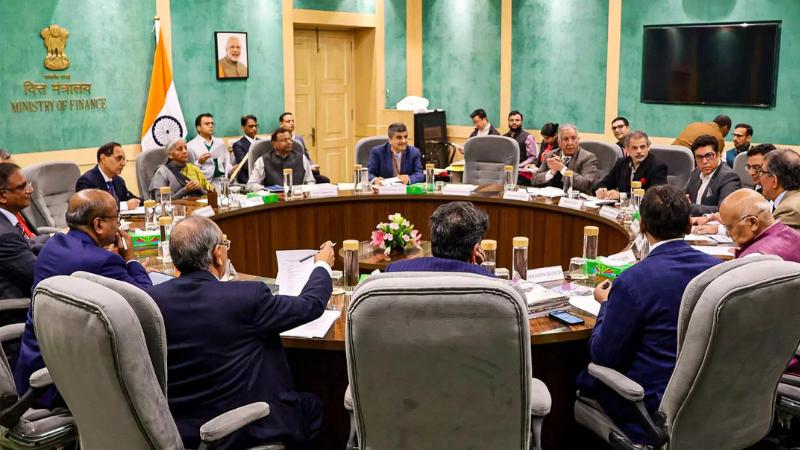
The statement came in response to a question about the status of ongoing trade talks between Washington and New Delhi, which have been overshadowed by new tariffs and policy differences related to India’s oil imports from Russia. The Biden administration’s sanctions on Russian energy and the resulting diplomatic fallout have placed India in a difficult position, as it continues to rely on discounted Russian oil to manage its energy costs. The White House decision to raise tariffs on Indian goods to 50 percent has been widely viewed as a retaliatory measure, deepening the existing friction between the two countries.
Trade experts note that the ongoing discussions are critical for maintaining stability in one of the most significant economic partnerships in the Indo-Pacific region. India and the United States have seen robust trade growth over the past decade, with sectors like information technology, defense, agriculture, and energy forming the backbone of bilateral engagement. However, recent tariff measures have raised concerns among both American and Indian industries about potential disruptions to supply chains and investment flows.
Despite the tensions, President Trump has repeatedly expressed admiration for Modi’s leadership and India’s economic growth. According to officials familiar with the matter, both leaders are in regular communication through diplomatic and trade channels, seeking common ground on contentious issues. “The relationship between President Trump and Prime Minister Modi has always been built on mutual respect and strategic understanding,” Leavitt said, adding that both nations continue to explore solutions that benefit their respective economies.
When asked about the future of India-US trade and citizenship policies, the Press Secretary said that President Trump feels “very positive and strongly” about the direction of bilateral relations. She emphasized that the administration remains committed to expanding cooperation in areas such as technology, defense, and energy security, even as negotiators work to resolve trade disputes.
Diplomatic observers believe that while the tariff issue has temporarily strained relations, the broader strategic alignment between Washington and New Delhi remains intact. The two countries share common interests in maintaining regional stability, countering China’s growing influence in the Indo-Pacific, and enhancing defense partnerships. These shared priorities, analysts say, provide a strong foundation for future collaboration despite current economic disagreements.
The trade tensions come at a sensitive time, as both governments face domestic pressures — in the United States, concerns over inflation and energy costs continue to shape trade decisions, while in India, maintaining affordable energy imports and protecting domestic industries remain key political priorities. The outcome of these negotiations could influence not only bilateral trade but also broader global supply chains that depend heavily on both economies.
As talks continue, officials from both sides are expected to meet again in the coming weeks to refine tariff proposals and discuss a framework for long-term trade cooperation. While no formal announcement has been made about a potential summit between Trump and Modi, diplomatic sources suggest that a high-level meeting could take place early next year to reaffirm their commitment to a balanced and forward-looking partnership.
For now, the message from the White House is one of cautious optimism. “Both leaders understand the value of this relationship,” Leavitt said. “President Trump respects Prime Minister Modi’s leadership, and they remain in close contact to ensure that progress continues, even through challenging discussions.”
The continued dialogue between Washington and New Delhi underscores the complexity and importance of modern global diplomacy — where personal rapport, national interests, and economic strategy intersect in shaping the world’s most consequential partnerships.