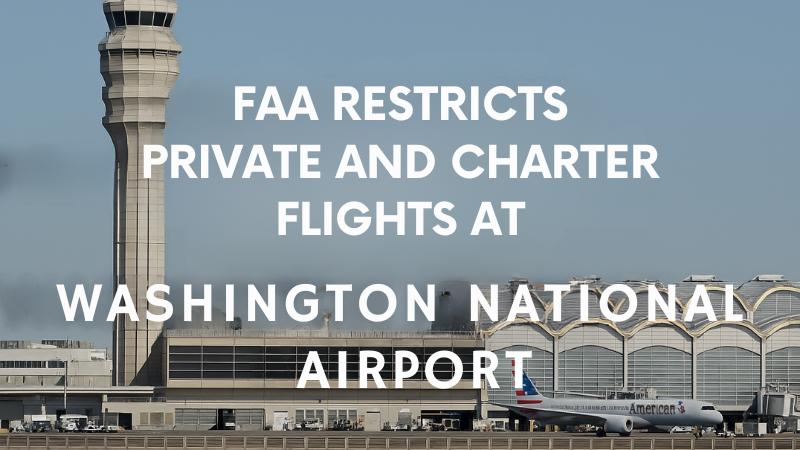
WASHINGTON — General aviation and private flights have been temporarily suspended from landing at Ronald Reagan Washington National Airport through the end of the year, according to updated Federal Aviation Administration (FAA) guidance. The directive took effect at midnight on Monday and will remain in place until 6:59 p.m. on December 31.
The restriction applies to all non-scheduled flights, including chartered, corporate, and privately operated aircraft, unless they receive specific authorization from the FAA. Only scheduled commercial passenger flights will continue unaffected under regular operations. The FAA confirmed that emergency, law enforcement, firefighting, medical, and military flights are exempt from the order and may continue to use the airport.
Aircraft already based at Ronald Reagan Washington National Airport, known by its airport code DCA, may still operate if approved through the FAA Command Center. These exceptions ensure critical services and emergency responses remain uninterrupted while the order is in effect.
The restriction at DCA places it among 11 major U.S. airports currently operating under similar FAA limitations. Other airports affected include Atlanta’s Hartsfield-Jackson (ATL), Denver International (DEN), Dallas-Fort Worth (DFW), Newark Liberty (EWR), George Bush Intercontinental in Houston (IAH), John F. Kennedy in New York (JFK), Los Angeles International (LAX), Chicago O’Hare (ORD), Phoenix Sky Harbor (PHX), and Seattle-Tacoma (SEA). Additionally, Boston Logan International (BOS) and Las Vegas McCarran (LAS) have comparable restrictions in place for limited durations through mid and late November, respectively.
These measures come amid broader operational challenges facing the nation’s air travel network during an ongoing government shutdown. With reduced staffing levels and unpaid air traffic controllers, the FAA has instructed airlines to cut scheduled operations by up to 10 percent at more than 40 major airports, including DCA. The reduction is intended to alleviate workload stress on air traffic management systems and maintain safety standards despite limited resources.
The impact of these combined restrictions has already been significant. Thousands of flights were canceled or delayed over the first weekend following the order’s implementation, leading to mounting frustration among travelers and airlines. Industry officials have expressed concern that extended disruptions could compound financial losses and strain airport logistics during the holiday travel season.
At Reagan National, passengers are advised to verify flight schedules before arriving at the airport and to allow additional time for check-in and security screening. Commercial flights continue to operate normally, but airspace congestion and reduced capacity could cause residual delays across the region.
FAA officials have not specified whether the restrictions could extend beyond the December 31 deadline. They emphasized that safety remains the agency’s top priority and that adjustments to the order will depend on staffing availability and operational conditions in the coming weeks.
The temporary ban underscores the ripple effects of the federal shutdown on transportation infrastructure. With general aviation suspended, DCA joins other major hubs experiencing unprecedented operational adjustments. The FAA continues to monitor conditions at affected airports, aiming to balance safety, staffing, and public convenience as the situation evolves.
If the shutdown persists into the new year, the agency may consider further extensions or modified guidance to maintain airspace efficiency while supporting critical flight operations nationwide. For now, travelers and aviation operators await clarity on when normal flight activity at Washington’s Reagan National Airport can resume.