U.S. stocks mostly advanced on Friday after the Supreme Court struck down former President Donald Trump’s sweeping global tariffs, delivering a major boost to Wall Street and companies exposed to international trade. The ruling, which found that the tariffs exceeded presidential authority under the International Emergency Economic Powers Act of 1977, triggered a broad market rally and lifted investor sentiment across multiple sectors.
In a 6–3 decision, the Supreme Court determined that the tariffs lacked clear congressional authorization, effectively voiding the duties that had been imposed under emergency powers. The judgment was widely interpreted by investors as reducing trade policy uncertainty and easing pressure on multinational corporations that rely heavily on imports and global supply chains. Transportation stocks and tariff-sensitive companies such as Nike and Abercrombie & Fitch led gains as markets reacted swiftly to the news.
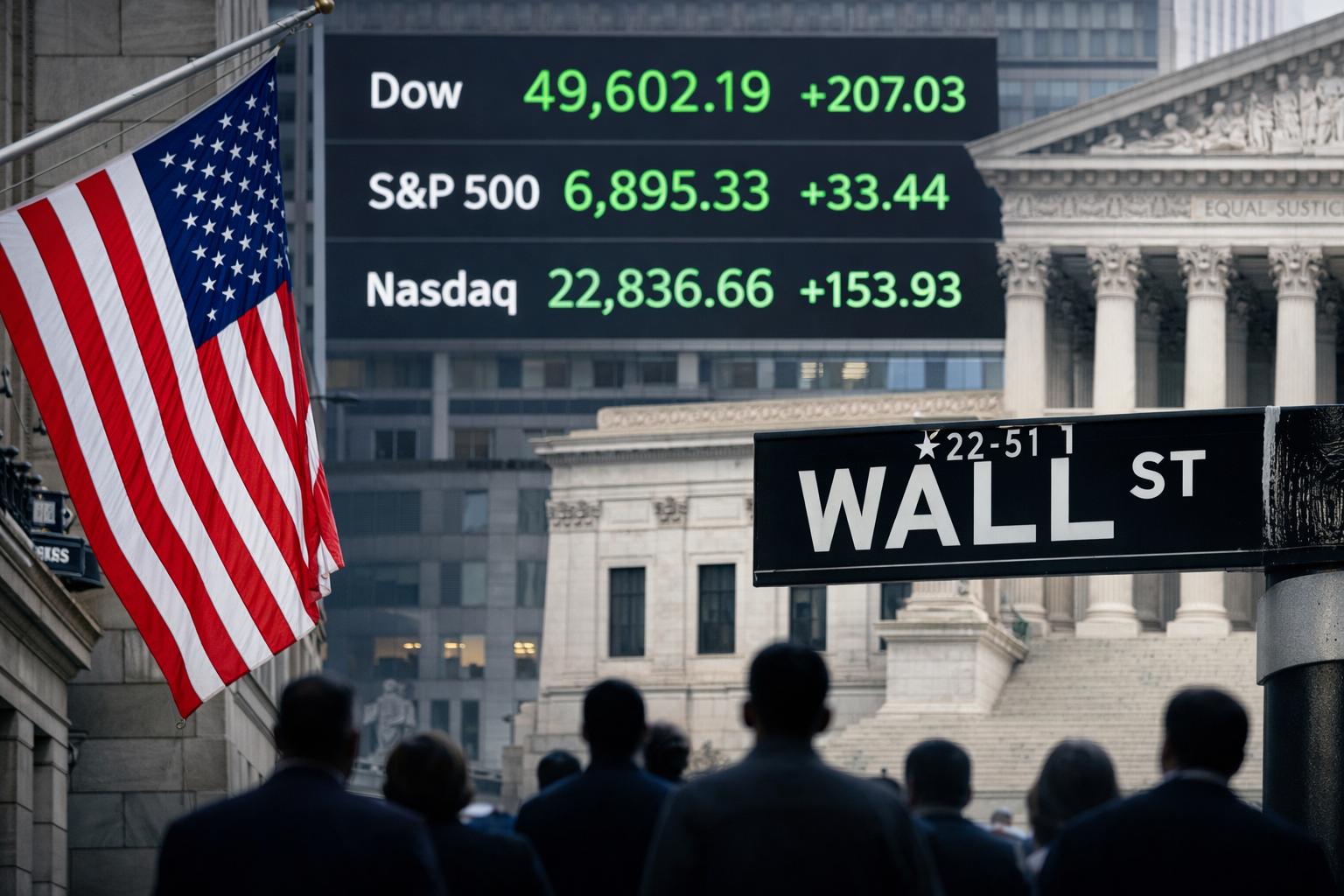
Following the decision, the Dow Jones Industrial Average rose 207.03 points, or 0.42 percent, to close at 49,602.19. The S&P 500 advanced 33.44 points, or 0.52 percent, reaching 6,895.33, while the Nasdaq Composite gained 153.93 points, or 0.68 percent, ending at 22,836.66. The upward momentum reflected renewed investor confidence that trade tensions could ease in the near term.
Currency and bond markets also responded to the development. The U.S. dollar slipped modestly, while yields on benchmark Treasury securities moved higher. The yield on the 10-year Treasury note climbed 2 basis points to 4.096 percent, indicating shifting expectations around economic conditions and capital flows following the court’s intervention.
Trump had originally imposed the levies in February 2005 using the 1977 economic sanctions law, which is typically reserved for national emergencies. His later “Liberation Day” tariff plan, announced on April 2, introduced a baseline duty of 10 percent on all imports into the United States, along with additional country-specific tariffs ranging from 15 percent to 50 percent. Many of those tariffs were subsequently renegotiated and partially reduced, but they continued to face legal scrutiny.
The Supreme Court’s decision comes after thousands of companies worldwide filed lawsuits challenging the legality of the sweeping import duties and seeking refunds for tariffs already paid. The ruling is expected to have significant implications for U.S. trade policy and executive authority, while also potentially reshaping ongoing legal battles over tariff reimbursements.
Global markets reacted positively alongside Wall Street. European auto shares posted gains, and U.S.-listed equities from markets including South Korea and India also moved higher, reflecting broad optimism that the removal of the disputed tariffs could support international trade flows.
Market participants will now closely watch how policymakers respond to the ruling and whether Congress moves to clarify the scope of presidential powers in future trade actions. For investors, however, the immediate focus remains on the relief rally sparked by the court’s decision and its potential to sustain momentum across U.S. stocks in the weeks ahead.