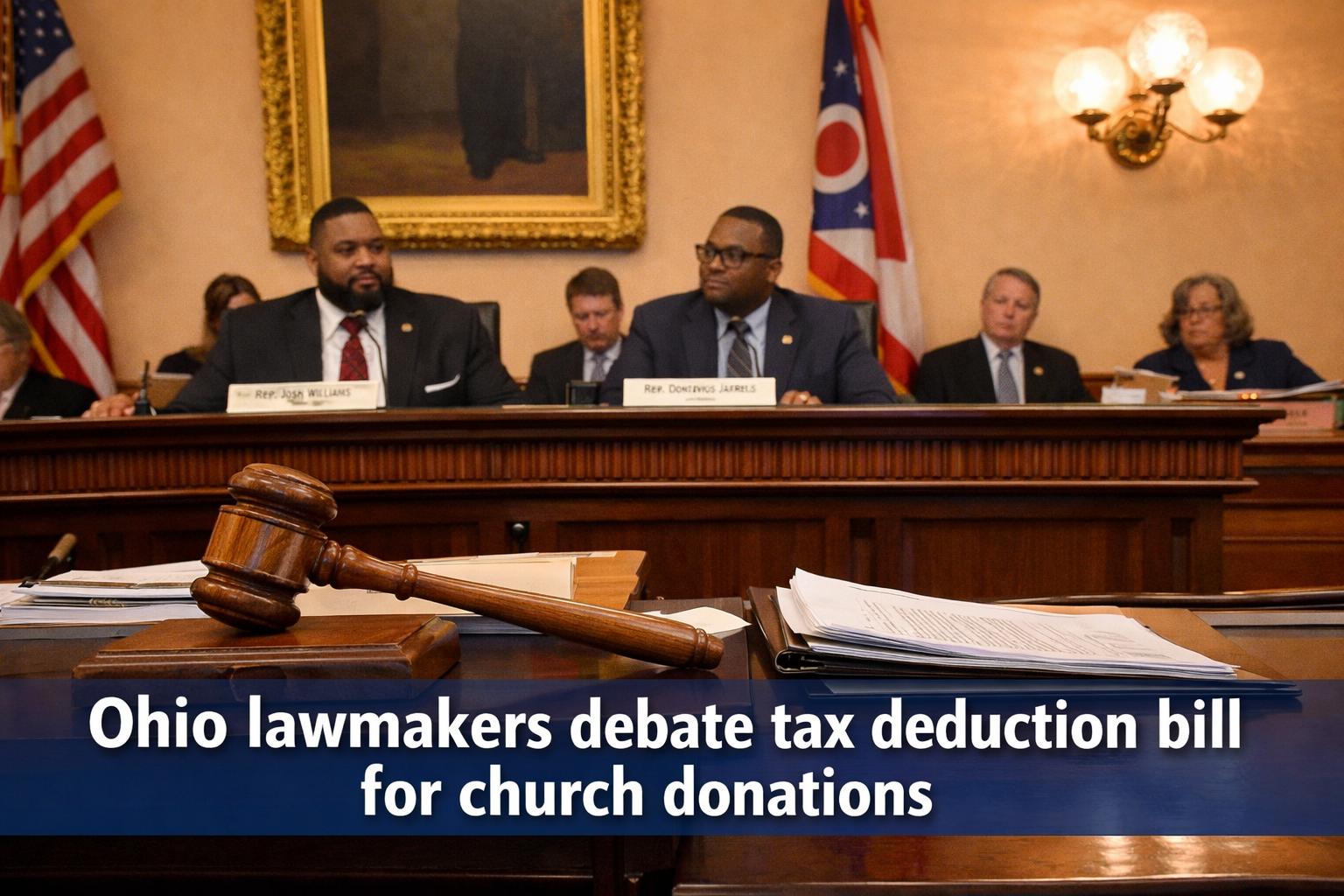
House Bill 444, also known as the Tithing Protection Act, was introduced last fall by Republican Rep. Josh Williams of Sylvania Township and Democratic Rep. Dontavius Jarrells of Columbus. The measure received its first hearing before the Ohio House Ways and Means Committee on February 11, marking an early step in the legislative review process.
If enacted, the bill would permit Ohio taxpayers who already itemize deductions on their federal income tax returns to also deduct eligible tithes and donations to church organizations when calculating their Ohio taxable income. Supporters say the change would create consistency between state and federal tax treatment of religious contributions and provide additional incentive for charitable giving.
During sponsor testimony, Williams emphasized the role churches and other religious institutions play in delivering community-based social services. He noted that many congregations operate food pantries, addiction recovery initiatives, homeless outreach programs and youth mentorship efforts that supplement public assistance programs.
Williams told committee members the legislation is intended to ensure taxpayers who itemize federally are treated similarly at the state level. He argued that aligning Ohio’s tax code with long-standing federal standards would create a more predictable and coherent tax environment while directing more private resources into community support networks.
The representative also pointed to national data showing a decline in average tithing and religious donations in recent years. Encouraging contributions through tax policy, he said, could help stabilize funding streams for faith-based organizations that often serve vulnerable populations.
Jarrells echoed those arguments, describing churches as trusted neighborhood institutions where families frequently turn for assistance during periods of hardship. He said aligning Ohio’s tax treatment with federal policy would formally recognize the continued community impact of religious organizations.
According to Jarrells, the proposal reflects respect for both faith communities and the generations of Ohio residents who have relied on churches not only for worship but also for practical support and guidance. He framed the bill as a policy adjustment that acknowledges the social value of faith-based service providers.
House Bill 444 remains under consideration in the House Ways and Means Committee, where lawmakers are expected to continue reviewing its fiscal impact and broader policy implications. The measure must clear multiple legislative steps before it could reach the governor’s desk.