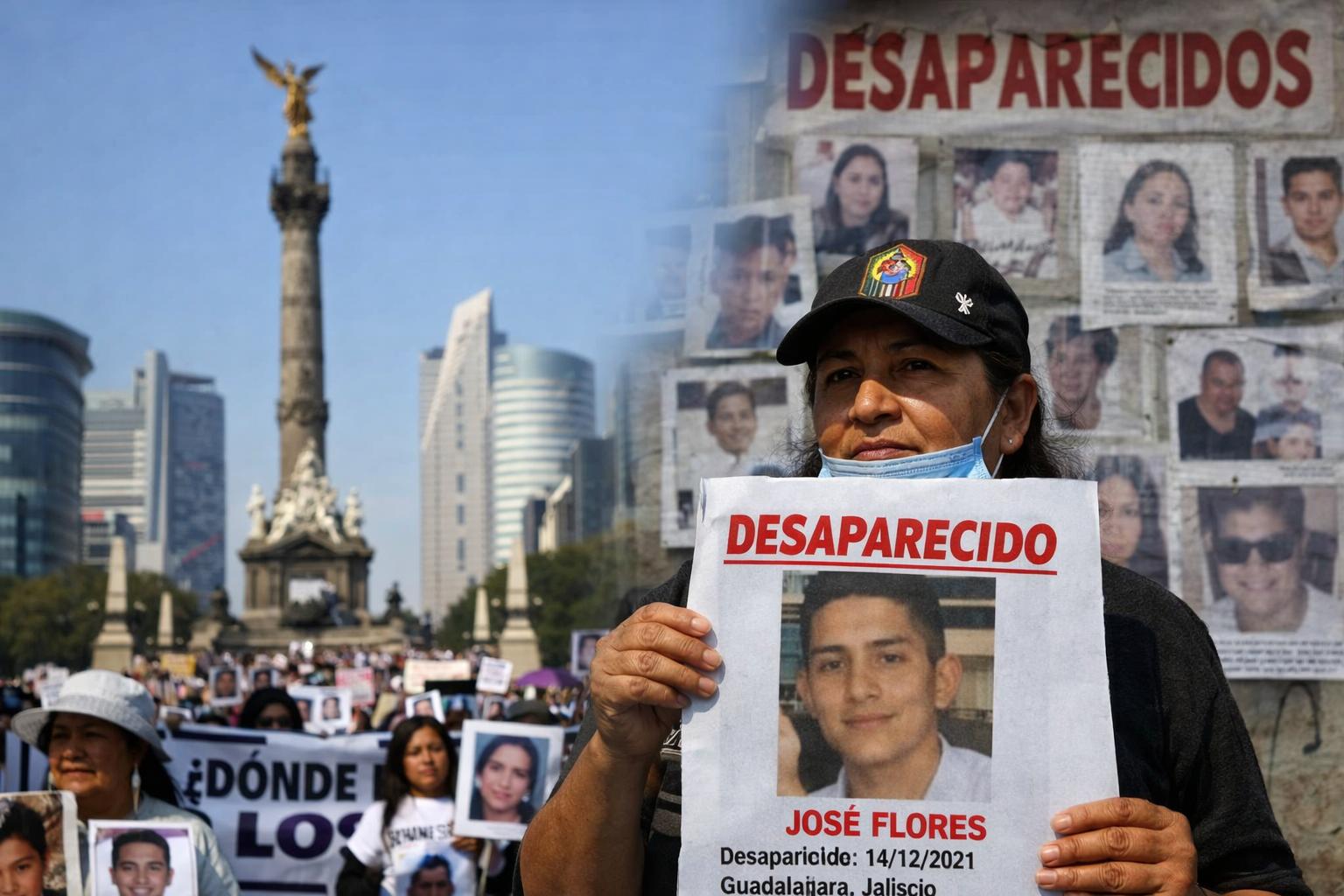
According to officials, a review of government databases—including vaccination records, civil registries, and tax filings—revealed that 40,367 individuals, or about 31% of those reported missing, showed some form of activity after their disappearance was recorded. Authorities said this activity suggests that these individuals may still be alive.
Marcela Figueroa, a senior security official, stated that the analysis also led to the confirmed location of 5,269 individuals, who have now been officially classified as “found.” She described many of these cases as voluntary absences, citing examples such as individuals leaving personal relationships or escaping domestic abuse. Figueroa emphasized that not all disappearances are linked to criminal activity and said the government is working to improve tracking and investigative systems.
However, search collectives and advocacy groups strongly disputed the conclusions. Héctor Flores, a leader of a search group in Jalisco, said the report lacks transparency and risks minimizing the scale of Mexico’s disappearance crisis. Families of the missing have long accused authorities of underreporting cases and failing to conduct thorough investigations, contributing to widespread distrust.
The report also highlighted significant data gaps. Officials said 46,000 cases—about 36%—contain incomplete information, making searches difficult. Another 43,128 cases, or 33%, showed no activity in official databases. Of those, fewer than 10% are currently under criminal investigation, which Figueroa acknowledged as a major shortcoming in law enforcement efforts.
Mexico’s disappearance crisis, which has grown since 2006 amid cartel violence, remains one of the country’s most pressing human rights issues. Critics argue that government attempts to reinterpret data risk obscuring the reality faced by families, many of whom conduct their own searches. Human rights organizations warned that while improving data accuracy is necessary, framing the findings in a way that downplays state responsibility could undermine accountability and justice efforts.