Mother’s Day Tradition Echoes Ancient Indian Earth Prayer
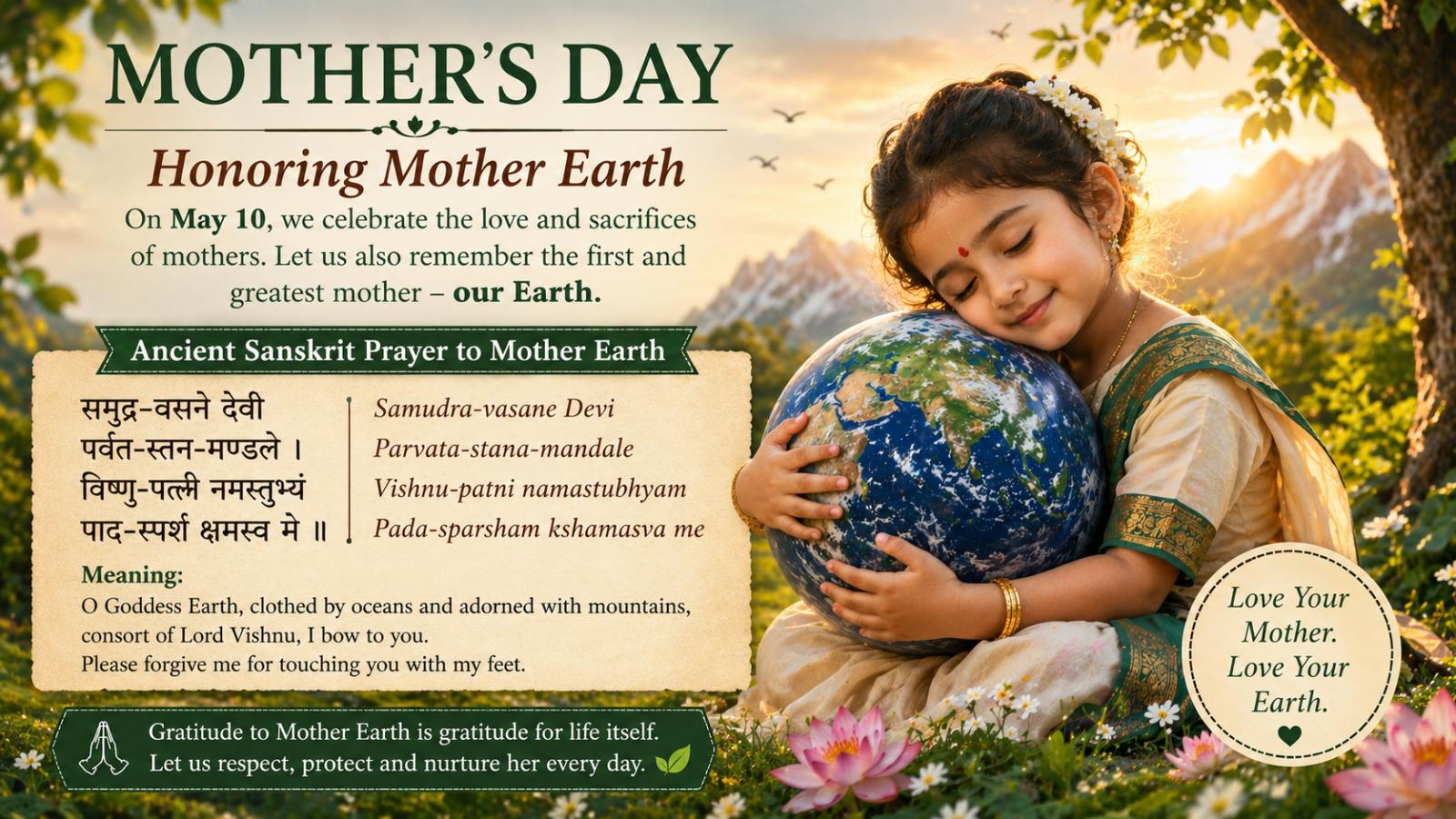
Mother’s Day, celebrated on Sunday, May 10 in many parts of the world, is widely observed as a tribute to maternal love and sacrifice. But an ancient Indian Sanskrit prayer reveals that the idea of motherhood extends far beyond family, honoring Earth itself as humanity’s first mother.
For centuries, Indian spiritual tradition has included a morning prayer recited before touching the ground with one’s feet. The prayer, beginning with “Samudra-vasane Devi,” describes Earth as a divine mother clothed by oceans and adorned with mountains while seeking forgiveness for stepping upon her.
Ancient Sanskrit Prayer to Mother Earth
“Samudra-vasane Devi
Parvata-stana-mandale
Vishnu-patni namastubhyam
Pada-sparsham kshamasva me”
The shloka translates to:
“O Goddess Earth, clothed by oceans and adorned with mountains, consort of Lord Vishnu, I bow to you. Please forgive me for touching you with my feet.”
In many Indian households, children learn this prayer from an early age as part of a daily spiritual practice centered on gratitude, humility, and mindfulness.
Why the Prayer Still Matters Today
Spiritual scholars say the tradition reminds people that Earth provides food, water, shelter, forests, rivers, and ecosystems essential for human survival. The message closely reflects Mother’s Day values of nurturing, protection, and unconditional care.
As conversations around climate change and environmental responsibility grow worldwide, the ancient Sanskrit prayer is gaining renewed relevance. Many believe the ritual encourages a deeper emotional connection with nature and reminds humanity to protect the planet for future generations.
While Mother’s Day celebrates mothers within families, this timeless Indian tradition broadens the meaning of motherhood itself — recognizing Mother Earth as the universal force sustaining all life.