WASHINGTON — Do senators get paid during government shutdowns? A new Senate rule would delay their salaries during future federal funding lapses, but the money would still be released after the shutdown ends.
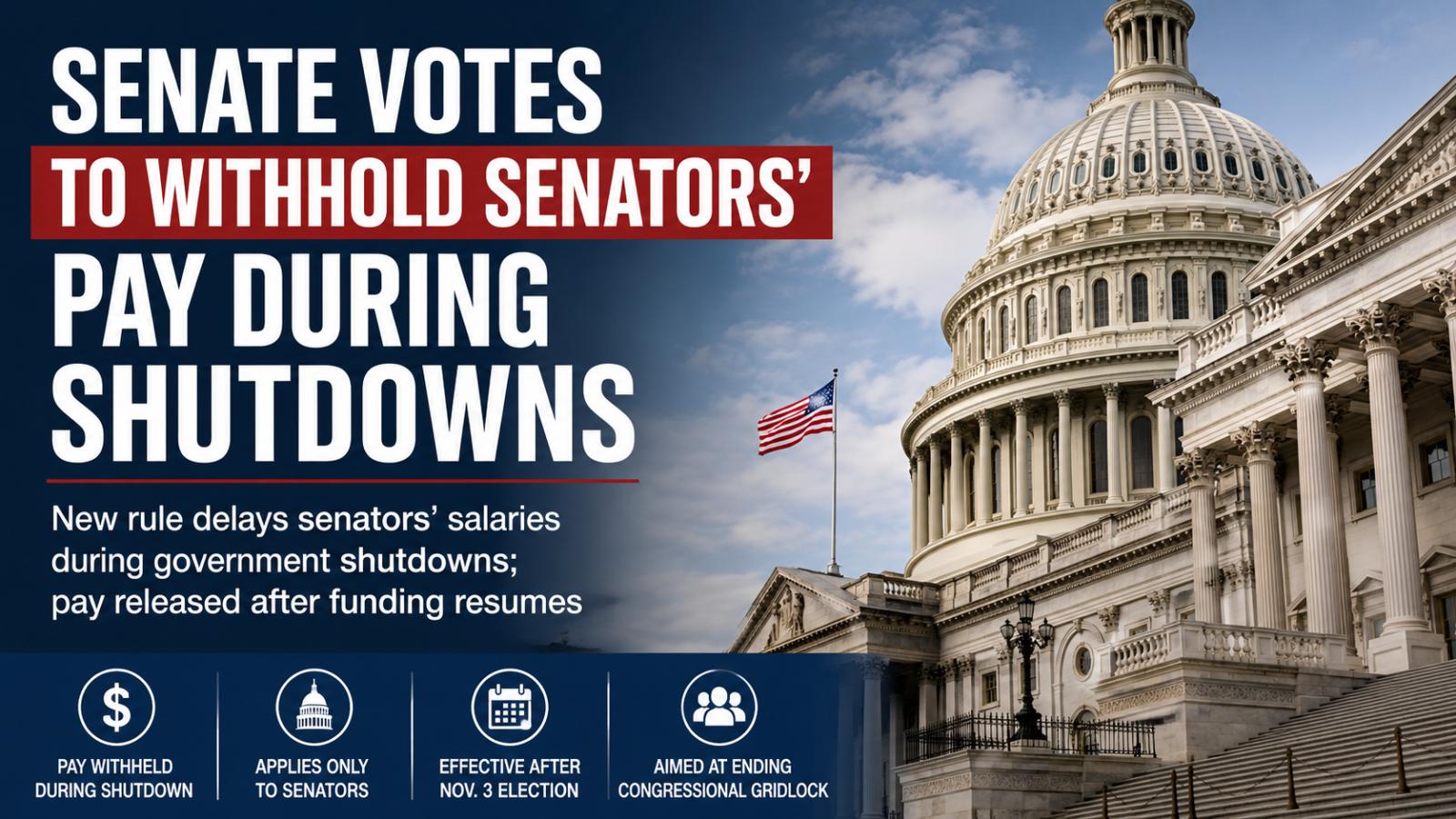
The U.S. Senate voted unanimously on Thursday, May 14, 2026, to withhold senators’ pay whenever a government shutdown affects one or more federal agencies.
Senate Shutdown Pay Rule Explained
The measure, sponsored by Sen. John Kennedy, R-La., directs the secretary of the Senate to hold senators’ salaries during a shutdown. The pay would be released once Congress restores government funding.
The rule applies only to senators. It does not apply to members of the House of Representatives, and it does not require approval from the House or the president.
When Does the Rule Start?
The Senate shutdown pay rule is set to take effect after the November 3, 2026, general election. That timing is important because congressional pay is protected by the Constitution, making immediate changes difficult during a current term.
Why Senators Backed the Pay Rule
Supporters said the measure is meant to make lawmakers share some of the financial pressure faced by federal workers during shutdowns.
Federal employees can face delayed paychecks when agencies close or operate without full funding. Lawmakers, however, have continued receiving salaries during past shutdowns.
The Senate vote followed recent funding fights, including a 43-day full government shutdown and a 76-day Department of Homeland Security shutdown, according to Kennedy’s office and national reports.
Does This Cancel Senators’ Pay?
No. The rule does not permanently cancel senators’ salaries. It withholds the money during a shutdown and releases it after funding is restored.
That detail matters for readers searching whether senators “lose pay” during a shutdown. The better answer is that senators’ pay would be delayed, not eliminated.
Why It Matters
The rule is mostly symbolic, but it gives the Senate a new accountability measure during budget standoffs. It also creates a clearer political message: if federal workers face delayed pay during a shutdown, senators should not receive normal pay without interruption.