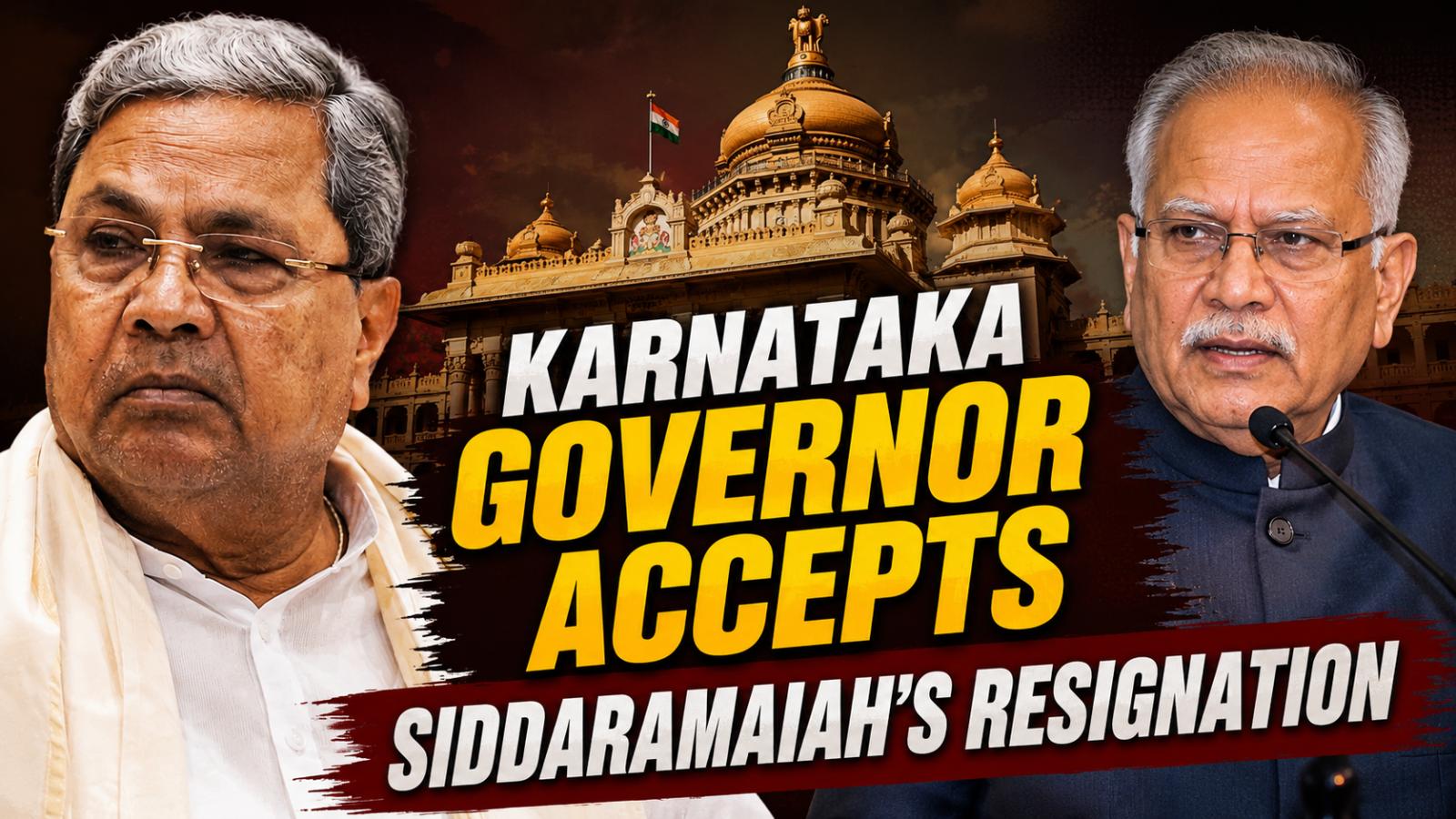
Karnataka Governor Thaawarchand Gehlot accepted Siddaramaiah’s resignation as Chief Minister on May 29, 2026, after returning from Madhya Pradesh. Siddaramaiah will continue as caretaker Chief Minister until Congress finalises the next leader and alternative arrangements are made.
Karnataka Governor Thaawarchand Gehlot has accepted Siddaramaiah’s resignation from the post of Chief Minister, marking a major political transition in the state. The resignation was accepted on Friday after the Governor returned from his visit to Madhya Pradesh. Siddaramaiah had submitted his resignation letter on Thursday at Lok Bhavan in Bengaluru, but since the Governor was not available at the headquarters, the letter was handed over to Prabhu Shankar, Special Secretary to the Governor. According to the official order, the Governor accepted Siddaramaiah’s resignation and dissolved the Council of Ministers headed by him with immediate effect. However, Siddaramaiah has been asked to continue functioning as Chief Minister until alternative arrangements are made. This means the state will remain under a caretaker arrangement until the Congress leadership finalises the next Chief Minister and completes the formal process of government formation.
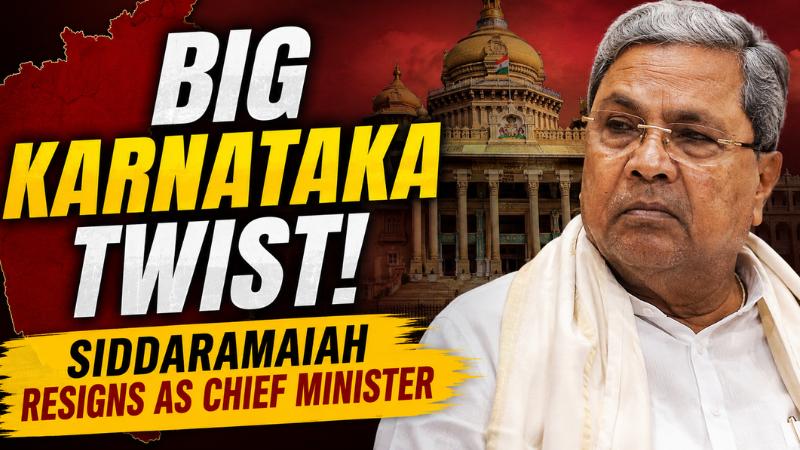
Siddaramaiah’s resignation letter was brief and direct, stating that he was tendering his resignation as the Chief Minister of Karnataka and requesting that it be accepted. His exit follows his announcement on Thursday that he was stepping down based on the direction of the Congress high command. He described the resignation as voluntary and said he would respect the party leadership’s decision. The move has triggered intense political discussion in Karnataka because Siddaramaiah had completed three years as Chief Minister before stepping down, while the remaining two years of the government’s term are now expected to be led by a new face. Deputy Chief Minister D.K. Shivakumar is widely seen as the leading contender to succeed Siddaramaiah, although the final decision depends on the Congress central leadership and the party’s internal consultations.
Siddaramaiah’s Karnataka CM resignation
What The Governor’s Acceptance Means
The Governor’s acceptance of Siddaramaiah’s resignation has formally started the transition process in Karnataka. Once a Chief Minister resigns and the resignation is accepted, the existing Council of Ministers also ceases to hold office in its earlier form. The Governor’s notification dissolving the Council of Ministers with immediate effect is therefore a crucial constitutional step. At the same time, asking Siddaramaiah to continue until alternative arrangements are made prevents an administrative vacuum in the state. This caretaker phase is important because government work, law and order responsibilities and official decision-making cannot simply stop while the ruling party chooses its next leader. The practical message is clear: Siddaramaiah is no longer continuing as Chief Minister in the full political sense, but he remains in charge temporarily until the next Chief Minister is sworn in.
The Congress party now faces the task of completing the leadership change without creating visible internal friction. Congress MLA Allamprabhu Patil reportedly said he had not yet received directions from Congress Legislature Party leader Siddaramaiah to convene a CLP meeting to elect a new leader. That detail matters because the Congress Legislature Party meeting is usually an important step in formally selecting or endorsing the next leader. Until that process happens, speculation will continue over the next Chief Minister, the shape of the new cabinet, the swearing-in date and the possible appointment of one or more Deputy Chief Ministers. Siddaramaiah and Shivakumar have also headed to New Delhi for discussions with Congress central leaders, making it clear that the final shape of the next Karnataka government will be decided only after high-level talks.
Karnataka Awaits New Chief Minister
The biggest question now is whether D.K. Shivakumar will officially take over as Karnataka Chief Minister. He has long been seen as a powerful Congress leader in the state and played a key organisational role in the party’s rise in Karnataka. If he is chosen, his immediate challenge will be to balance ambition with stability. He will need to carry Siddaramaiah’s supporters, satisfy MLAs expecting cabinet positions and ensure that welfare schemes and administrative priorities do not lose momentum during the transition. Karnataka is politically important for Congress, and any leadership change in the state will be watched closely by both supporters and opposition parties.
For Siddaramaiah, this resignation does not necessarily mean the end of his political influence. He remains one of the most recognised Congress leaders in Karnataka and continues to command a strong support base. His decision to follow the high command’s instruction may help the Congress project unity, but it does not remove the possibility of factional pressure within the party. Supporters of Siddaramaiah may expect him to remain central to Karnataka politics, while Shivakumar’s camp will expect a clear and smooth transfer of authority. This is where Congress has little room for careless handling. A messy transition could give the opposition a strong attack line, while a disciplined transition could help the party present itself as stable and organised.
The Governor’s acceptance of Siddaramaiah’s resignation has therefore turned a political announcement into an official change of power. The cabinet has been dissolved, the caretaker arrangement is in place and the Congress leadership must now move quickly. Karnataka’s next few days will be crucial, not only for deciding who becomes Chief Minister, but also for determining whether the ruling party can manage competing ambitions without damaging governance. For voters, the real concern is not just who occupies the top post, but whether the new leadership can deliver stability, continue promised schemes and keep the government focused on public issues instead of internal power struggles.