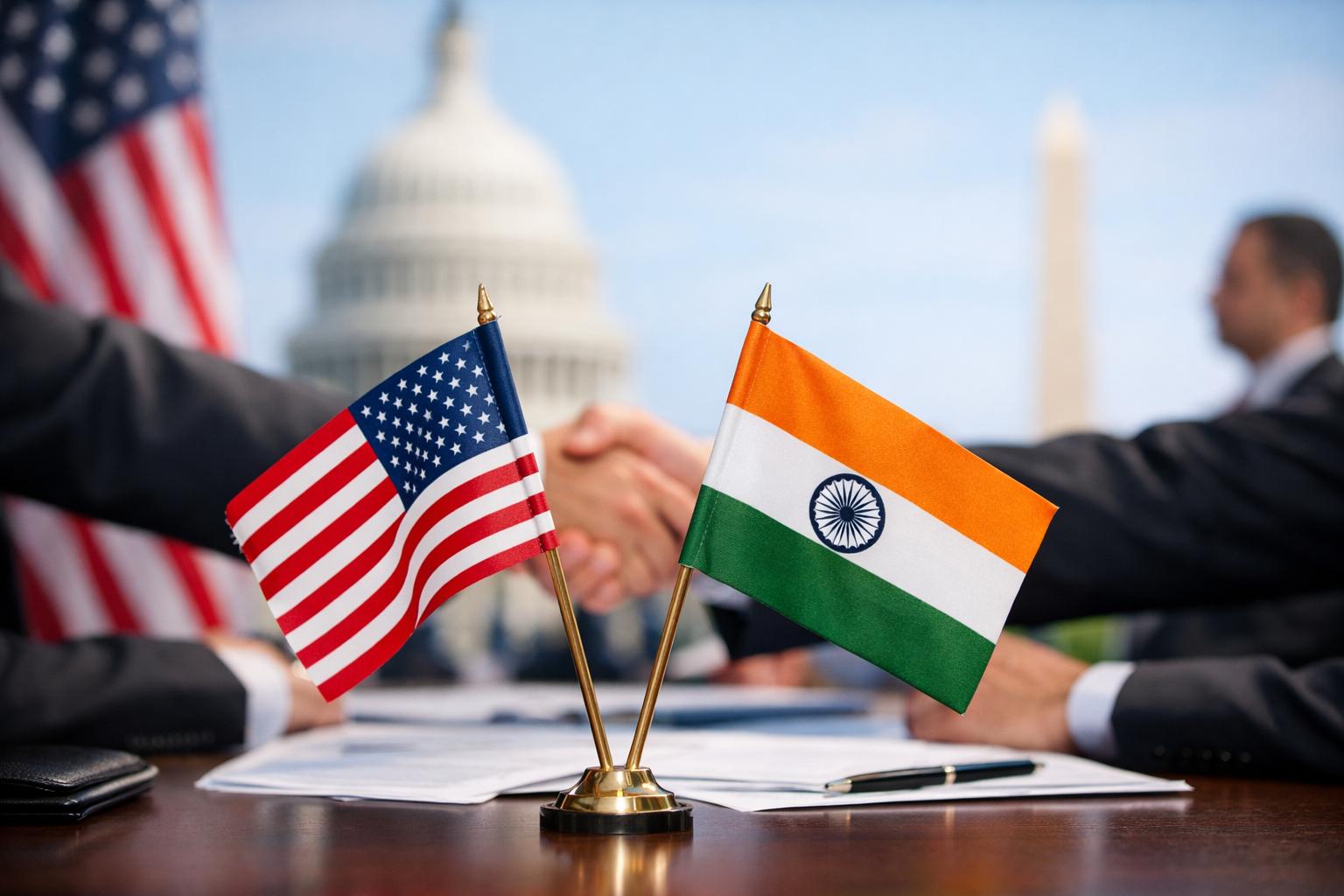
The Indian delegation, led by chief negotiator Darpan Jain, had been scheduled to travel to the United States to finalize the legal text of an interim framework agreement. However, commerce department officials said the visit has been deferred after both governments concluded that additional clarity was needed on the evolving tariff situation. Jain and his team were expected to hold three days of consultations with their American counterparts beginning Monday, in talks that were seen as a precursor to US Trade Representative Jamieson Greer’s planned visit to India.
Sources familiar with the negotiations said the two countries have already reached a broad understanding on the framework of the proposed trade pact, though it does not yet carry binding commitments. The recent US Supreme Court ruling against the reciprocal tariffs and baseline levies imposed under the Trump administration has complicated the negotiating environment, prompting New Delhi to reassess its strategy.
The development is being closely watched globally. Countries such as Malaysia and Indonesia, which had earlier concluded tariff arrangements with Washington, have reportedly emphasized that their agreements have not yet been formally notified. South Korea has also indicated that judicial rejection of the tariff measures has effectively nullified its 15 percent reciprocal tariff deal with the United States, highlighting the wider global trade impact of the court’s decision.
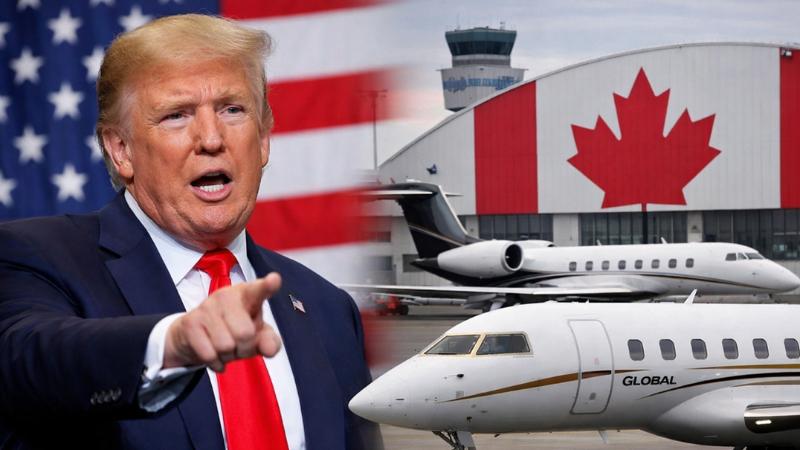
Despite the uncertainty, Trump stated on Friday that negotiations with India remain on track and that “nothing changes.” Indian officials, however, have adopted a more measured tone, confirming that a detailed legal analysis of US actions is underway. The government is also evaluating the potential implications for broader US-India relations and future trade negotiations.
Under Section 122 of the Trade Act of 1974, an additional 15 percent tariff has been applied across countries for a limited period of 150 days, placing all trading partners on a similar footing for now. However, concerns persist that further tariff actions could be introduced. US officials have indicated that Section 338 of the Tariff Act of 1930 remains an available tool, allowing the imposition of tariffs of up to 50 percent on countries deemed to be discriminating against US trade.
Against this backdrop, India’s decision to pause the Washington visit signals a wait-and-watch approach. Policymakers appear keen to use the window created by the legal uncertainty to secure more favorable terms while ensuring that any future commitments align with the shifting global tariff policy landscape.