India considers expiry safeguard in US trade talks
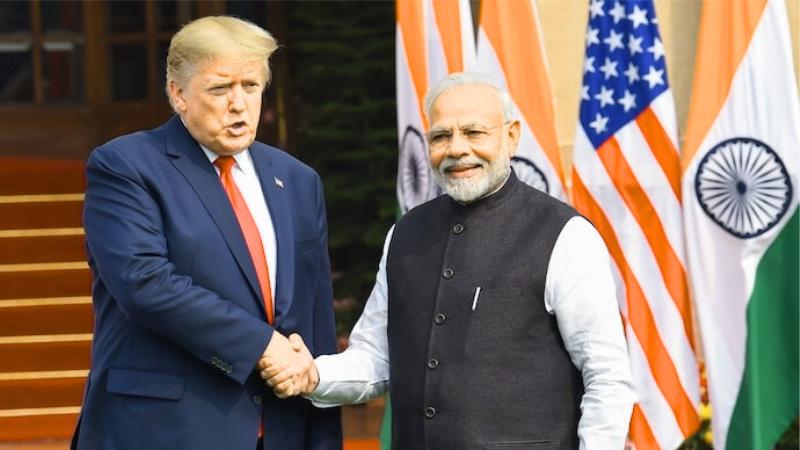
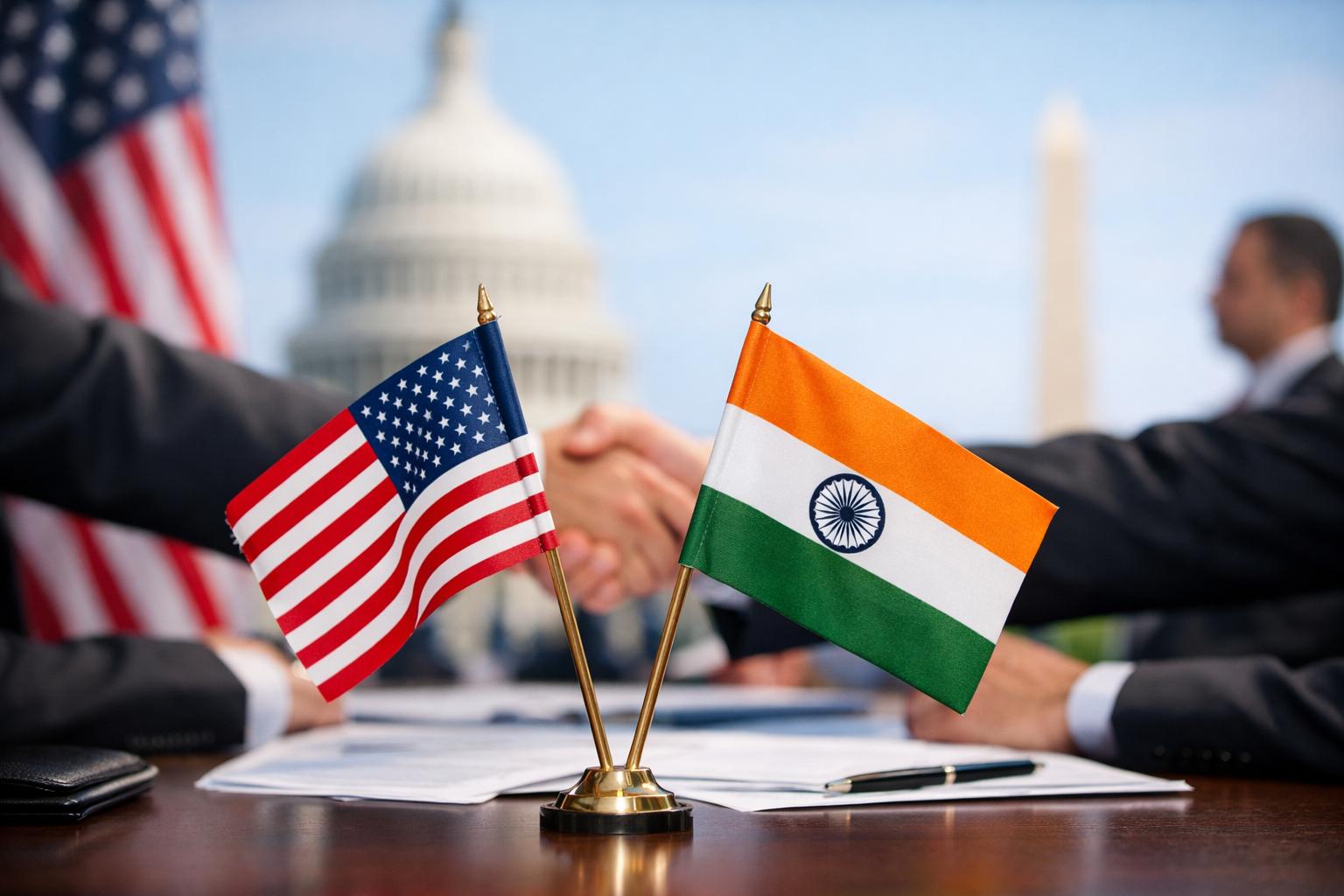
India is reportedly preparing to seek a sunset clause in its proposed interim trade agreement with the United States, reflecting a growing global trend among trading partners to build expiry mechanisms into major economic deals. The move aligns closely with recent developments in European Union–US trade arrangements, where similar provisions have been introduced to limit long-term exposure
India considers expiry safeguard in US trade talks
India is reportedly preparing to seek a sunset clause in its proposed interim trade agreement with the United States, reflecting a growing global trend among trading partners to build expiry mechanisms into major economic deals. The move aligns closely with recent developments in European Union–US trade arrangements, where similar provisions have been introduced to limit long-term exposure
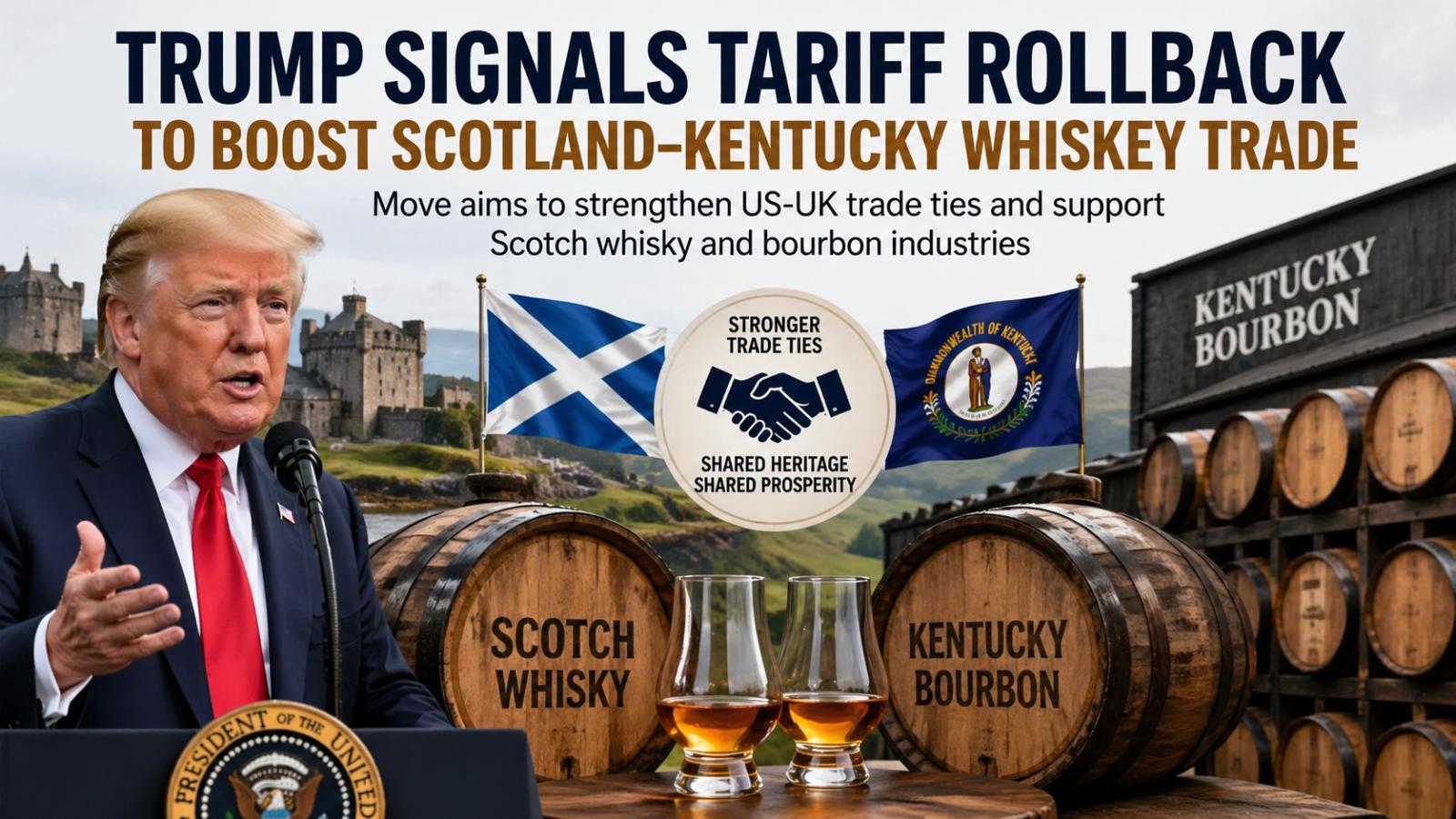
President Donald Trump announced plans on Thursday, April 30, 2026, to remove tariffs affecting whiskey trade between Scotland and Kentucky, aiming to boost US-UK trade ties and support the Scotch whisky and bourbon industries.
Trump signals tariff rollback to boost Scotland–Kentucky whiskey trade — Donald Trump announced on Thursday, April 30, 2026, that he intends t
President Donald Trump announced plans on Thursday, April 30, 2026, to remove tariffs affecting whiskey trade between Scotland and Kentucky, aiming to boost US-UK trade ties and support the Scotch whisky and bourbon industries.
Trump signals tariff rollback to boost Scotland–Kentucky whiskey trade — Donald Trump announced on Thursday, April 30, 2026, that he intends t
The Indian government has decided to reschedule a planned visit by its trade delegation to Washington, DC, following fresh uncertainty triggered by the US Supreme Court’s decision to strike down former president Donald Trump’s “Liberation Day” tariffs. Officials indicated that the move reflects a cautious approach as both sides assess the legal and strategic implications of the ruling on the ongoing India-US trade deal discussions.
The Indian delegation, led by chief negotiator Darpa
The Indian government has decided to reschedule a planned visit by its trade delegation to Washington, DC, following fresh uncertainty triggered by the US Supreme Court’s decision to strike down former president Donald Trump’s “Liberation Day” tariffs. Officials indicated that the move reflects a cautious approach as both sides assess the legal and strategic implications of the ruling on the ongoing India-US trade deal discussions.
The Indian delegation, led by chief negotiator Darpa
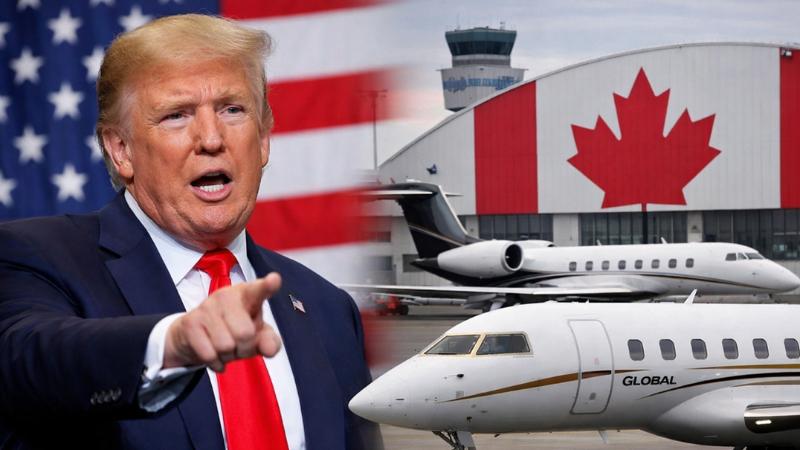
US President Donald Trump has intensified trade tensions with Canada by threatening to impose sweeping tariffs on Canadian-made aircraft, opening a new chapter in an already strained bilateral relationship. In a statement issued on Thursday, Trump said the United States could levy tariffs of up to 50 per cent on aircraft sold from Canada into the US market, citing what he described as Canada’s refusal to certify American-made business jets.
The president also announced plans to decertify all aircraft manufactured in Canada for use in the United States, a move he said would remain in effect until Canadian regulators approve a series of jets produced by Gulfstream Aerospace. The warning was delivered through a post on Truth Social, where Trump accused Canadian authorities of erecting regulatory barriers that unfairly block American products.
In his remarks, Trump singled out the Bombardier Global Express business jet, which is manufactured in Quebec, arguing that Ottawa has benefited from access to the US market while allegedly denying similar treatment to American manufacturers. He claimed Canada had “wrongfully and illegally” refused to certify the Gulfstream 500, 600, 700, and 800 models, which he described as among the most advanced aircraft in the world. According to Trump, the lack of certification effectively prevents Gulfstream from selling its jets in Canada.
Trump warned that unless the situation is resolved immediately, the United States would move forward with punitive tariffs on all aircraft imported from Canada. He framed the threat as a matter of fairness and reciprocity, asserting that American companies should not face obstacles abroad while foreign competitors enjoy broad access to the US market.
The aircraft dispute is the latest flashpoint in a broader deterioration of relations between the United States and Canada since Trump returned to office last year. Political and economic friction between the two long-time allies has grown steadily, with trade policy emerging as a central source of conflict. Earlier the same day as Trump’s comments, Canadian Prime Minister Mark Carney publicly urged Washington to respect Canadian sovereignty, following reports of contacts between US officials and Alberta separatist groups.
Trade tensions have also been fueled by Canada’s recent diplomatic engagement with China. Trump has repeatedly warned Ottawa against deepening economic ties with Beijing, arguing that such moves could undermine US interests. He has threatened to impose tariffs as high as 100 per cent on Canadian goods if Canada proceeds with a trade agreement with China, a warning he reiterated over the weekend.
In a series of earlier social media posts, Trump mocked Carney by referring to him as “Governor” and cautioned that Canada should not act as a conduit for Chinese goods entering the US market. He claimed that closer ties with Beijing would leave Canada economically vulnerable and pledged swift retaliation if such an agreement were finalized. The remarks came shortly after Carney visited Beijing, marking the first visit by a Canadian leader to China in nearly a decade.
The escalating rhetoric underscores the growing uncertainty surrounding North American trade and the aerospace sector in particular. With aircraft manufacturing representing a significant industry for both countries, analysts say prolonged disputes over certification and tariffs could have far-reaching economic consequences. For now, the standoff highlights how regulatory disagreements and geopolitical concerns are increasingly shaping trade relations between Washington and Ottawa.
US President Donald Trump has intensified trade tensions with Canada by threatening to impose sweeping tariffs on Canadian-made aircraft, opening a new chapter in an already strained bilateral relationship. In a statement issued on Thursday, Trump said the United States could levy tariffs of up to 50 per cent on aircraft sold from Canada into the US market, citing what he described as Canada’s refusal to certify American-made business jets.
The president also announced plans to decertify all aircraft manufactured in Canada for use in the United States, a move he said would remain in effect until Canadian regulators approve a series of jets produced by Gulfstream Aerospace. The warning was delivered through a post on Truth Social, where Trump accused Canadian authorities of erecting regulatory barriers that unfairly block American products.
In his remarks, Trump singled out the Bombardier Global Express business jet, which is manufactured in Quebec, arguing that Ottawa has benefited from access to the US market while allegedly denying similar treatment to American manufacturers. He claimed Canada had “wrongfully and illegally” refused to certify the Gulfstream 500, 600, 700, and 800 models, which he described as among the most advanced aircraft in the world. According to Trump, the lack of certification effectively prevents Gulfstream from selling its jets in Canada.
Trump warned that unless the situation is resolved immediately, the United States would move forward with punitive tariffs on all aircraft imported from Canada. He framed the threat as a matter of fairness and reciprocity, asserting that American companies should not face obstacles abroad while foreign competitors enjoy broad access to the US market.
The aircraft dispute is the latest flashpoint in a broader deterioration of relations between the United States and Canada since Trump returned to office last year. Political and economic friction between the two long-time allies has grown steadily, with trade policy emerging as a central source of conflict. Earlier the same day as Trump’s comments, Canadian Prime Minister Mark Carney publicly urged Washington to respect Canadian sovereignty, following reports of contacts between US officials and Alberta separatist groups.
Trade tensions have also been fueled by Canada’s recent diplomatic engagement with China. Trump has repeatedly warned Ottawa against deepening economic ties with Beijing, arguing that such moves could undermine US interests. He has threatened to impose tariffs as high as 100 per cent on Canadian goods if Canada proceeds with a trade agreement with China, a warning he reiterated over the weekend.
In a series of earlier social media posts, Trump mocked Carney by referring to him as “Governor” and cautioned that Canada should not act as a conduit for Chinese goods entering the US market. He claimed that closer ties with Beijing would leave Canada economically vulnerable and pledged swift retaliation if such an agreement were finalized. The remarks came shortly after Carney visited Beijing, marking the first visit by a Canadian leader to China in nearly a decade.
The escalating rhetoric underscores the growing uncertainty surrounding North American trade and the aerospace sector in particular. With aircraft manufacturing representing a significant industry for both countries, analysts say prolonged disputes over certification and tariffs could have far-reaching economic consequences. For now, the standoff highlights how regulatory disagreements and geopolitical concerns are increasingly shaping trade relations between Washington and Ottawa.
The United States is preparing a major escalation in its economic pressure campaign against Russia, with President Donald Trump announcing that he supports Senate legislation enabling Washington to impose tariffs of up to 500 percent on countries that continue significant trade with Moscow. The measure represents one of the most aggressive attempts yet to curtail Russian war funding and signals growing frustration in Washington over the prolonged conflict in Ukraine.
Speaking before
The United States is preparing a major escalation in its economic pressure campaign against Russia, with President Donald Trump announcing that he supports Senate legislation enabling Washington to impose tariffs of up to 500 percent on countries that continue significant trade with Moscow. The measure represents one of the most aggressive attempts yet to curtail Russian war funding and signals growing frustration in Washington over the prolonged conflict in Ukraine.
Speaking before